
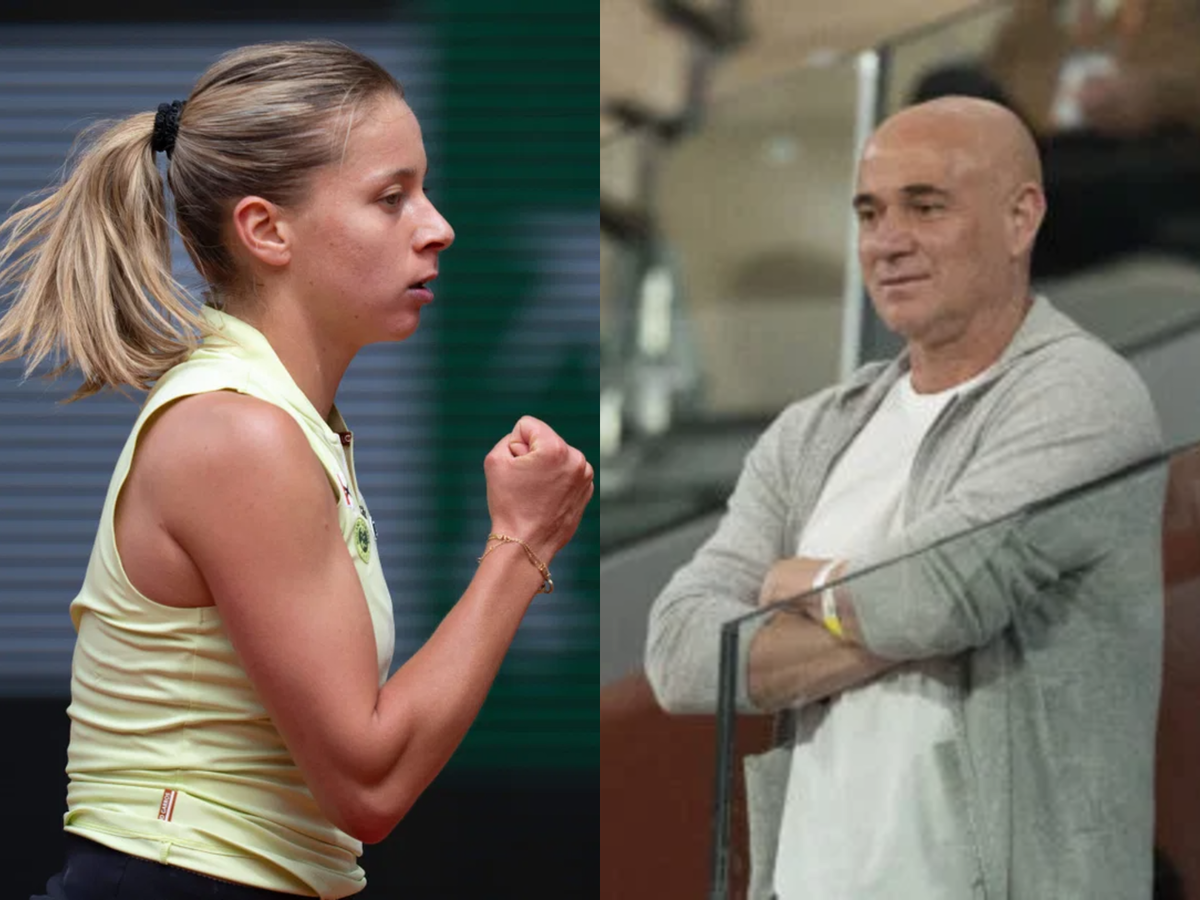
“I honestly don’t know what I did to deserve it,” Maja Chwalińska said during her post-match TNT Sports interview, still trying to process all that had unfolded at Roland Garros. She had just gone from qualifier to French Open finalist in a run that defied expectations at every stage. Even then, she felt she hadn’t done enough. But nobody in the room was going to let her sit around discounting her incredible achievement, and so tennis legend Andre Agassi stepped in to put things into perspective.
Watch What’s Trending Now!
“Well, if you don’t know why you deserve it, let me help you understand that,” said Agassi. “You qualified and got to the finals of one of the toughest challenges in all of our sport. And don’t be distracted by those articles. Don’t be distracted by wins and losses.”
Listening to Agassi, Chwalinska simply blushed, laughed, and told him to stop. But the point had landed. Then the host of the show, Adam Lefkoe, wrapping up the exchange, put it simply: “When great things happen to good people, it makes us feel good. I think everyone can see how great you are.”
Honestly, the Polish fans have definitely seen now how great a player she is. It was visible that those who had descended on Roland Garros this fortnight renamed it as “Poland Garros.” It was visible through their newspaper headlines. In fact, the numbers that Chwanlinska managed to pull, as cited by Polish television, are head-turning.
Polish television reported that Chwalinska’s matches have drawn more viewers than Iga Swiatek’s. To put that into perspective, she is a four-time French Open champion and one of the most popular sports stars in Polish history.
Polish fans’ support was in no way subtle, and it was definitely not manufactured. This was a country that was watching one of its own do something that no one could have predicted, and from a player who was only a few weeks ago fretting about how she could afford to keep the hotel room. Part of what made this run so captivating was the way Chwalinska actually plays tennis.


Maja Chwalinska got a special message from @AndreAgassi after her incredible #RolandGarros run 🥹👏
As the 5’5″ player with no base power to equal the current force of the women’s tour, she took her game to the next level with something that was more scarce, and more exciting – on clay, at least – more valuable: variety. She is left-handed, which already skews the angles her opponents have to deal with, but the more disorienting quality was her refusal to hit the same ball twice in a row.
The drop shots, slices, looping moonballs, and lefty angles that were well placed and forced opponents to constantly reset. Chwalinska identified the effect it had.
“I feel like it’s pretty tough to play against this kind of style, because you don’t have any rhythm, and you just need to be very focused because every ball can be different.”
As a teenager, Chwalinska would watch tennis for hours on end, dissecting how the best players moved and constructed points. Her hobby turned to meticulous preparation, and come the time she was in Paris, she could read a play and anticipate her opponent’s next steps.
Against Zheng Qinwen, an Olympic gold medalist on these courts, she won 6-4, 6-0. Against Sakkari, Kalinskaya, and Shnaider in succession, she barely wavered, dropping just one set across nine matches, including qualifying. She left opponents in the dust, as a well-rounded game does to the best players in the world on clay.
Adversities did not stop Maja Chwalinska
Maja Chwalinska arrived in Paris with virtually no trappings of the top players. She didn’t have an apparel sponsor, so she wore a different outfit each round. A journalist spotted and questioned the change of kits, and her answer was very direct with no filter.
“There is no story, really. I’m not sponsored, so I guess that’s the story,” she said.
Imago
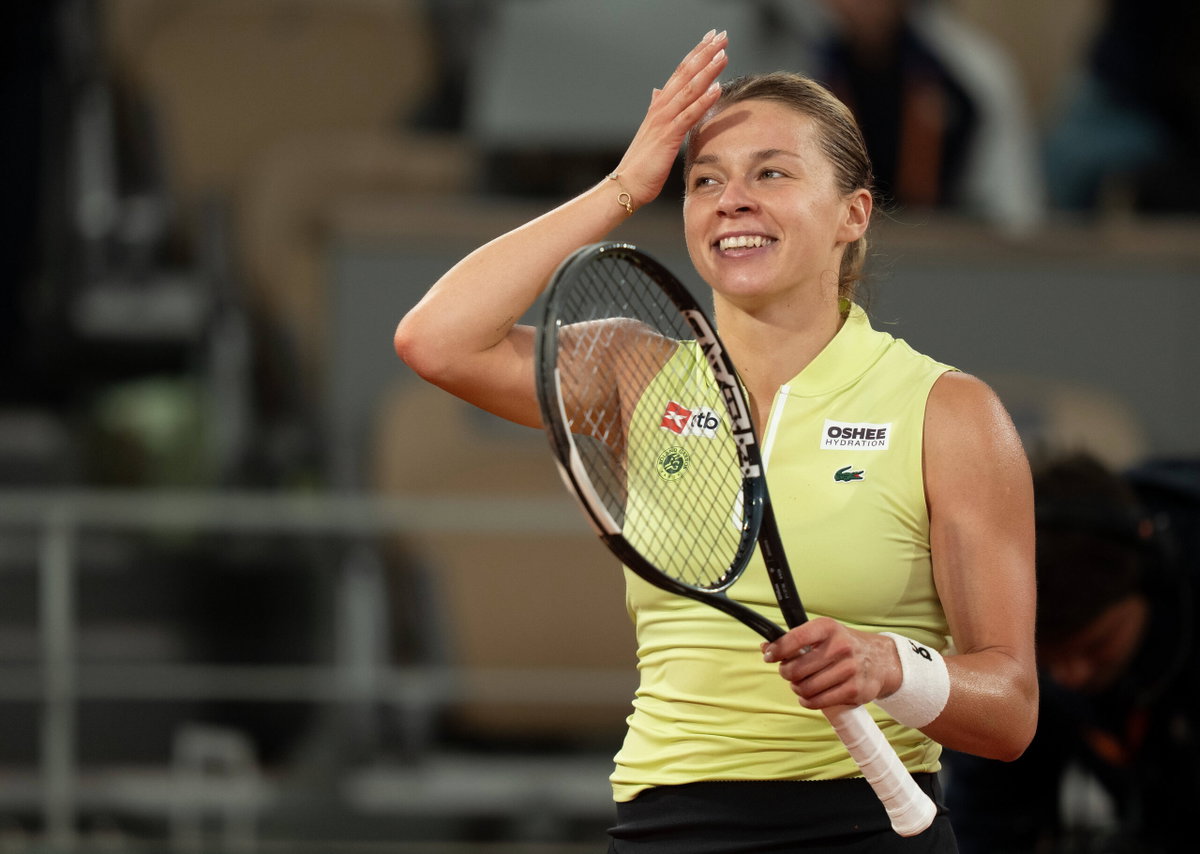
Jun 4, 2026; Paris, France; Maja Chwalinska of Poland celebrates winning her match against Diana Shnaider on day 12 at Stade Roland Garros. Mandatory Credit: Susan Mullane-Imagn Images
As she continued to go deeper into the tournament than anyone had anticipated, she revealed in a press conference that she had been concerned throughout about having enough money to stay at her hotel in one of the world’s most expensive cities.
In tennis, prizes are awarded at the end of the tournament, not at the end of every match, meaning Chwalinska bore the costs of the extra nights. But eventually, to ensure that a player, one of their pride, isn’t worried about paying for room fare instead of a tennis court, a Polish sports nutrition firm called ‘Oshee’ picked up the bill for her hotel.
Chwalinska arrived at Roland Garros with total career prize earnings of $864,030, accumulated across years of WTA 125 events and Challenger-level tennis. In this one tournament alone, she won €1,400,000, approximately $1.6 million, nearly doubling the total of every cheque she had won in her past tournaments. From here, things go a whole different way with the finances.
She will no longer have to deal with weeks of grueling qualifying rounds that will take time away from her preparation and add to her matches. As world No. 21, she will enter the main draw of the biggest events directly. Sponsorships change just as much.
Chwalinska arrived at Roland-Garros with no sponsor to even provide her with kits. But since then, a nutrition company provided her with a hotel, and now she has become a Grand Slam finalist whose journey this fortnight has gone all over the world.
She may not have known why she deserved it. Agassi knew. Poland knew. And the rest of the tennis world, along with a growing list of sponsors, is beginning to work it out too.