Andrey Rublev Makes Heartbreaking Admission About His Darkest Days: “Didn’t Understand the Point of Living”

Add us on Google
Andrey Rublev Makes Heartbreaking Admission About His Darkest Days: “Didn’t Understand the Point of Living”
Add us on Google
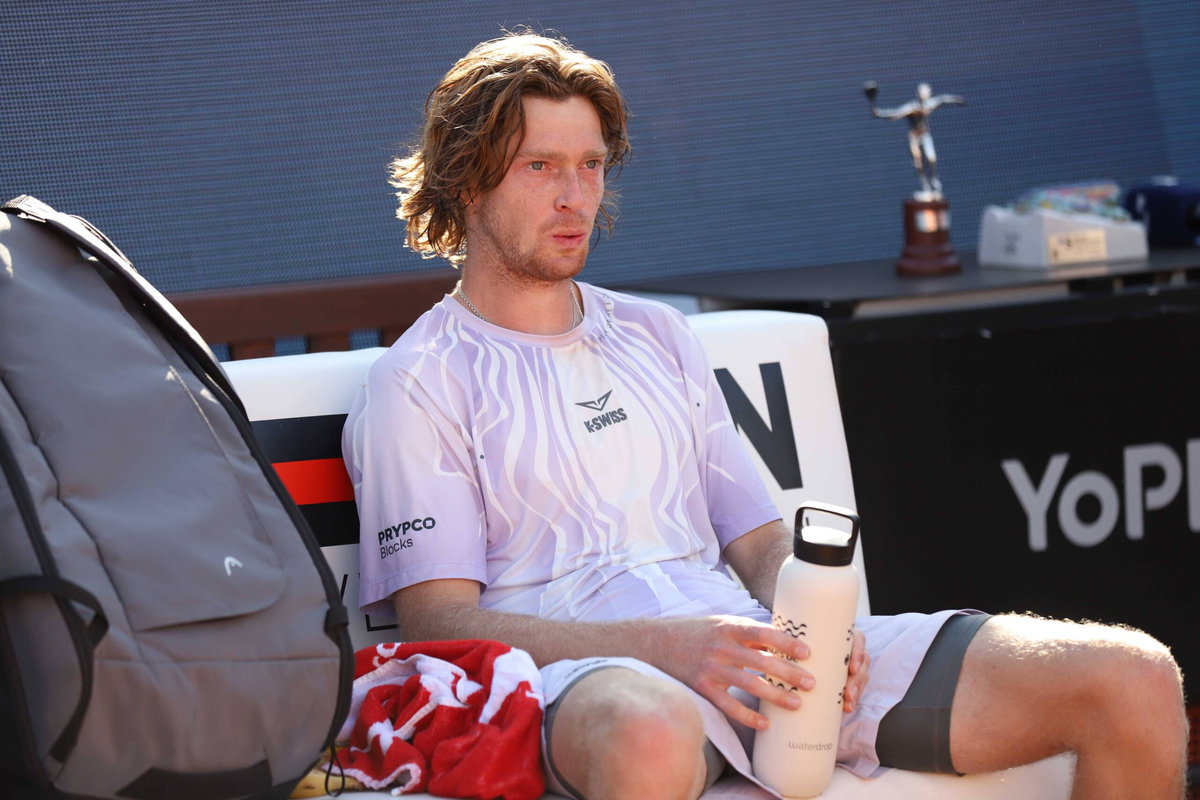
Imago
April 19, 2026, Sabadell, Barcelona, Spain: Barcelona Spain 19.04.2026 Andrey Rublev Russia gestures in the match between Andrey Rublev Russia and Arthur Fils France during the Day 9 of the Barcelona Open Banc Sabadell Godo on 19 April 2026 in Barcelona. Sabadell Spain – ZUMAu50_ 20260419_zsp_u50_076 Copyright: xXavixUrgelesx
Imago
April 19, 2026, Sabadell, Barcelona, Spain: Barcelona Spain 19.04.2026 Andrey Rublev Russia gestures in the match between Andrey Rublev Russia and Arthur Fils France during the Day 9 of the Barcelona Open Banc Sabadell Godo on 19 April 2026 in Barcelona. Sabadell Spain – ZUMAu50_ 20260419_zsp_u50_076 Copyright: xXavixUrgelesx
Andrey Rublev has never really hidden his emotions on court. Some of his outbursts have become hard to forget – especially at the Wimbledon Championships in 2024, when he repeatedly hit himself with his racket, leaving his knee bleeding during a difficult match.
Watch What’s Trending Now!
At the time, it looked like frustration over tennis. But in 2025, Rublev admitted it was much deeper than that. He revealed he was going through a battle with depression, and looking back on that moment, he said it had nothing to do with the match itself. As he put it: “That was the worst moment that I face about myself. It was not about tennis. It was to do with myself, like after that moment I don’t see the reason of living life.”
Now, a year later, Andrey Rublev has once again spoken about that difficult period, opening up further about his mental struggles and giving fans a clearer understanding of what he was going through at the time.
In a recent interview with L’Equipe, the Russian went far deeper than anything seen during a match. The world No. 14 revealed a time of deep personal upheaval that coincided with his falling out of the top 10 in the spring of 2025, when he had lost his desire to interact with life at all.
“It wasn’t specific to tennis. I couldn’t find meaning in life in general. I wasn’t enjoying anything anymore. I didn’t understand the point of living. Every day was the same. It sounds dramatic, put like that, and it’s difficult for me to describe exactly what I was feeling because I don’t feel it anymore. But I had hit rock bottom, I was completely lost, I was shattered. Today, I’m doing much better,” he said.
The timing of that collapse was visible in his results. Rublev had been in the top 10 since 2020, except for three weeks in the summer of 2022, until he fell out of the top 10 in the spring of 2025. The ranking slide was the most obvious sign of a much deeper issue that lay underneath.
His self-destructive tendencies stem from a much earlier time than 2025, he said. The Russian explained that he had been unable to take a loss since he was a child. “Every time I lost, it was a tragedy. When that becomes your daily life for ten or fifteen years, you sink deeper and deeper until you destroy yourself.”
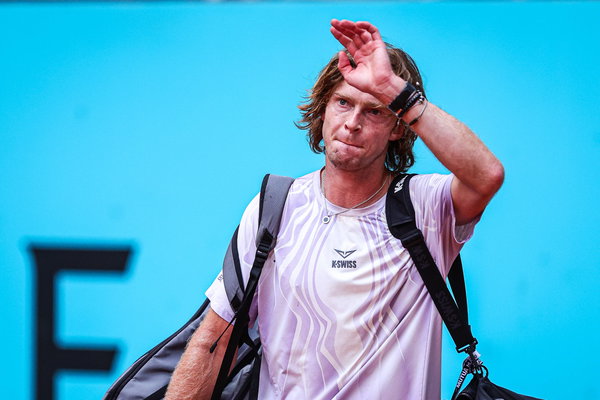
Imago
Mutua Madrid Open 2026 – Day 5 Andrey Rublev of Russia competes against Vit Kopriva of the Czech Republic during their Men s Singles match on Day Five of the Mutua Madrid Open at La Caja Magica on April 24, 2026, in Madrid, Spain. Madrid Madrid Spain PUBLICATIONxNOTxINxFRA Copyright: xMiguelxReisx originalFilename:reis-notitle260424_npTkY.jpg
It’s a style anyone who has seen Rublev on court for years will instantly recognize. The racket slamming, the frustration in words, the obvious pain when the ball goes out of the court have always been there. What it wasn’t showing was how much it was impacting him in his everyday life.
The turnaround came through a combination of therapies and his decision during the off-season to bring in Marat Safin as coach. The former world No. 1 did more than just revolutionize Rublev’s game. “What really helped me was Marat. You know when you open the hood of a car to see what’s inside? Well, he did the same thing with my brain,” Rublev stated.
The results have been tangible. After his stint with Safin, Rublev has returned to the top 14 in the world rankings and advanced to the Italian Open quarterfinal. It is the type of stage he wasn’t on at his worst point in 2025, and he couldn’t be more different mentally and physically a year ago.
When asked whether he had fully dealt with the deeper issues, his answer was honest. “Not completely, about half, I’d say. The goal is to pull it out by the roots and get rid of this cancer completely.” A player who’s been at war with himself for most of his career can now see the issue and discuss it openly, which is progress in itself.
Andrey Rublev’s reinvention under Marat Safin faces its toughest test
The off-season work with Safin was not just psychological. Andrey Rublev came in 2026 with a clear intention to take a game that had taken him to world No. 5, but which by his own admission had reached a plateau. “I realized I’d reached the limit of my playing style and that I wouldn’t do better than world number 5 like that. The players better than me were much more well-rounded. I felt I’d reached the limits of my game, which was so focused on my forehand. I thought that would be enough. I hit a brick wall,” he said.
The change he is attempting is not a small one. Rublev’s entire career has been based on the power of his forehand, and it’s a tremendous challenge to alter your identity in mid-career and still perform at the highest level. He acknowledged as much. “It takes a huge mental effort to abandon the game you’ve built over so many years, which has brought you so many results, and to trust a new identity that’s still under construction. You have to accept that because of this, you might lose at first. Accepting defeat is hard. But I feel ready to do it,” Rublev added.
The internal conflict that comes with it has been just as real. “Sometimes I feel like it’s not me playing or that I’m imitating someone else. It becomes a psychological battle with myself,” he said. The new elements gelled in Doha and Dubai. In Indian Wells and Miami, he indulged in old ways. Rome has been one of his better weeks, dropping just one set to advance to the quarterfinal, where he will face Sinner. The first set of that match, which is currently underway, has gone to the world No. 1 6-2, a reminder of how steep the climb still is against the very best, even when the rebuilding process is going well.
What is evident from all that Rublev has said is that the focus is no longer on results. A player who once described every loss as a tragedy is learning, slowly, to separate his identity from the scoreboard. Safin’s impact has been the link between the psychological work and the tactical development. “He brings me peace of mind. Sometimes it’s better not to overthink things, otherwise you get tangled up and you collapse,” Rublev concluded. For a player who has spent years tangling himself up, that might be the most significant change of all.
Written by

Edited by

Purva Jain