
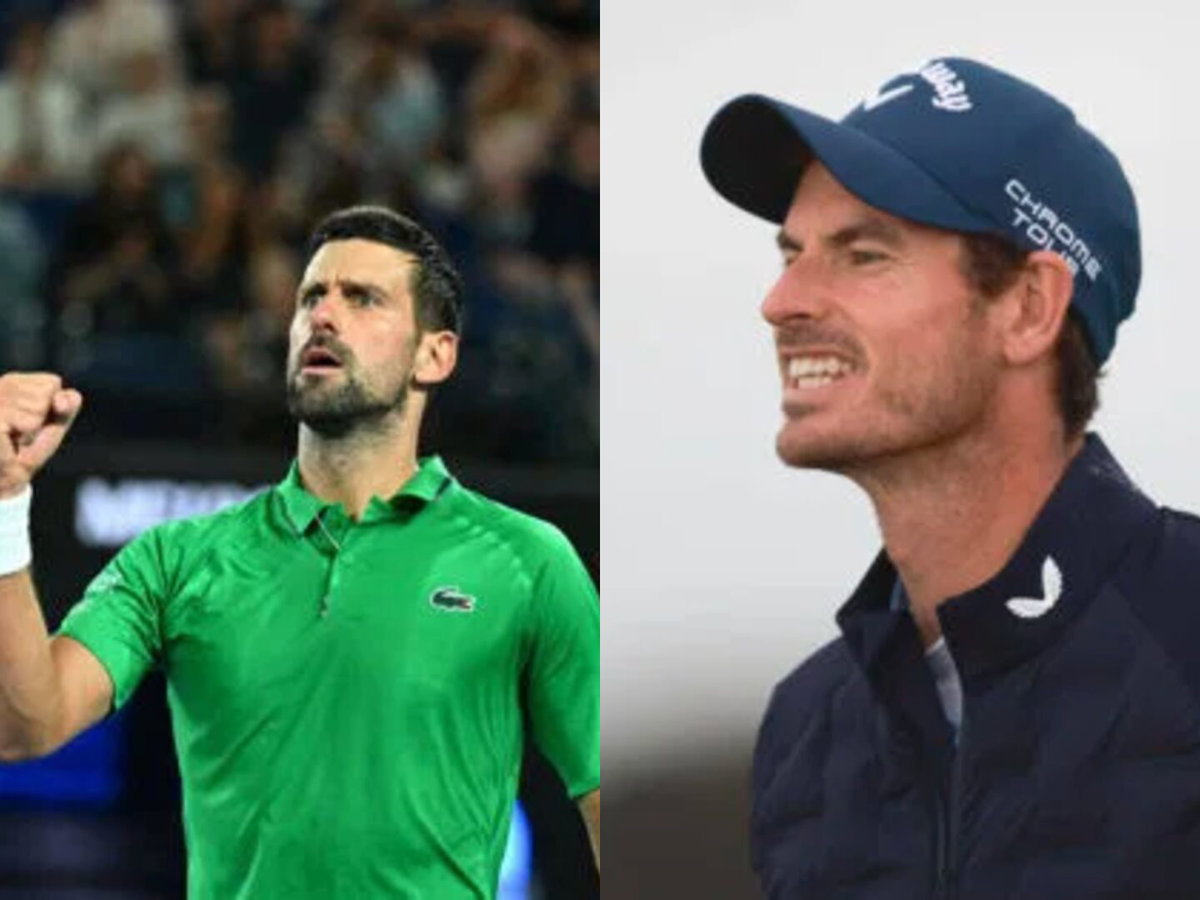
Andy Murray has been retired from professional tennis for nearly two years and has spent a considerable portion of that time working on his golf handicap. The 39-year-old has made it abundantly clear that the life of a full-time traveling coach is not something he has any interest in pursuing. And yet, for the second time in less than eighteen months, he finds himself in a coaching box. This time for his compatriot Jack Draper ahead of the grass-court season and Wimbledon.
Watch What’s Trending Now!
The role has prompted Murray to reflect openly on what his stint with Novak Djokovic between December 2024 and May 2025 actually taught him about the profession, and one aspect of the job surprised him considerably more than he expected. In a recent interview, Murray explained what he found most difficult while working with Djokovic, and it wasn’t watching games from the box.
“I didn’t find it strange watching the matches from Novak’s box. It was the match preparation that I found quite difficult, because you have to communicate well with the player and make sure everything is under control: the right courts booked, the practice partners, the balls, the rackets, the strategy. All that kind of thing. You want everything to run smoothly,” he said.
The logistics of elite coaching, the invisible scaffolding that holds a player’s tournament week together, is precisely the aspect that most observers never see and rarely consider. It was a real change of roles for Murray, who played his entire career on the receiving end of that preparation.
What he found considerably easier was the part that most former players assume will be the hard part. “Once the player is on the court, I found it quite easy. I found the pre-match preparations more difficult than sitting in the box watching and observing a tennis match while trying to be objective. I didn’t feel like I was so emotionally involved in the matches that I couldn’t think straight. To be honest, I rather enjoyed that aspect,” Murray said.
Murray’s talent for taking in tactical information was one of his most defining qualities. In an era that spawned Roger Federer, Rafael Nadal, and Djokovic, he was one of the most analytical players the sport had seen, and that made him successful. His instincts translated naturally to match observation, even from the box rather than the baseline, perhaps should not come as a surprise.
His time with Djokovic ran for around six months, a period that included the Australian Open, where Djokovic fell in the semi-finals to Zverev due to an injury, a Miami runner-up finish, and a run through the clay-court swing before the partnership was dissolved by mutual agreement. The outcome was “mixed” and the overall period was “short,” but Murray has always referred to it as a formative experience, a crash course in the reality of coaching at the highest level in everyday life. The Djokovic chapter did not put him off the profession. In fact, it set out the conditions under which he might do it again.
Those conditions came when Draper called in May. The former world No. 1 has made it clear that he is not keen to make a lot of travel with his kids around, and a grass-court-only engagement with the player living 30 minutes away in Surrey was just about perfect.
“I get on very well with Jack, and I wanted to help him when he asked me. But I was very clear about what I could and couldn’t do,” Murray said.
Draper parted ways with coach Jamie Delgado ahead of the arrangement, and his early sessions with Murray have left the three-time Grand Slam champion considerably more optimistic than he anticipated.
“He has been more impressive than I expected in the sessions I have had with him. He learns quickly. He has very few holes in his game. He is a more complete player than I probably expected,” he concluded.
Two-time Wimbledon champion providing that vote of confidence makes it even more significant for a player who has been on the sidelines for the better part of the year.
Draper’s comeback gives Murray’s coaching role immediate stakes
Draper’s return will further heighten the pressure on Murray’s box debut as coach. The 24-year-old has not competed in a full match since the Barcelona Open in April, where he again had a shoulder problem and ended his clay-court campaign. His ranking has fallen from a career-high No. 4 after winning the Indian Wells title last year to No. 113, and it has more to do with the amount of time he has been away from competition than any quality decline.
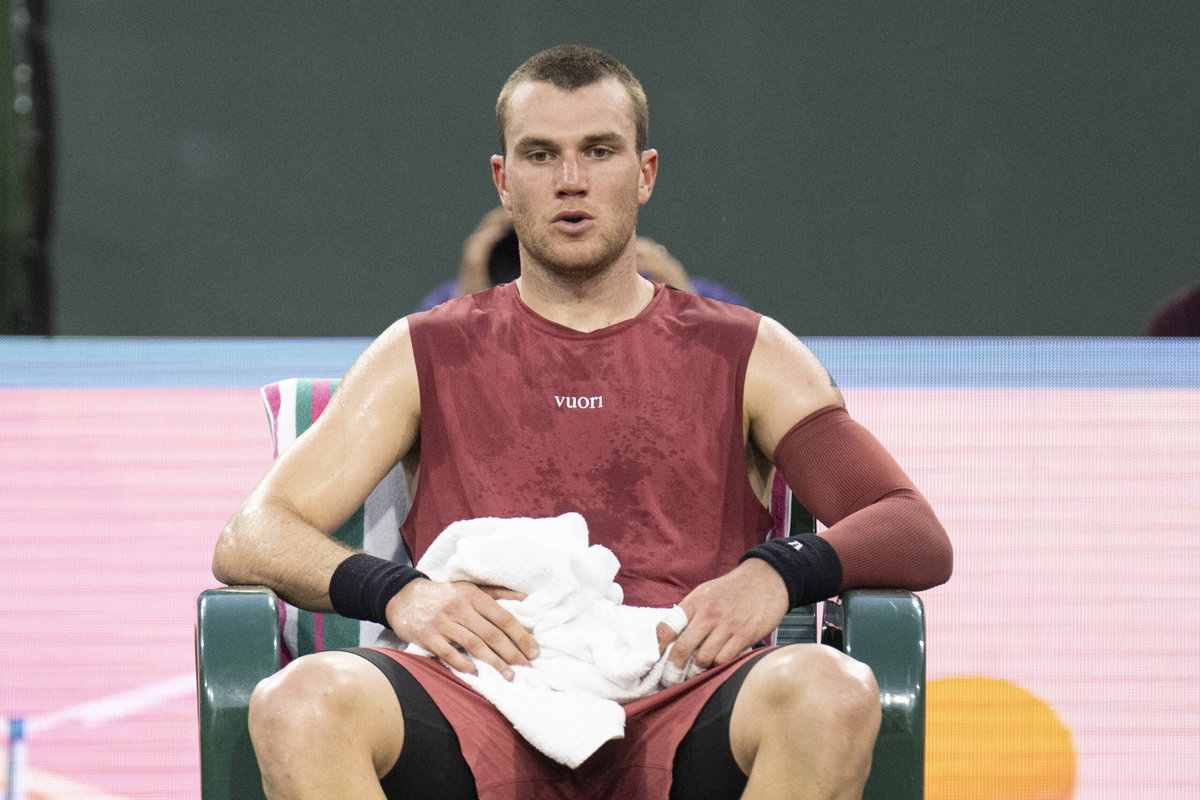
Imago
March 11, 2026, Indian Wells, California, USA: JACK DRAPER of Great Britain focuses on his breathing between changeovers while playing against Novak Djokovic of Serbia during their round of 16 match at the BNP Paribas Open at Indian Wells Tennis Garden on March 11, 2026 in Indian Wells, CA. Indian Wells USA – ZUMAl140 20260311_aap_l140_054 Copyright: xShelleyxLiptonx
Murray, who faced his own injury struggles over several surgeries on his hip before returning to claim his second Wimbledon title in 2016, knows the mental side of rehabilitation from physical setbacks better than anyone in the sport.
The London native will take on the court this week at Eastbourne before Wimbledon opens on 29 June, and he is likely to start on a protected ranking or wild card, depending on the situation. Murray is on his home turf with Draper for the first time, and there are high hopes for what the pair can achieve at the All England Club if everything goes according to plan.
The former world No.1 will be navigating the pre-match logistics he found so demanding at his first attempt. This time, he has had six months of coaching experience under his belt. He will not be caught off guard by the same things twice.