
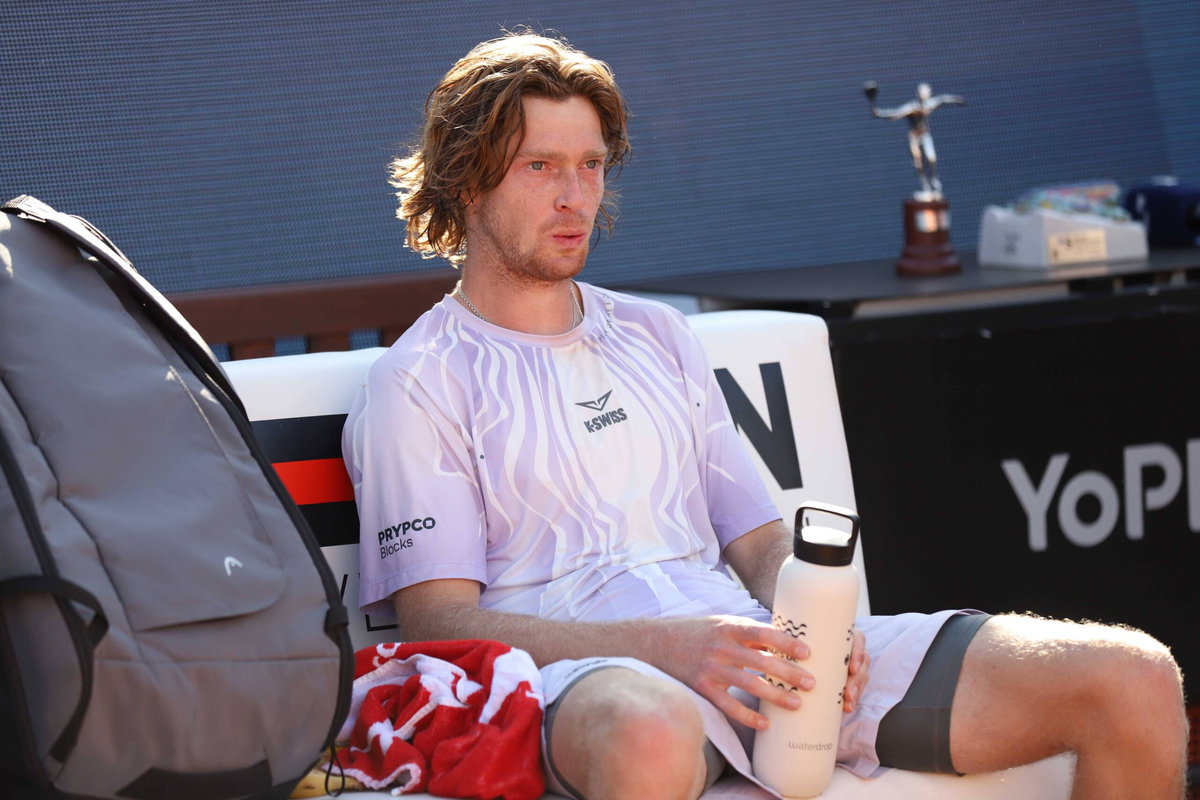
The courts at the French Open remain unlike any other surface in tennis, something players have warned about for years. Back in 2007, Maria Sharapova famously admitted she felt like a “cow on ice” while battling the slippery clay in Paris. Now, Andrey Rublev has added his voice to those growing concerns, exposing an unsettling reality surrounding the Roland Garros courts ahead of this year’s tournament.
Watch What’s Trending Now!
Speaking in an interview with Championat, the Russian was asked whether the courts in Italy reminded him of the conditions at Roland Garros. “No, I don’t see any similarities at all,” the Russian admitted while discussing the modern conditions on the Paris clay courts.
Rublev then went further and delivered a blunt assessment of how the French Open courts have changed in recent years. According to him, many of the outside courts no longer even feel like true clay surfaces.
“I don’t know, now in recent years in Paris, especially if you don’t play at the stadium, then it’s like you’re not playing on clay at all – it’s slippery, concrete, and there is not much sand. I don’t even know what it looks like… Nothing.”
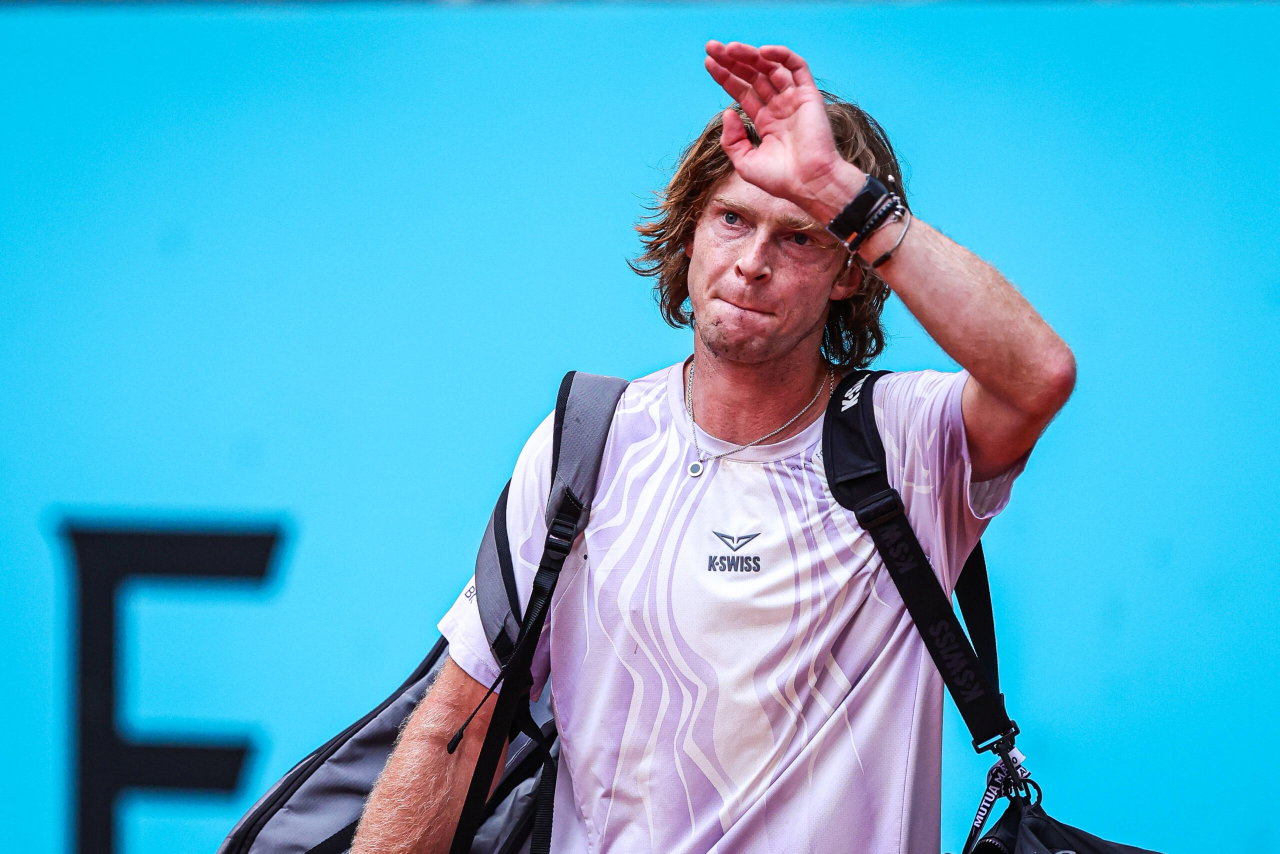
Imago
Mutua Madrid Open 2026 – Day 5 Andrey Rublev of Russia competes against Vit Kopriva of the Czech Republic during their Men’s Singles match on Day Five of the Mutua Madrid Open at La Caja Magica on April 24, 2026, in Madrid, Spain. Madrid Madrid Spain PUBLICATIONxNOTxINxFRA Copyright: xMiguelxReisx originalFilename:reis-notitle260424_npTkY.jpg
The world No. 14 also explained that the difference between the main stadium courts and the smaller outside courts has become increasingly noticeable since the pandemic years.
“They have changed somehow. Even before the pandemic, if you are at the stadium, then you are already playing there, there is already a little more clay, and it turns out to be some kind of more clay surface. And there is almost no sand on the small courts. I don’t know, we’ll see how it will be this year. But for the last two or three years, there seems to be no soil there at all.”
While players continue debating the conditions at the French Open, differences between the main courts and outside courts in Paris have also become a major talking point in recent years.
According to court preparation staff, Court Philippe-Chatrier is usually the last court to be prepared before the tournament begins. Players competing in qualifying rounds generally practice first on the outside courts rather than the larger stadium courts.
Because of that, the main courts are intentionally prepared later to avoid remaining unused for long periods. Most of the clay preparation work begins in early April once weather conditions in Paris become favorable.
Top-seeded stars such as Jannik Sinner or Novak Djokovic often prefer training on Philippe-Chatrier or Court Suzanne-Lenglen because they expect to play most of their matches there during the two-week tournament.
There are also significant physical differences between the main courts and the smaller outside courts. Philippe-Chatrier is considerably larger, measuring 70 feet wide and 140 feet long, while outside courts are generally 60 feet wide and 120 feet long.
Because of those dimensions, staff members need around an extra hour and a half to fully roll and prepare Philippe-Chatrier properly. However, despite the size difference, the overall outlines and preparation methods remain largely similar across all courts.
Officials have also explained that preparing the central stadium courts requires roughly the same workforce as an outside court, with around a dozen people involved during the process. Still, players often notice clear differences in movement, bounce, and footing once they actually step onto the courts, depending on when and where they trained.
And while Andrey Rublev’s recent comments focused specifically on Paris, complaints surrounding slippery and inconsistent clay conditions across the tennis tour have continued to increase in recent times.
Flavio Cobolli launches a blunt criticism of the controversial Madrid Open court
At the recently concluded Madrid Open, Flavio Cobolli openly criticized the court conditions during his match against Camilo Ugo Carabelli. The Italian appeared visibly frustrated with the slippery surface throughout the contest.
During the match, Cobolli directly approached the ATP supervisor to voice his concerns. “You need to do something for this court; it’s impossible to play,” Cobolli said while expressing his anger over the condition of the clay surface.
The Italian did not stop there and made his frustration even clearer moments later. “It’s not clay, it’s really slippery, it’s like playing ice hockey on a tennis court.”
According to Cobolli, the surface made controlled movement almost impossible and removed the natural feel players usually expect from clay. For a player whose game depends heavily on balance and sliding into shots, those differences became a serious problem. The comparison to ice hockey perfectly captured how uncomfortable and unstable the conditions felt during the match.
Even after the contest ended, Cobolli continued criticizing the court during his press conference. He admitted the slippery conditions directly impacted his performance, especially during the opening stages of the match.
“With the game I have, I think I can play well here. I had some problems in the first set with the court, which was very slippery. There was no clay on that court. But you also have to fight with those aspects,” he added.
As complaints surrounding clay courts across Europe continue increasing, attention will now shift toward the Italian Open and whether similar concerns emerge during the next two weeks in Rome.