
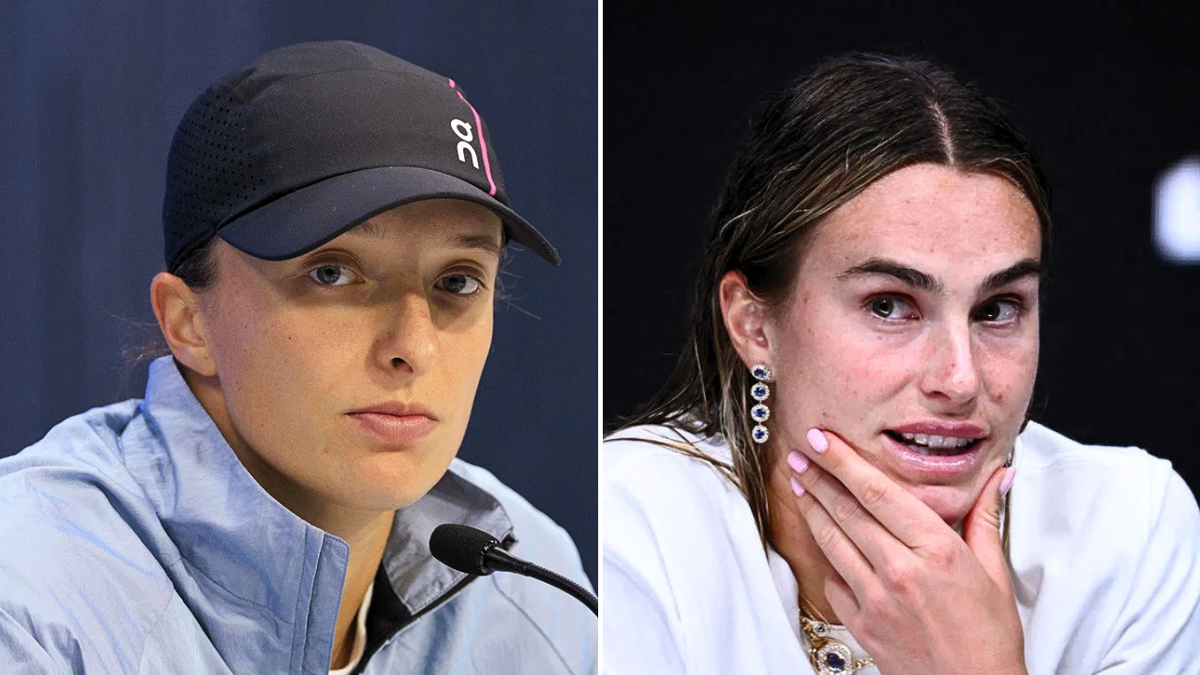
Back in February, when Aryna Sabalenka withdrew from the Dubai Tennis Championships citing a minor injury, few expected the situation to spiral into a major controversy. But with growing frustration already surrounding the packed WTA calendar, the incident quickly reignited debate around player workload and scheduling pressures.
Watch What’s Trending Now!
The controversy intensified after Dubai tournament director Salah Tahlak publicly suggested stricter punishments, including ranking-point deductions, for players who withdraw late from tournaments. Sabalenka reportedly responded strongly to those remarks, even threatening to boycott the event in the future. And now, standing firmly in support of the world No. 1 is Iga Swiatek.
Swiatek’s response was sharp and unambiguous. “I haven’t heard about penalties, probably because it’s a bit absurd. We have the right to withdraw at any moment. If we’re not ready to play or we don’t feel it’s the right moment to compete in the tournament, are we slaves? We have the right to decide. We received zero points. That’s the penalty,” she said.
This all stemmed from a problem that arose when both Swiatek and Sabalenka pulled out of the Dubai Championships just a day before the tournament draw and two days before it started. Sabalenka was forced to pull back from the tournament due to a minor hip injury and mainly because she wanted to prevent an early burnout after a lengthy Australian Open. Meanwhile, Swiatek was out due to a change of schedule after falling to Maria Sakkari in the Qatar final.

Iga Świątek pojawiła się na konferencji prasowej przed Roland Garros. Oto wybrane fragmenty: 💬 Co sądzisz o komentarzach dyrektora turnieju w Dubaju, który sugerował, że Ty, Aryna i pozostałe zawodniczki powinnyście dostać surowsze kary? 🗣️ Nie słyszałam o tym. Słyszałam o Show more

Tahlak called their withdrawals an “unfortunate surprise” and said the reasons were “a bit strange,” adding: “I think there should be a harsher punishment on the players, not just fines; they should be docked ranking points.”
Sabalenka fired back at the time, calling the comments “ridiculous” and suggesting she might never return to Dubai. “It’s actually so sad to see that the tournament directors and the tournaments are not protecting us as players. They just care about their sellings, about their tournament and that’s it,” she said. The Polish player joined the discussion at Roland Garros as tensions between the players and the tournament came to a head with the prize money protest.
When asked about the media protest and what it is ultimately about, she was equally clear. “First and foremost, I think we all have nothing against the media and we fully respect you. We know how important our relationships are. But when it comes to the tournament, I feel we’ll get more if the tournament does more for us. Not just for us, the top players, because we’re the ones who have the most contact with you, but also for lower-ranked tennis players and the entire structure. So personally, I have nothing against you, but we’ve made this decision and we’ll stick to it,” she added.
Swiatek’s remarks are a reminder that the controversy over Dubai and the current prize money controversy are not unrelated. They’re two forms of the same thing: the conflict between individuals and the very institutions that are supposed to govern the sport. Sabalenka has already made that leap at Miami this March, when she made headlines after stating she felt unprotected by the very tournaments she is expected to carry.
Her ultimatum to possibly withdraw from Dubai completely was not a one-off, but in line with the broader sentiment of the top players, who this month openly spoke of a Slam boycott in Rome. Swiatek saying in the same breath about withdrawal rights and media protest shows that the frustration is far more deep-seated than any one of the tournament directors’.
Roland Garros asks a different question of Iga Swiatek this year
The press conference was no ordinary affair; it was more than protests and withdrawal controversies. This year, Iga Swiatek came to Paris with a different kind of burden, one that is not about governance, but about her own position on the court she’s owned for half a decade.
Last year at this time, she was looking to win her fourth consecutive Roland Garros. Instead, Aryna Sabalenka put an end to her 26-match winning streak at this tournament in the semifinals. The Iga aura on clay has been missing since her last victory here in June 2024, and doubts have been lingering since then as to whether the clay magic has faded away.
Imago
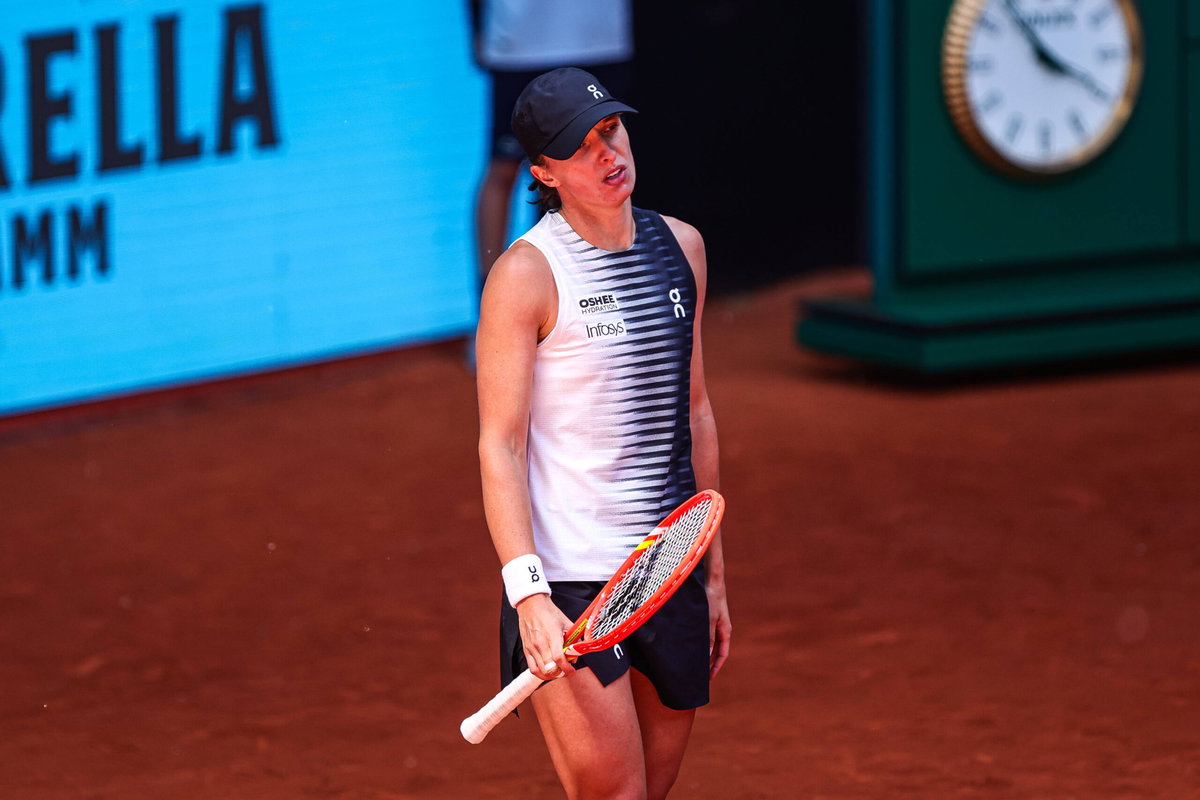
Mutua Madrid Open 2026 – Day 6 Iga Swiatek of Poland competes against Ann Li of the United States during their women s singles match on Day Six of the Mutua Madrid Open at La Caja Magica on April 25, 2026, in Madrid, Spain. Madrid Spain PUBLICATIONxNOTxINxFRA Copyright: xMiguelxReisx originalFilename:reis-notitle260425_npqU1.jpg
Swiatek herself is not interested in entertaining those questions for long. “I don’t particularly think about last year. Doesn’t really matter,” she told reporters. Her mental attitude is based on what she believes in, not on what others would like her to believe. Last year, she said, the stars simply were not aligning. “My tournament in Rome was like a really cold shower, and I woke up cold. I felt terrible on the court in Rome last year, so this year, after a couple of good matches, there is a more positive vibe. It’s good to just have some really solid matches on your shoulders and start the tournament with that.”
Her competitors have not written her off either. When asked if Swiatek has lost her magic on clay, Jessica Pegula was crisp and straight. “I think those few years with Iga on clay were definitely tough, because she was the best clay court player that we had had, and she was so dominant on it. I don’t know if she’s lost any aura. She’s still an amazing Grand Slam champion, multiple Grand Slam champion and has won on all the surfaces, so that’s always going to be there.”
A 40-3 record at Roland Garros since her debut here in 2019 does not disappear overnight. The draw may look more open than the last three years, but Swiatek, playing the first time this fortnight on Philippe Chatrier, will carry the weight that no other player in the women’s draw can claim. Over the next two weeks, Paris will have to answer whether the aura has died down or has evolved into something more human. Iga is set to play Emerson Jones of Australia on Monday in the first round of the French Open.