
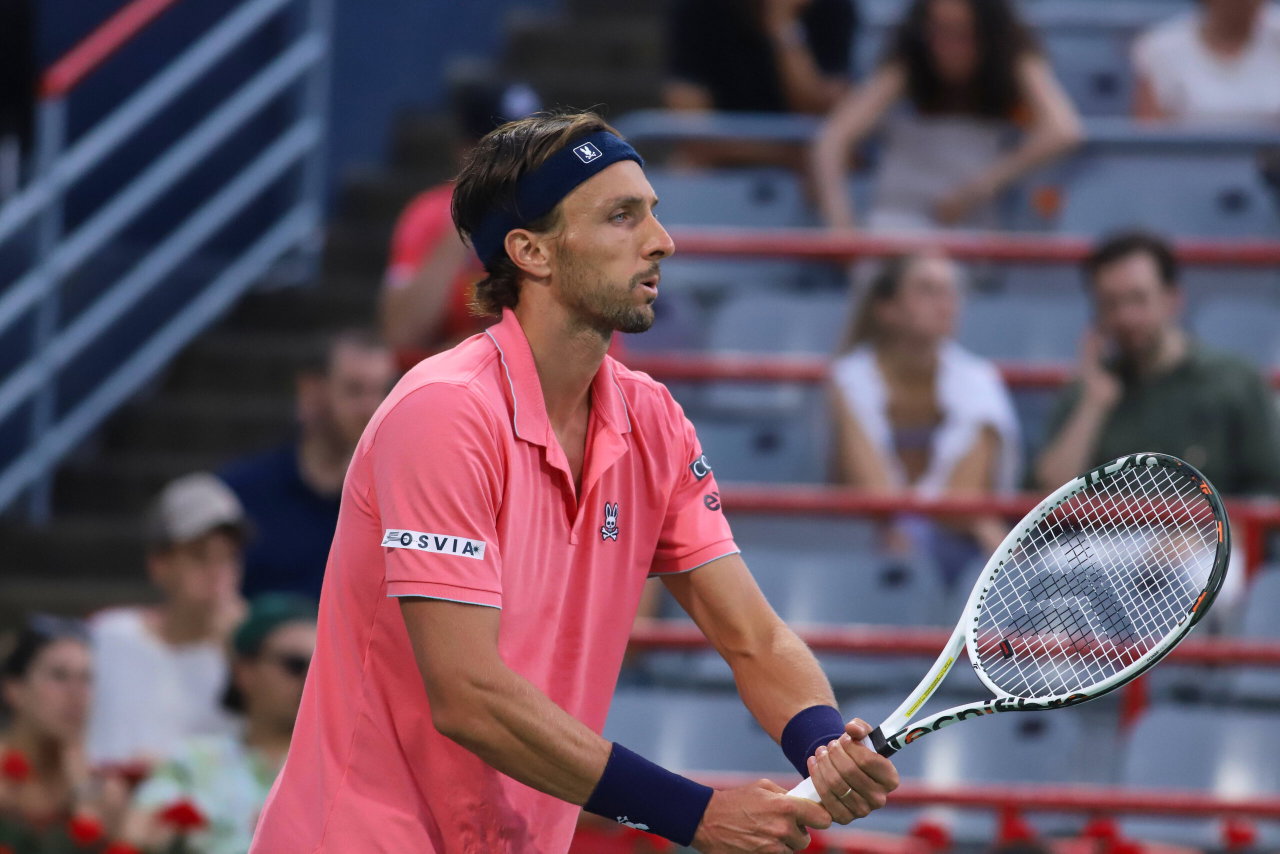
Arthur Rinderknech could be facing one of the most difficult moments of his tennis career, and the allegation against him does not involve a failed drug test. The Frenchman is at the center of an anti-doping investigation over an alleged refusal to provide a sample. He strongly disputes the claim and believes an independent tribunal will clear his name. However, the potential consequences are serious, with a four-year suspension on the table.
According to French newspaper L’Equipe, the incident happened in early June 2026 in Brittany. A doping control officer reportedly approached Rinderknech as he was leaving his home to catch a train. The interaction allegedly became complicated because of a misunderstanding during a conversation in English.
Reports suggest Rinderknech believed that leaving without providing a sample would count as a missed test rather than a refusal. He allegedly signed a document recording the refusal without fully understanding its consequences. These details have not been established by a tribunal, and Rinderknech has not publicly confirmed this account.
The 31-year-old reportedly became aware of the ITIA investigation in mid-September. He was allowed to continue competing because an alleged test refusal does not automatically trigger a provisional suspension. He played at the Paris Masters in November, where he lost to Ben Shelton in the fourth round.
Rinderknech responded to the allegations through an Instagram statement on November 25. He questioned how details of a case that the ITIA had reportedly told him would remain confidential reached the media. He also confirmed that he had requested an independent tribunal.
“I have already advised the ITIA that I deny the allegation, and I have already requested that the matter be heard and determined by an Independent Tribunal as is my right.”
He said he would present the full circumstances during the proceedings rather than discuss the allegations publicly.
“It is my belief that when the matter is presented to the Independent Tribunal I will be exonerated of the test refusal allegation.”
Rinderknech also insisted that he had never taken a banned substance and credited his professional achievements to hard work and integrity. Importantly, this is not a positive doping test. The case concerns an alleged refusal to provide a sample, which is treated as a separate anti-doping violation.
Under Article 2.3 of the 2026 Tennis Anti-Doping Programme, refusing or evading sample collection without compelling justification can constitute an anti-doping rule violation. Article 10.3.1 sets a four-year suspension as the starting sanction for a first offense. However, Article 10.3.1.1 allows that period to fall to two years if a player establishes that the failure to submit to sample collection was not intentional. That distinction could become crucial to Rinderknech’s defense.
Rinderknech is not the first tennis player to face a lengthy suspension over an alleged refusal to undergo an out-of-competition test. Marketa Vondrousova received a four-year ban in June 2026 after an independent tribunal ruled that she had refused a test at her home in December 2025.
The 2023 Wimbledon champion argued that the testing officer had not properly identified herself and raised concerns about her safety. She also cited personal and mental health difficulties. The tribunal did not accept her explanation and found that she had no compelling justification for refusing the test. Vondrousova appealed the decision to the Court of Arbitration for Sport in August.
There is a clear connection between the two cases: neither allegation involves a positive test, and both concern an out-of-competition sample collection. But the circumstances are not identical. Vondrousova’s tribunal has already ruled against her, whereas Rinderknech’s case remains unresolved. His reported misunderstanding and the question of intent could make a significant difference to the outcome.
The consequences could be substantial for both players. Vondrousova faces an enforced absence until June 2030 unless her appeal succeeds. Rinderknech, currently ranked No. 57 and a former world No. 24, could lose four years of his career if the maximum sanction is imposed. Even a reduced two-year suspension would represent a major interruption. For now, he has not been found guilty or suspended.
Arthur Rinderknech Also Faces a Coaching Change Ahead of 2027
The anti-doping investigation is not the only uncertainty surrounding Rinderknech’s immediate future. He has also ended his coaching partnership with former world No. 10 Lucas Pouille, who is preparing to return to professional tennis in 2027.
Pouille worked with Rinderknech for around 17 months, a period that included the Frenchman’s run to the 2025 Shanghai Masters final and his rise to a career-high ranking of No. 24. Pouille explained that he could not continue coaching Rinderknech properly and prepare his own comeback at the same time. He is targeting a return around March 2027 after dealing with Achilles and wrist injuries.
Rinderknech must now prepare for the next season without a coach who played a significant role in his career-best run. The coaching split is unrelated to the anti-doping investigation, but it adds another change to an already uncertain period for the Frenchman.
His immediate priority, however, will be presenting his case to the independent tribunal and challenging the allegation that could keep him away from tennis for years.