
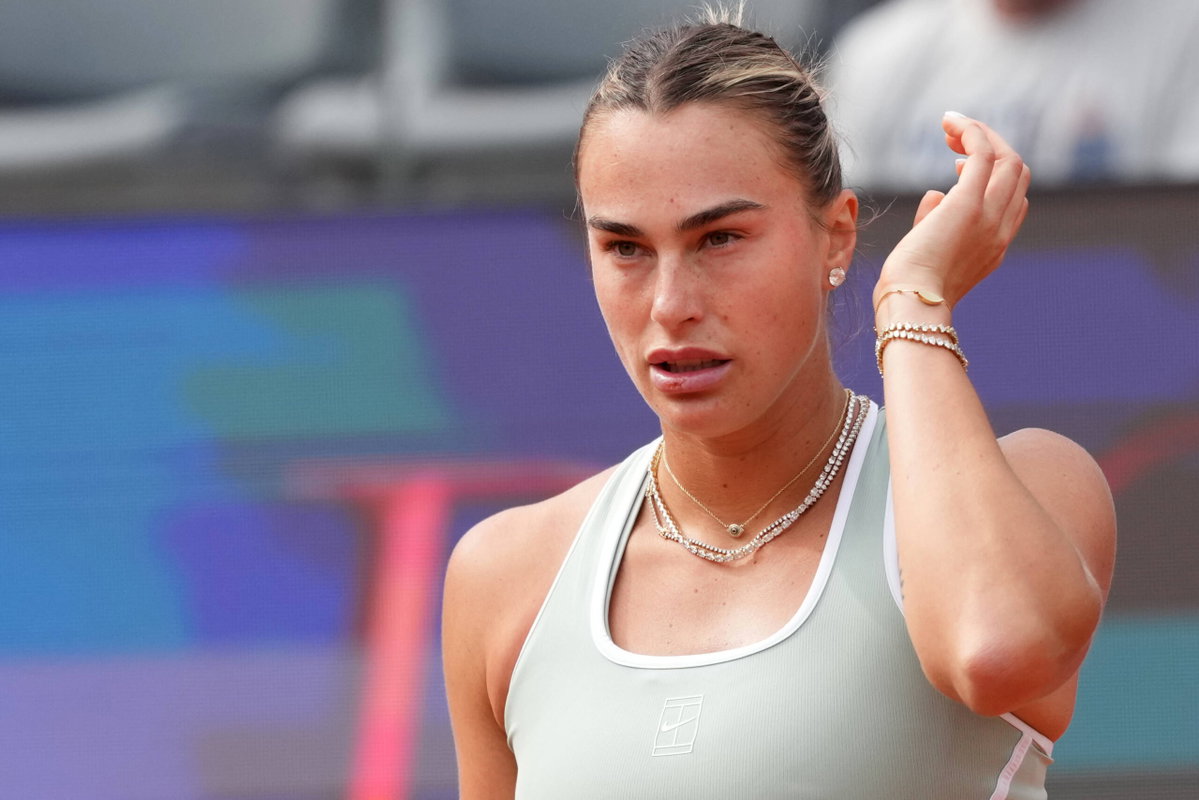
Aryna Sabalenka walked into her Roland Garros press conference on Friday with the clock already in mind. And before the first question was finished, the world No. 1 made one thing clear—this would not be a normal media session. She would be giving the room just 15 minutes. This was not because she wanted to avoid the questions but because the players wanted the tournaments to finally hear them.
Watch What’s Trending Now!
The world No. 1 was one of several others who cut their media appearances to 15 minutes due to a coordinated protest regarding prize money, player welfare, and representation at the Grand Slams. What’s even striking is how carefully she had structured the time. Ten minutes would go to the written press, and five minutes would be given to the World Feed broadcasters. And she meant it. Toward the end, Sabalenka glanced at her agent at the side of the room, who held up one finger and mouthed, “One more question.” And she went on to clarify why before she left!
“We just wanted to make our point, and we are united, and 15 minutes is better than zero, and I’m here to talk to you because I have my respect for you guys. I guess we just do 10 minutes here and five minutes for the World Feed. That’s it. And now it’s time for national language, and thank you so much for being here for asking questions. As I said a thousand times today, I have huge respect, but we know what’s happening here, so thank you so much.”
That final line almost felt like a mic drop, and honestly it does capture the mood around the sport. Plus, this protest was never really about the journalists. The real target was the group who were not sitting in that room. The Grand Slam executives and tournament officials are currently locked in a growing financial battle with the players. So, she made sure the crux of the issue came into the open. That this was not really all about her, or the journalists.
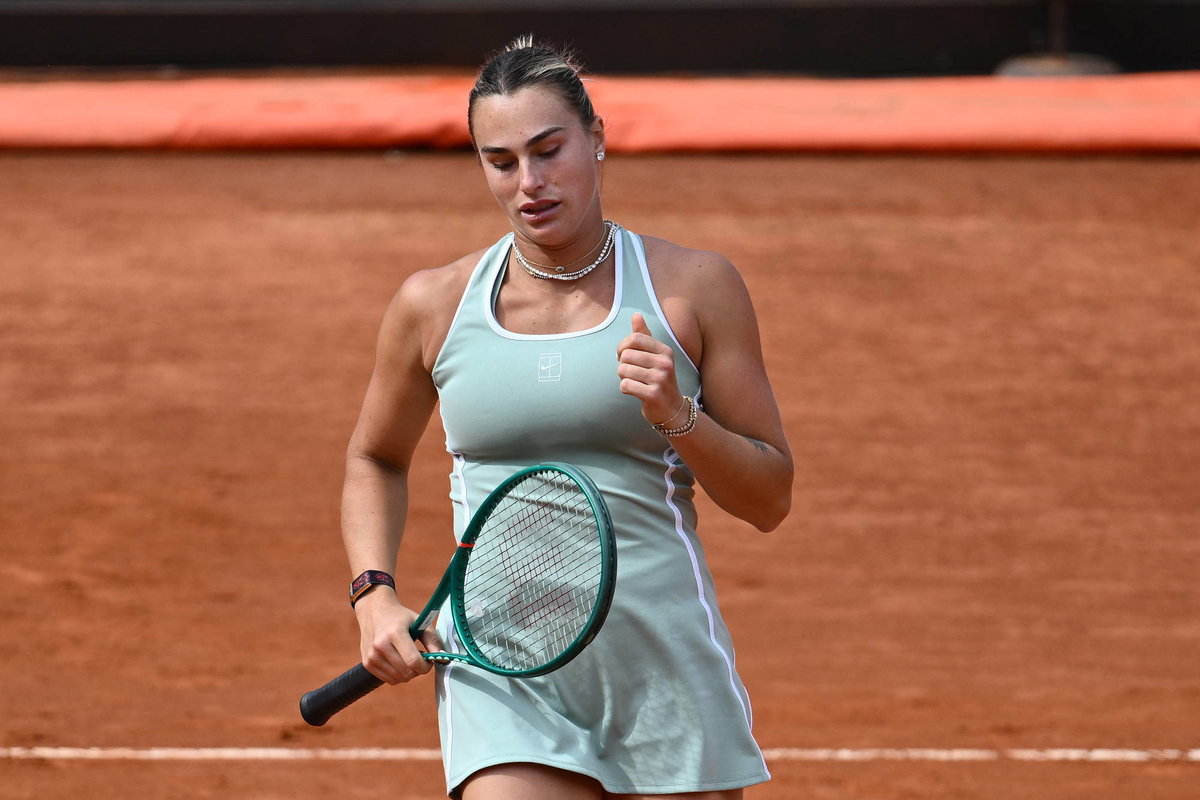
Imago
IPA84518710 – Aryna Sabalenka in action against Sorana Cirstea of Romania during the Internazionali BNL d Italia Day Four at Foro Italico on May 08, 2026 in Rome, Italy. PUBLICATIONxNOTxINxITA Copyright: xDomenicoxCippitelli/IPAxSportx/xx 84518710
“I feel like the whole point here is it’s not about me. It’s about the players who are lower in the ranking, who are suffering, and it’s not easy to live in this tennis world with that percentage that we are earning. But as the world No. 1, I feel like I have to stand up and fight for those players, for lower-level players, for players who are coming back after injuries, and for the upcoming generation. I feel like our point is pretty clear and pretty fair to everyone. That’s what we are all about,” Sabalenka said.
It’s a message Sabalenka has been consistent with throughout this dispute. Though she’s the world No. 1, despite having won four Grand Slams and earned more prize money than most of the players ever have, she’s consistently been talking about the players at the bottom of the structure, not the top. That framing is important because it makes it much more difficult for the tournaments to shrug off the protest as a bunch of rich, successful athletes demanding more.
The boycott she raised in Rome earlier this month has not gone away either. Asked about her suggestion that players could boycott the Slams to fight for their rights, she did not walk it back.
“I stand with my words. We wanted to do it in a respectful way at the beginning, and you guys know how much we respect you and we appreciate you. It’s not your decision; it’s not about you. It’s just we are trying to fight for a fair percentage.” In that context, the 15-minute protest is not the end of the road. It’s the start of what Sabalenka has previously said could escalate if the Slams don’t take any meaningful action.
It was a moment that showed something of the essence of Sabalenka’s game in this fight. Authoritative, clear, respectful, and firm. She does not want to offend the individuals who are in the room. She is on a mission with the one group of people who were not there: the tournament directors and Slam executives, who will read the coverage and know what the world No. 1 walked out of their press conference on a timer.
Meanwhile, the Belarusian will take the center court on Monday and start her French Open campaign against Jessica Bouzas Maneiro. The dispute goes much deeper than headline prize money numbers.
Why prize money at the Slams matters more than the headline numbers suggest
Tennis is one of the few global sports where athletes are responsible for nearly every major expense themselves. All coaching fees, physiotherapy, travel costs, accommodation, and equipment are paid by the player. Those costs are still not factored into the game, and players who aren’t in the top 50 hardly break even. Prize money is not a form of income.
If they don’t have the engine, then the majority of professionals are in trouble, and for those players in the vicinity of 200 in the world rankings, early round Grand Slam cash could just be the difference between a career that runs smoothly and one that slowly leaks money. This conflict’s welfare side is not what is really in the spotlight – but it’s certainly the most important one.
The ATP and WTA combined pay $80 million each year in players’ benefits, including pensions, maternity pay, and healthcare benefits. The Grand Slams contribute nothing to those funds. Players are therefore not simply asking for a bigger winner’s cheque at the end of a fortnight. They are asking the four richest events in the sport to share in the cost of sustaining the professional ecosystem that makes those events worth watching. Without a pension contribution from the Slams, players who spend their careers below the top 50 retire with whatever they managed to save from prize money after all those costs were deducted. That’s a small number for many.
The significant flash point this year is the 9.5% rise in prize money at the French Open, which the players worked out to be only 5.4% in real terms, against a 14% increase in revenue to €395 million. But Wimbledon’s response to the players’ demands deserves equal scrutiny. It provided the first 7% rise after the Paris talks last year, and was touted as a step forward. Compared to the recent history of Wimbledon, it was nothing. Wimbledon increased its prize money by 15.23% in 2022, 11.2% in 2023, and 14.9% in 2024. The tournament raised the prize money by 11.86% even in 2025, before the current controversy had fully blown itself up. In comparison to Wimbledon’s own standards over the past four years, the increase was very low. The last financial statement for Wimbledon shows that they have £406.5 million in revenue and £53.5 million in prize fund. Those numbers are well known to the players. That context reframes the entire dispute.
This is not a dispute over percentages in general. Will the four biggest events in tennis be prepared to invest in the long-term sustainability of the sport that makes them possible – or will they continue to leave the care of player welfare to someone else while their revenues keep climbing from year to year? Sabalenka’s 15 minutes on Friday was a straight answer to that question, one that will be heard in the only language the tournaments are promised.