
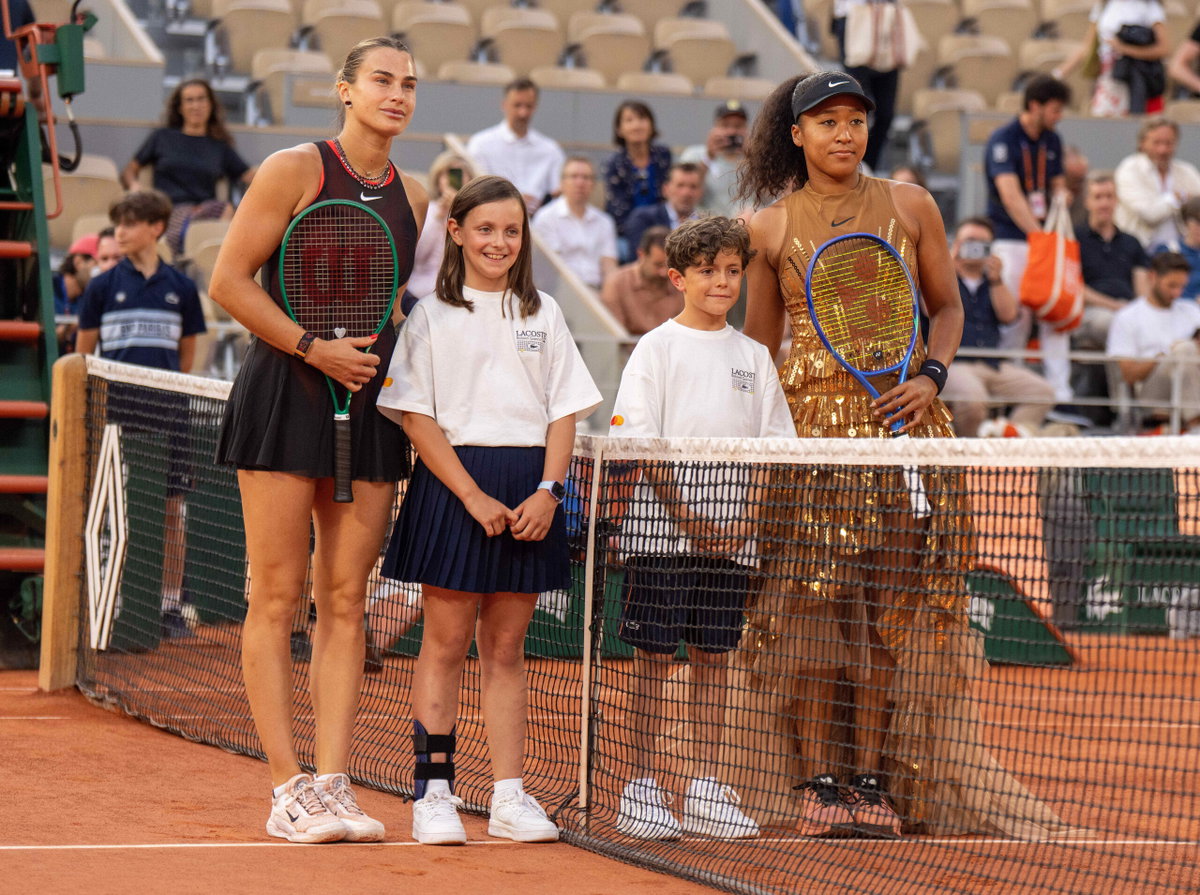
Since night sessions arrived at the French Open five years ago, tournament organisers have stood firm despite growing criticism over the lack of women’s matches in the spotlight slot. The last WTA night-session encounter came in 2023 between Aryna Sabalenka and Sloane Stephens, leaving many questioning the tournament’s direction. But after Sabalenka and Naomi Osaka lit up the Paris night with a blockbuster clash yesterday, both the WTA players believe a new chapter may finally be beginning for women’s tennis.
Watch What’s Trending Now!
“I think it’s really important that they put our match today as a night session,” Sabalenka said in her post match press conference yesterday. “I think that’s the right move. I think the atmosphere and the attention that this match brought gonna show them that probably for the future they should consider putting at least sometimes woman matches at night.”
The current world No. 1 believed that the match inside Court Philippe-Chatrier proved exactly why women deserve more opportunities in the tournament’s showcase slot. Continuing her thoughts, the Belarusian added, “So I hope that this is the beginning, today’s match. It’s like we open up that door for woman night sessions.”
Even after securing victory against Naomi after one hour and 27 minutes, Sabalenka admitted she would love to experience more night-session matches in Paris. “I really want to keep going but who knows, right? But thank you so much for bringing such an amazing atmosphere. You guys truly make this place special. Thank you,” she added.
Naomi Osaka, the former world No. 1 shared a similar feeling after the match. The 28-year-old appreciated the opportunity and hoped it would not remain a one-off occasion. “I’m honoured the tournament chose us to play in this slot and I hope going forward they continue to do so.”
Under the lights on Monday evening, Sabalenka and Osaka delivered exactly the kind of spectacle many had been asking for in the WTA night session match. The quality of tennis on display highlighted the depth, strength, and star power currently present on the WTA Tour.
Sabalenka eventually took control of the contest at the end and secured a 7-5, 6-3 victory. The scoreline suggested a straight-sets win, however, the match still offered plenty of entertainment throughout.
Inside Chatrier, nearly 15,000 spectators packed the stands, with the venue operating close to full capacity apart from some empty seats. Very few seemed disappointed by the result or felt they had not received value for their hard-earned money.
Beyond the game itself, both players brought a unique sense of showmanship to the occasion. The Japanese ace arrived in another haute couture outfit, wearing a sparkly Eiffel Tower-inspired dress that would not have looked out of place at Paris Fashion Week.
Meanwhile, Aryna Sabalenka delighted the crowd by performing the moonwalk during her on-court victory speech after the match.
And while the long-awaited women’s night session finally became reality after years of debate among the tennis fraternity, tournament officials continue to face scrutiny for their repeated reluctance to feature more women’s matches in the prestigious evening slot.
How French Open officials faced rigorous scrutiny over limited WTA night-session matches
Since the night sessions introduced in 2021, the French Open has repeatedly faced questions over its scheduling choices. Each of the last 33 primetime sessions at night, designed to attract the largest possible audience across France, Europe, and the US, had been given to men’s matches.
The clash between Aryna Sabalenka and Naomi Osaka marked an important moment in this scenario. It was only the 5th women’s match to be featured in 61 night sessions since the format was introduced.
For several years, the FFT and tournament organizers have been scrutinized for their reluctance to place women’s matches in the prestigious evening slot. Even several WTA players openly voiced their frustration over the policy.
Among the strongest critics was Ons Jabeur. “I hope whoever is making the decision, I don’t think they have daughters, because I don’t think they want to treat their daughters like this,” Jabeur said last year.
She later added, “It’s a bit ironic. They don’t show women’s sport, they don’t show women’s tennis, and then they ask the question, yeah, but mostly they (viewers) watch men. Of course they watch men more because you show men more. Everything goes together.”
On the other side of the debate stood the current tournament director Amélie Mauresmo, who has often explained the reasoning behind the selections. Mauresmo has regularly pointed to the possibility of shorter two-set matches in the women’s game, which has happened yesterday.
“The match-ups are always interesting for both men and women, but there are multiple factors for us to make the choice,” Mauresmo said. “As you know, the potential length of the matches is something that we are also looking at.”
When discussing the decision to schedule the match between Sabalenka against Osaka in the night session, she left little doubt about her view. “It was obvious that it should be a night match tonight.”
Ironically, the fourth-round match eventually finished in straight sets, although it still delivered a high-quality battle and strong entertainment value.
With players, fans, and even tournament officials now acknowledging the appeal of such contests, the question remains whether FFT will finally open the door to more women’s night-session matches in the years ahead.