
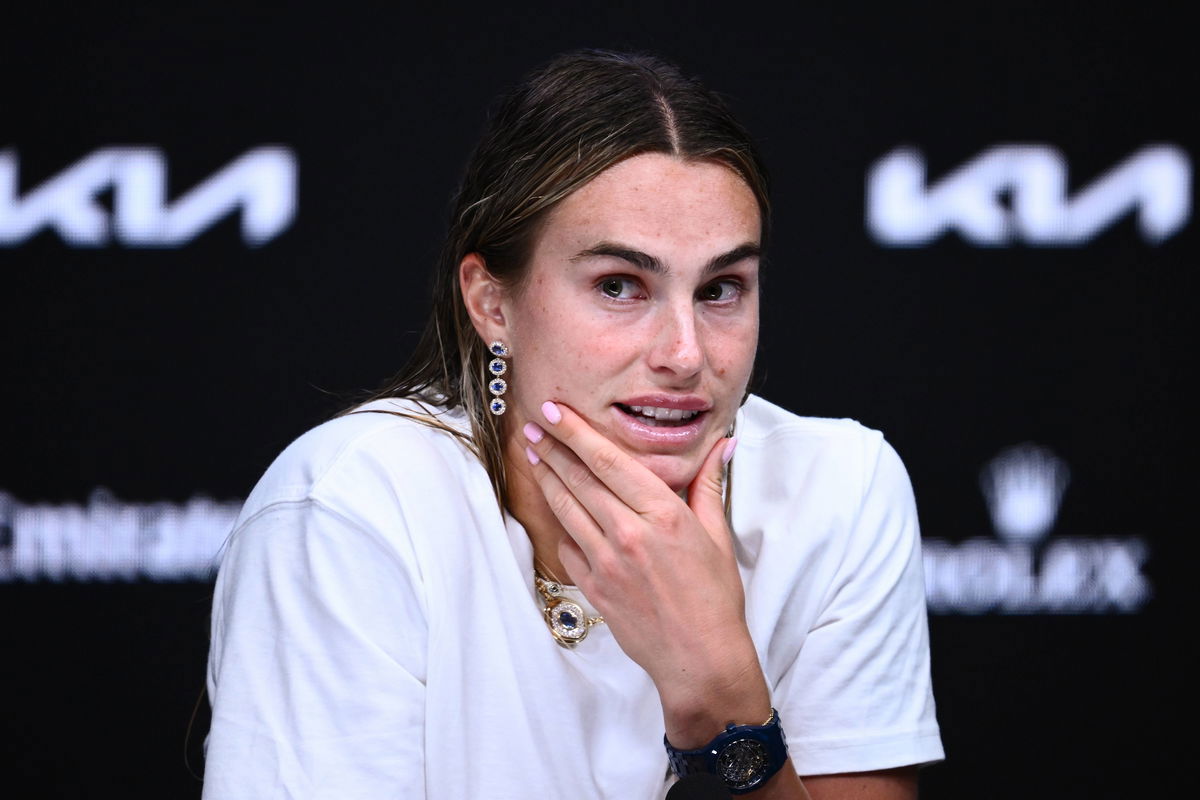
Aryna Sabalenka steamrolled past Naomi Osaka in the Indian Wells WTA 1000 round of 16, showcasing world number one dominance with a commanding 6-2, 6-4 victory. She played at a breathtakingly high level, leaving no doubt about her unstoppable form. However, after the match, she expressed her satisfaction with the existing economic equality that carries the WTA side of tennis.
Watch What’s Trending Now!
“I feel like we’re on the right path, we’re moving towards right direction. We’re being treated equally, we’re paid equal,” she said when asked about gender equality and equal prize money in 2026. “Overall, I feel like woman’s sport, in general, improved in growth more, and I feel like we’re going towards right direction.
“Well, me personally, I’m happy with most of the things, even like scheduling, and, I mean, prize money and all of that stuff. I would probably do a little bit better job on promoting our sport.”
“I’m impressed — not impressed, but I love the way ATP promotes and how the marketing for ATP works. I feel like this is the gap where we can improve and bring more attention and more eyes on women’s tennis.” she added.
Imago
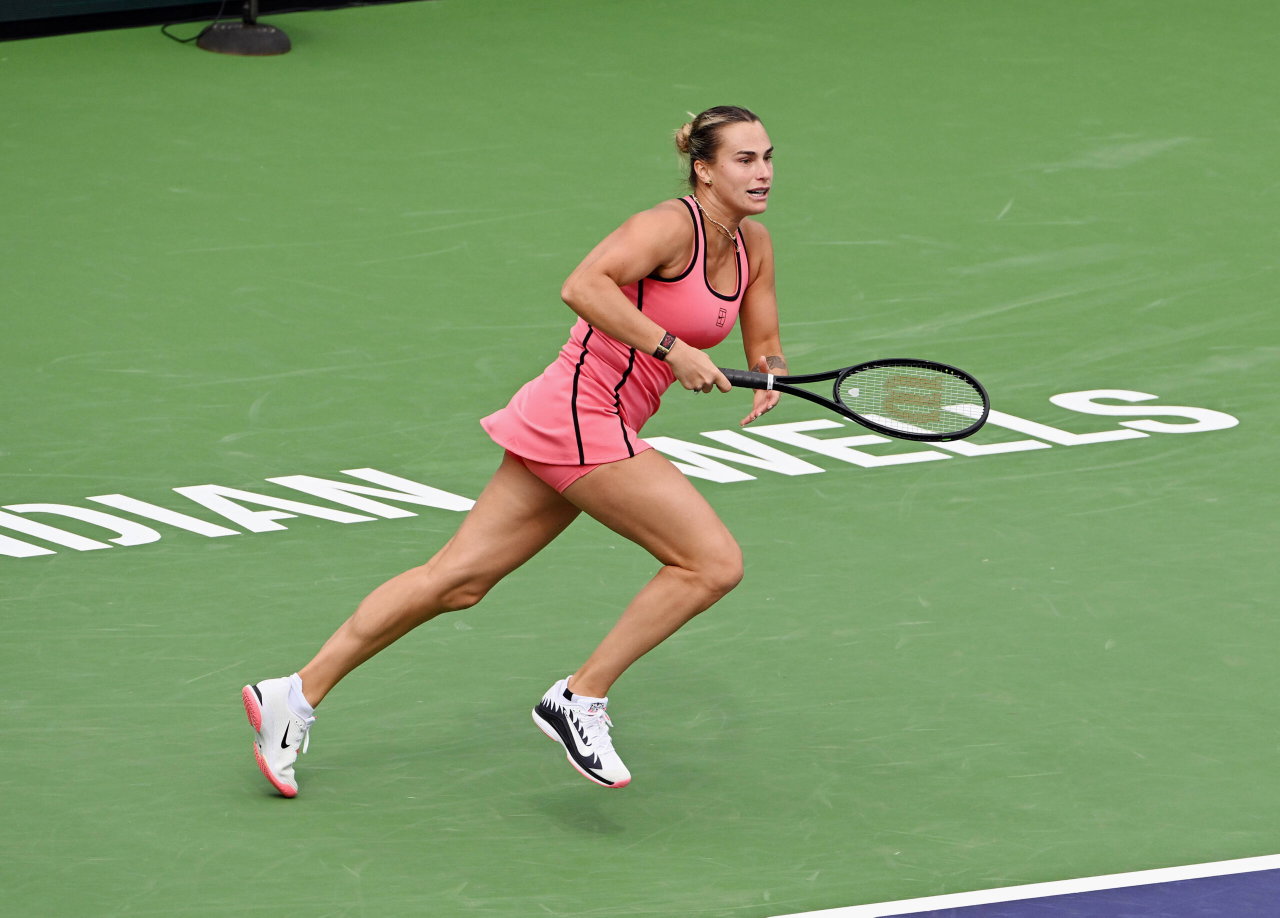
INDIAN WELLS, CA – MARCH 06: Aryna Sabalenka RUS heads for the ball during a WTA, Tennis Damen tennis match during the BNP Paribas Open played on March 6, 2026 at the Indian Wells Tennis Garden in Indian Wells, CA. Photo by John Cordes/Icon Sportswire TENNIS: MAR 06 BNP Paribas Open EDITORIAL USE ONLY Icon506260306035
In June 2023, the WTA announced that all combined 1000- and 500-level events will offer equal prize money by 2027. All non-combined 1000- and 500-level events will do so by 2033.
Earlier in March of the same year, private equity firm CVC Capital Partners invested $150 million. WTA president Micky Lawler told FOS this will help “accelerate” the tour’s plans to build out its media product and offer equal pay.
Even at Indian Wells this year, a total prize pool of US$9.42 million is available. Both men’s and women’s winners get $1.15 million. This is now streamlining the equal pay concept.
However, not everyone shares Sabalenka’s satisfaction, as some players are still not fully satisfied with gender equality in tennis.
Iga Swiatek hints player requests may still face inequality
Iga Swiatek lost to Maria Sakkari in Doha last month. She got revenge in Indian Wells, beating Sakkari 6-3, 6-2. Later, at the post-match press conference, Swiatek, who had expressed dissatisfaction with scheduling at this year’s AO, said she was happy with how women’s tennis players are treated.
However, she suggested that ATP players might receive more preferential treatment for schedule requests.

Imago
WUHAN, CHINA – OCTOBER 07: Iga Swiatek of Poland reacts in the Women s Singles Round of 32 match against Marie Bouzkova of the Czech Republic on day 4 of 2025 Wuhan Open at Optics Valley International Tennis Center on October 7, 2025 in Wuhan, Hubei Province of China. PUBLICATIONxNOTxINxCHN Copyright: xVCGx 111595739070
“Honestly, I don’t look at the schedule from this perspective, because, for example, for you guys, you can say that, ‘Oh, night session is the best match to play, but I want to play day session,’” Swiatek explained when asked about inequality between men’s and women’s tennis.
“So, like, if it’s not equal and I’m getting day session, I’ll be fine with it (smiling). So I really didn’t analyze it from this perspective, because I never felt the need to. You kind of just see the schedule and you go with it. Also, sometimes I don’t even know when other players are going or guys, so…”
Novak Djokovic was asked a similar question after his win over Aleksandar Kovacevic at Indian Wells.
He replied, “Well, it’s not what I think. It’s the fact. Women’s tennis has been by far the most successful, I guess, global woman’s sport and also most paid, so it’s great to see that. I’m happy for that, and I’m proud of that. I think it’s in a good place.”
As the tour moves toward the Miami Open, Indian Wells is approaching its final stages. Quarterfinals are rolling, and gender equality remains a key topic.
Players continue making strides toward the semifinals, keeping the conversation alive in tennis.