
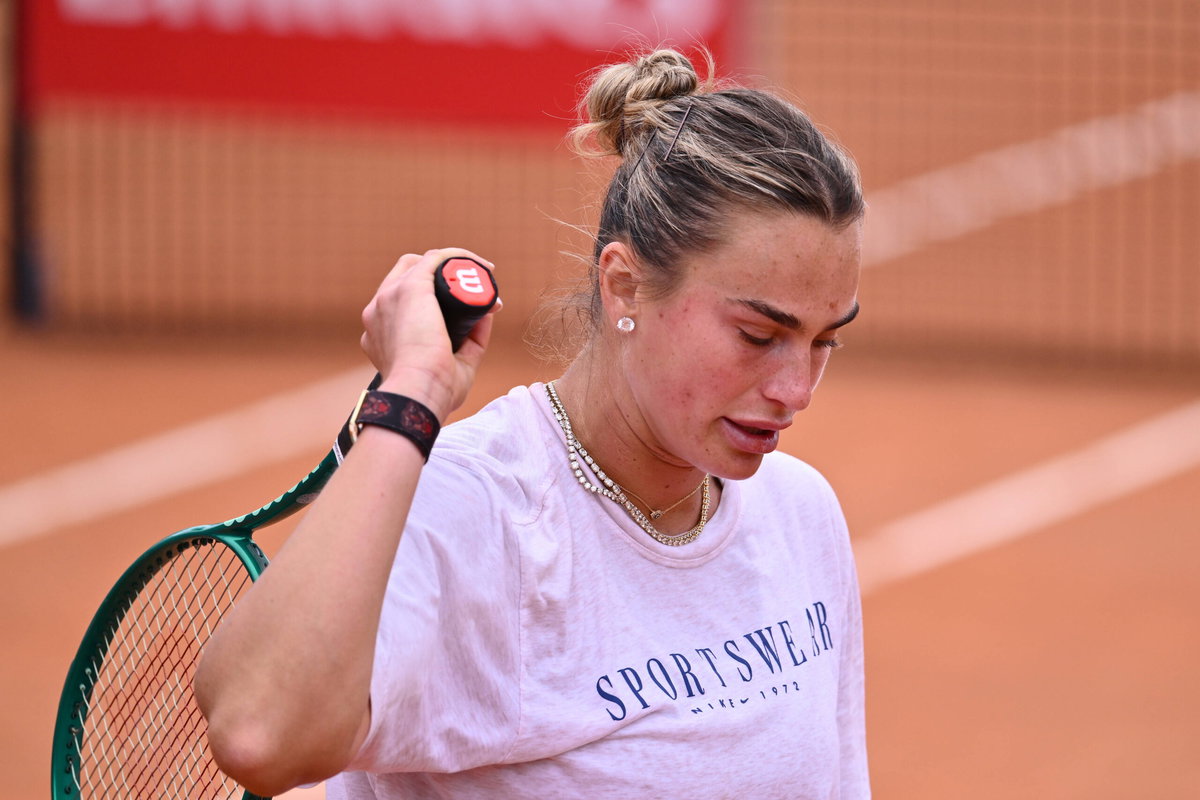
One fine day, a simple drive with her father changed the course of Aryna Sabalenka’s life forever. When six-year-old Aryna passed by a set of tennis courts, curiosity made her stop, and her father, Sergey Sabalenka, handed her a racquet just for fun. Neither of them could have known that moment would become the beginning of her journey to World No. 1.
Watch What’s Trending Now!
But the climb to the top was anything but simple. For years, Aryna Sabalenka battled through chaos at the summit of women’s tennis.
Revisiting those darkest moments of her life, the Belarusian has made some honest confessions in an emotional interview with Vogue. From nearly walking away from tennis to enduring heartbreaking personal loss, here’s the untold story of the World No. 1.
1. Aryna Sabalenka reflects emotionally on difficult childhood struggles
Like many elite athletes, Sabalenka began her journey as a child overflowing with energy and searching for direction. Born and raised in Minsk, the capital of Belarus, she picked up a tennis racket for the first time at six years old.
Her father, Sergey Sabalenka, had once dreamed of becoming a professional hockey player before a near-fatal motorcycle accident shattered those ambitions. After that setback, he built a successful car-repair business to support the family.
Sabalenka’s mother did not work professionally, but education remained deeply important in their household. She held two university degrees and always made sure her daughters focused seriously on their studies.
As the Belarusian grew older, she slowly began understanding the difficult side of life inside her family. By the age of 13, she had already witnessed her father facing repeated struggles in his career.
View this post on Instagram
Despite the hardships, his determination left a powerful mark on her. Sabalenka admitted that she “watched him struggle many times in his career but always got up.”
The bond between father and daughter became especially strong through those difficult years. It is clear that Sabalenka saw herself in his fighting spirit and learned resilience directly from him.
Still, he was never one of those harsh and controlling tennis parents often seen in the sport. Instead of forcing success, he supported his daughter with pride and quiet encouragement.
There was also a difficult phase when Sabalenka nearly walked away from tennis completely. At nine years old, she no longer felt the same love for the game and seriously considered quitting.
Looking back on that moment, she confessed, “There was a period when I was probably nine when I was close to giving up. But I saw how proud my dad was of me, and I didn’t want to disappoint him. And then I fell in love again with the sport, much more than before.”
2. Aryna Sabalenka’s late arrival to pro circuit
Aryna Sabalenka was never considered a true late bloomer, but her rise in tennis came far differently from many players of her generation. Unlike several young stars who were pushed into the professional circuit at just 15 years old, Sabalenka’s journey moved at a slower and more uncertain pace.
She did not win her first main-draw match on the WTA Tour until she was 19 years old at Wimbledon. During those early years, Belarus also lacked the powerful state-backed tennis systems seen in countries like China, Russia, and France.
Because of that, Sabalenka often struggled to find stable coaching and proper development opportunities. The lack of consistent guidance made her path far more difficult than that of many of her competitors on tour.
Even worse, several coaches openly doubted her abilities and dismissed her potential from a young age. Sabalenka still remembers the harsh criticism she constantly received while trying to build her career.
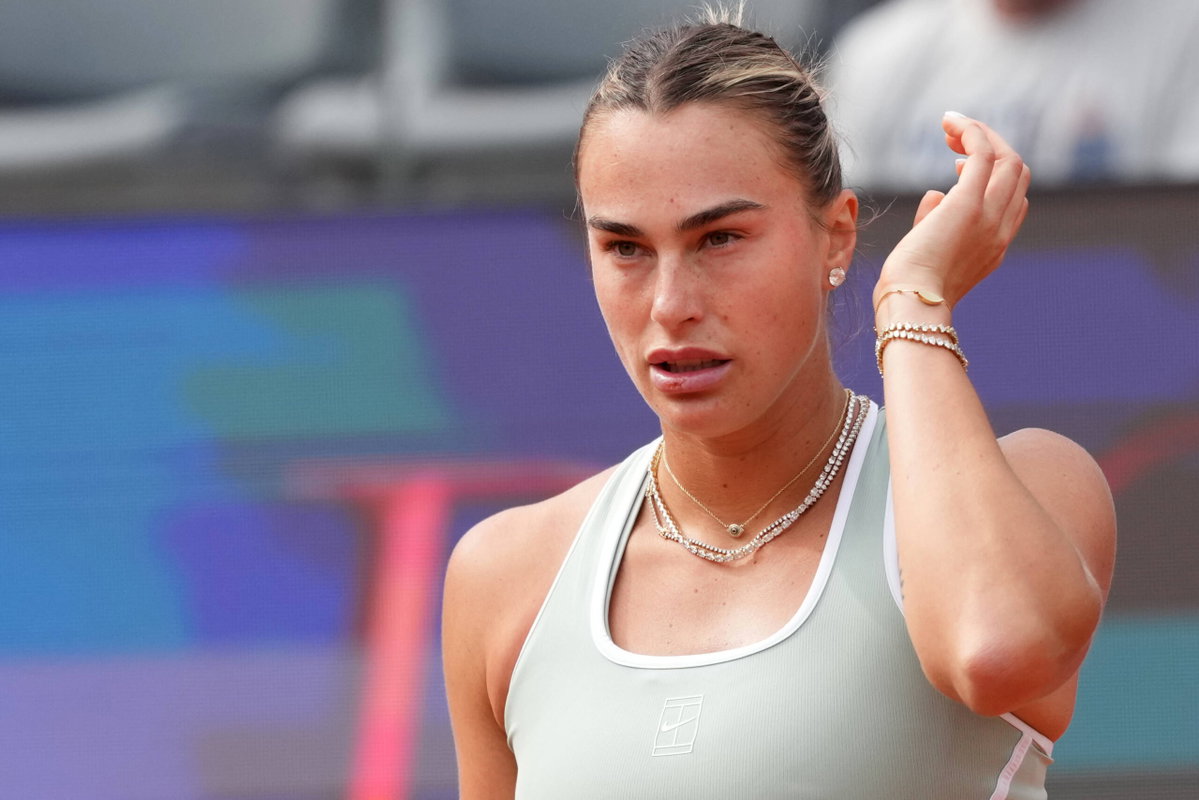
Imago
Aryna Sabalenka of Belarus during the match against Sorana-Mihaela Cirstea of Romania at the Internazionali BNL d Italia 2026 tennis tournament at Foro Italico in Rome Italy on May, 9, 2026. AntoniettaxBaldassarre
Recalling those painful experiences, she said, “So many coaches told me that I was stupid, and that the only thing I could do was overhit the ball—that I would never reach the top 100.” Those words stayed with her for years.
Everything slowly began to change when Belarusian businessman Alexander Shakutin noticed her talent. He believed in her potential early and decided to provide financial support at a crucial point in her development.
It was only during her mid-teen years that Sabalenka truly decided she wanted to pursue tennis professionally. Unlike most elite prospects, she never competed in junior Grand Slam tournaments and instead focused entirely on senior-level events from the age of 17.
Over time, Sabalenka and Shakutin no longer remained professionally connected. In recent years, he has also faced major controversy because of his links to Belarusian president Alexander Lukashenko and sanctions imposed by the European Union.
Despite all of that, Sabalenka still speaks with gratitude about the role he played in her early career. “He was the one who really believed in me. There were other people who believed in me, but he was the one who helped me.”
3. Aryna Sabalenka confronts emotional struggles that sometimes make her appear villainous
Even though Aryna Sabalenka worked with a psychologist between the ages of 18 and 24, she still openly admits that emotional control remains an ongoing battle in her life and career. Those years of therapy became deeply important for her personal growth.
The experience helped Sabalenka develop techniques to manage pressure and regulate her emotions during difficult moments on court. More importantly, it taught her how to calm herself mentally when matches started slipping away emotionally.
Still, Sabalenka has never claimed to be completely in control of herself. She openly describes herself as a “work in progress,” especially while carrying the pressure of being the undisputed world number one.
Although she held the top ranking throughout all 52 weeks of the 2025 season, the year was also marked by dramatic, highly publicised emotional incidents. At times, it seemed as though she was struggling to fully adjust to the expectations attached to leading women’s tennis.
One of the biggest moments came during the Australian Open final in January. Just moments before the trophy ceremony honouring Madison Keys, Sabalenka smashed her racket on court in frustration after losing the match.
A few months later, after losing the French Open final to Coco Gauff in June, Sabalenka again drew attention for her emotional comments during the press conference. She told reporters that the American “won the match not because she played incredibly, just because I made all of those mistakes from…easy balls.”
Her frustrations continued later in the season during the Wuhan Open in October. While losing a semifinal match against Jessica Pegula, Sabalenka angrily threw her racket, and it bounced dangerously close to a ball kid.
The chair umpire immediately issued her a warning for “racket abuse.” Looking back at her younger years on tour, Sabalenka admitted she had serious problems controlling her emotions during matches and often lost composure completely.
Reflecting honestly on those struggles, she said, “I would get super emotional all the time. I was, like, under zero control. I could lead the match, then be super crazy and let it go. I knew that I had a problem.” Her emotional reactions were not limited only to losses, either.
During the Miami Open final against Gauff in March, a spectator shouted “out!” in the middle of a point. Frustrated by the interruption, Sabalenka yelled “shut up!” toward the crowd and later received an obscenity warning from the umpire, despite eventually winning the title.
Even with those emotional outbursts, Sabalenka does not believe players should completely suppress their feelings. Later, while dressed in a Gucci dress, heels, and wearing her own ring, she explained her perspective clearly: “It’s okay to throw the racket. It’s okay to yell. It’s okay to go nuts. Sometimes you just need to let it go…so you’re ready to start over and play the match.”
4. Aryna Sabalenka speaks brutally honestly about abusive hate messages on social media
In today’s social media era, online abuse has become a growing problem across professional tennis. Many players regularly face cruel comments, threats, and personal attacks from angry fans and gamblers after matches.
Bettors, in particular, often direct frustration toward players when their bets fail because of an unexpected result. Instead of accepting the loss, some take their anger online and attack athletes personally.
German player Eva Lys experienced this kind of abuse after losing to Coco Gauff at the China Open. The backlash once again highlighted how toxic online reactions in tennis have become.
Jessica Pegula also spoke publicly about the abusive messages she received after her fourth-round defeat to Lois Boisson at the French Open. Pegula later admitted that she hoped WTA organisers would take stronger action against the issue.
Even Iga Swiatek became another recent victim after her shocking fourth-round exit at the China Open. The repeated incidents have shown that no top player is completely protected from online hostility.
For Sabalenka, the experience has been both disturbing and emotionally difficult to understand. She admitted that it still shocks her how much hatred some strangers can carry toward athletes they have never even met.
Speaking honestly about the situation, Sabalenka said, “With a lot of love and a lot of attention and a lot of success, there’s always gonna be people who judge you.” She explained that people criticise everything from her appearance and grunting to her nationality, private life, and personal choices.
Although she tries not to spend too much time reading comments online, certain messages still affect her deeply. “I don’t scroll a lot, but sometimes I’ll see random comments on Instagram, TikTok, and Threads, and I’ll ask my manager, ‘Do people really hate me that much?’ Then I go into the stadium, and I feel so much support, and I realize that on the internet, it’s so few people, but it’s so loud.”
Sabalenka also revealed how disturbing some of the messages can become once she checks the profiles behind them. “Sometimes it’s a fake account, and I think, you don’t even have the b*lls to show your face? Or sometimes you click on the profile, and you see it’s a mother with three kids, a happy family living a very conventional, perfect life. And the stuff that she’s messaging you, it’s ‘I want you to die, I want your family to have cancer, you’re a wh*re.’ And I think: There’s something wrong with this planet.”
5. How did Aryna Sabalenka cope with her father’s devastating death?
In 2019, when Aryna Sabalenka was only 21 years old, her life changed forever after the sudden death of her father from meningitis. The tragedy happened during the offseason while she was training in Minsk.
Sabalenka recalls the days before his passing with painful clarity. On the first day, he became seriously ill, and her mother called an ambulance to help him at home.
However, according to Sabalenka, the medics only reduced his fever and decided not to take him to the hospital. The next day, another ambulance arrived, but the same thing happened again.
Watching her father’s condition worsen left Sabalenka terrified and frustrated. Recalling the moment, she said, “I was like, let me fu*king carry him to the hospital myself if the ambulance isn’t taking him.”
By the third day, the ambulance finally took him to the hospital, but it was already too late. The loss devastated the entire family and completely shattered the emotional foundation of their lives.
The Belarusian admitted that the pain was especially difficult for her mother to endure. At the same time, she later realized how deeply her sister had suffered as well because both daughters shared an incredibly close bond with their father.
Looking back, she explained, “They took him on the third day, and it was too late. It was even harder for my mom. And I didn’t realize until later how much my sister suffered.”
Although she has grown much closer to her mother over recent years, her father had always been the central pillar in her life. After his death, tennis training became the only thing that briefly distracted her from overwhelming grief.
“People say that time helps, but in some ways I struggle more now because I know how much fun my dad would be having with my success,” she says.
Sabalenka once also revealed that she and her father once made a heartfelt pact that she would win two Grand Slam titles before turning 25, a story later shared in the Netflix series Break Point.
Even today, the grief still hits unexpectedly. “Nowadays, my fiancé will find me crying in bed in the evening because I’m watching Reels and there’s something about a father, or old times. The most sensitive videos for me are when I see people posting a family reaction to their kid athlete winning something, and I just imagine how my dad would react to me. I’m crying like crazy, like I just lost him.”
6. Aryna Sabalenka opens up about grieving her late ex-boyfriend
Aryna Sabalenka made her relationship with former professional hockey player Konstantin Koltsov public in June 2021. Their relationship remained in the spotlight until tragedy struck in March 2024.
On March 18, 2024, Sabalenka was practising on the tennis courts in Miami when police officers approached her with devastating news. They informed her about the apparent su*cide of Koltsov, leaving her completely shocked and emotionally shattered.
Miami had become one of the closest places Sabalenka considered home because of the amount of time she spent there training and competing. Learning about Koltsov’s death on those same practice courts made the moment even more painful for her.
Recalling the traumatic experience, Sabalenka admitted she could not immediately process what the police were telling her. “I was fighting with the cop—like, I couldn’t accept it,” she remembers.
As she had done during other painful moments in life, Sabalenka once again tried to bury herself in tennis. Only a few days after the tragedy, she returned to competition at the Miami Open despite still struggling emotionally.
However, the pain clearly followed her onto the court. She eventually lost in the third round to Anhelina Kalinina, and her frustration became visible as she smashed her racket after the defeat.
Following the loss, Sabalenka also decided to cancel her scheduled press conference. The emotional weight of everything happening around her had become too overwhelming to handle publicly in that moment.
Even after dealing with such personal heartbreak, Sabalenka still faced criticism online for returning to competition so quickly. Some people questioned her decision to play tennis only days after Koltsov’s death.
Responding honestly to the criticism, she explained, “I don’t know if there’s any cliché about how you’re supposed to grieve. I feel like in this situation, there is no right or wrong. We all need different things. For me, going back to work is the only way. I’m 28, but sometimes I think I’ve had everything in life that you could imagine.”
Now, Sabalenka has once again turned pain into motivation during another dominant season on the WTA Tour. Since the beginning of the year, she has collected 27 wins and only 3 losses while winning three titles, including Indian Wells and Miami during the Sunshine Swing in March.
Despite an inconsistent clay-court season so far, the Belarusian now heads toward the French Open determined to finally capture her first title in Paris this year.