
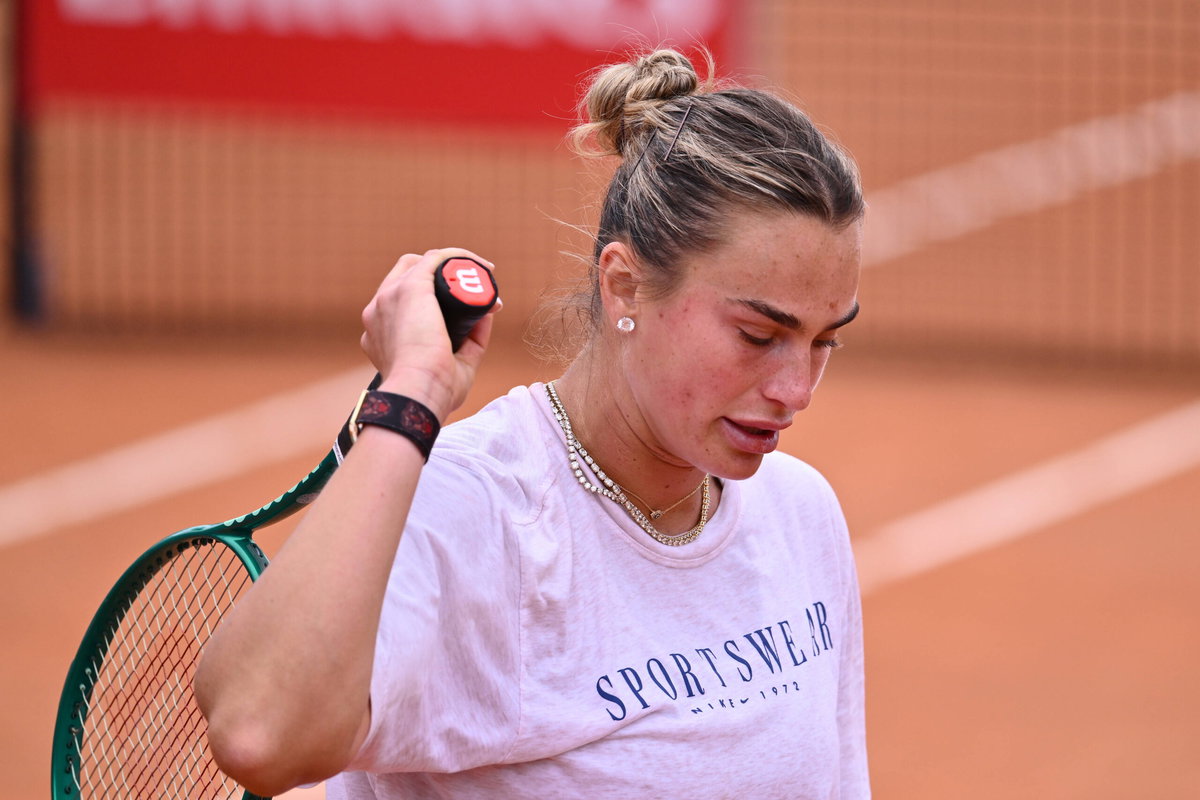
“I have to keep fighting no matter what.” That’s how Aryna Sabalenka once explained the meaning behind the tiger tattoo she proudly wears on her arm, and it pretty much sums up who she is. The World No. 1 has never been one to stay quiet, especially when something doesn’t sit right with her. So when questions came up around gaps in the French Open prize money structure, she didn’t hold back. This time, she spoke up loud and clear, and made it known that it’s something that can’t just be brushed aside.
Watch What’s Trending Now!
Ever since the revised Roland Garros Prize Money structure came to light, Aryna Sabalenka and Jannik Sinner led a powerful player revolt, and issued a statement expressing “deep disappointment.” Beyond pay, they are demanding fair representation, stronger health support, and pensions from all Grand Slams. Yet despite a recent prize money increase, frustration is intensifying, with Sabalenka even hinting at a potential boycott.
“I think at some point we will boycott it, yeah,” said the Belarusian during her pre-tournament press conference at the Italian Open. Her statement immediately signaled how serious the situation has become, especially among top-ranked players who feel their concerns are not being addressed.
“I feel like that’s going to be the only way to fight for our rights,” she added, making it clear that stronger action may be inevitable.
Her comments come after a group of the top 20 male and female players released a statement criticising the prize money levels offered at the French Open, which begins this month.
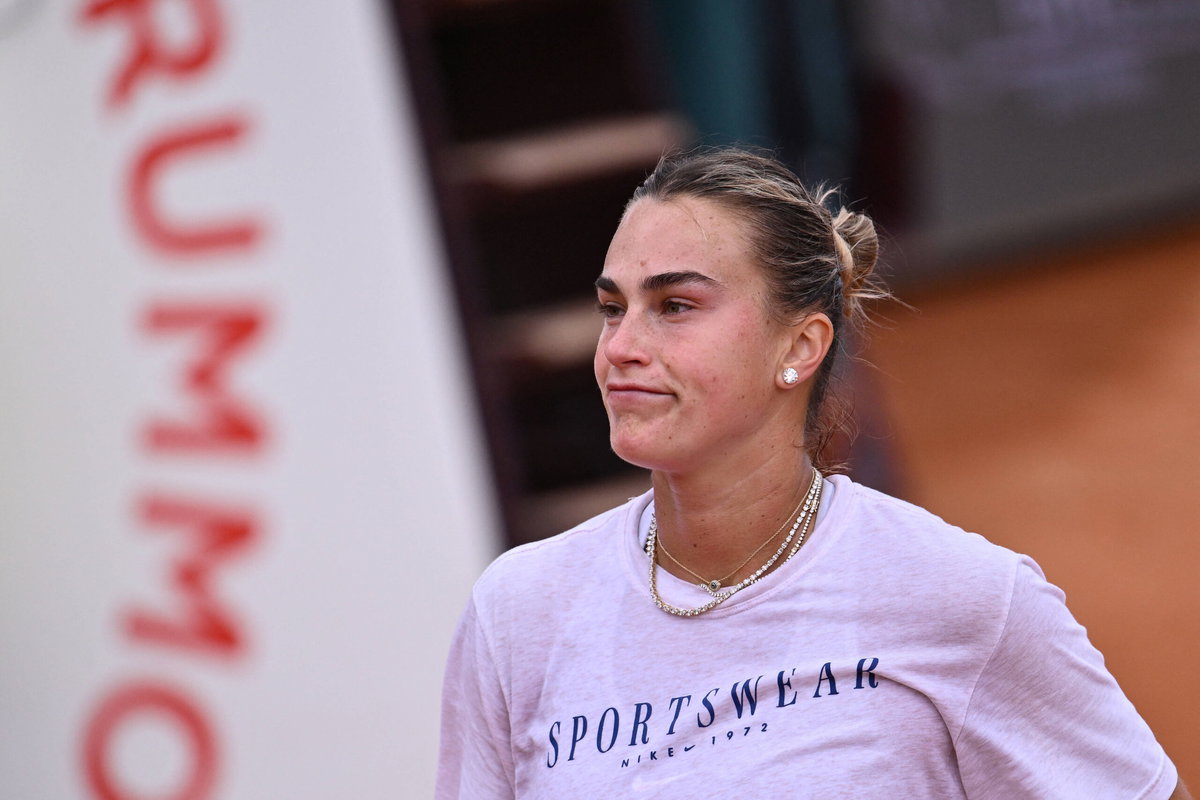
Imago
TENNIS – Internazionali di Tennis – Internazionali BNL d Italia Aryna Sabalenka in action during a training session ahead of the Internazionali BNL d Italia Day One at Foro Italico on May 5, 2026 in Rome, Italy. Rome Italy PUBLICATIONxNOTxINxFRAxUK Copyright: xIPAxSport/ABACAx
The 28-year-old argued that players should be better compensated, especially considering their central role in driving the sport’s popularity and financial success. “Definitely when you see the number, and you see the amount the players [are] receiving … I feel like the show is on us,” Sabalenka said.
She continued to stress the imbalance, pointing out how much tournaments depend on player participation to create value and global interest. “I feel like without us there wouldn’t be a tournament and there wouldn’t be that entertainment,” she said.
“I feel like definitely we deserve to be paid more percentage. What can I say? I just really hope that all of the negotiation that we are having, we at some point are going to get to the right decision, to the conclusion that everyone will be happy with.”
Sabalenka remains confident that players can unite on the issue and push for change. “Let’s see how far we can get,” she said. “If it’s going to take players for boycott. I feel like nowadays, we girls can easily get together and go for this because some of the things I feel like it’s really unfair to the players. I think at some point it’s going to get to this.”
Support for her stance is growing, with Coco Gauff, the current world No. 4, openly agreeing that a boycott might be necessary to push for meaningful change. “I kind of agree with that,” Gauff said of Sabalenka’s comments, “Just taking what the WNBA accomplished. They also have a union, so I think that helps.”
Gauff drew parallels with other sports, suggesting that structural organization among players could be key to achieving long-term progress.
“I definitely think, not from my experience, because I don’t have a lot of life experiences, but from the things I’ve seen with other sports, usually to make massive progress and things like this, it takes a union.”
She emphasized that without collective structure, it becomes difficult to apply sustained pressure on governing bodies and tournament organizers. “We have to become unionised in some way. I think you can put pressure on media and things like that.”
“For all of us showing up, everyone’s going to act as normal. I definitely agree with her on that standpoint. I think a few other players agree, too.”
Now, it is not just Sabalenka and Gauff, as more voices across the tour are beginning to echo the same frustration, signaling a broader movement within the sport.
Iga Swiatek echoes frustration over French Open prize increase concerns
Over the past year, a unified group of players has steadily increased pressure on the four Grand Slam tournaments, raising concerns over how revenue is distributed. Through a series of signed private letters and public statements, they have argued that players receive an unfairly low share despite being central to the sport’s commercial success.
Earlier this week, many of the world’s leading players released a joint statement expressing their dissatisfaction with the prize money offered at Roland Garros, set to begin later this month.
The group includes top names such as Novak Djokovic, Aryna Sabalenka, Coco Gauff, and Iga Swiatek, reflecting the scale and seriousness of the issue.
According to the players, the prize money as a percentage of revenue in Paris will fall well short of the 22% share they have requested, a figure they believe would align the Grand Slams with ATP and WTA tour standards.
Imago
A ball boy holds tennis balls when Elena Rybakina of Kazakhstan plays Iga Swiatek of Poland during their fourth-round match of the French Tennis Open in Roland Garros in Paris, France, on Sunday, June 1st, 2025. Swiatek won 1-6, 6-3, 6-5. PUBLICATIONxINxGERxSUIxAUTxHUNxONLY PAR2025060111002 MAYAxVIDON-WHITE
Earlier this year, Roland Garros announced a 9.5% increase in pay for its 2026 event, aiming to address some of these concerns.
However, despite the increase, many top players feel the underlying issue remains unresolved. Swiatek offered a more measured perspective while still highlighting the need for change and structured dialogue.
“I think we’ve been pretty reasonable in terms of our proposal and getting the fair share of revenue,” she said. “The most important thing, honestly, is to have proper communication and discussions with the governing bodies so we have some space to talk and maybe negotiate. Hopefully, before Roland Garros there’s going to be opportunity to have these type of meetings, and we’ll see how they go.”
She also addressed the growing talk of a boycott, acknowledging the complexity of such a move while emphasizing unity among players.
“I think we have [been] pretty clear and [hold a] similar vision. But boycotting the tournament, it’s a bit extreme kind of situation. I don’t know. I guess we as players are here to play as individuals, and we’re competing against each other. There have been situations like that, so it’s really hard for me to say how it would work, if it’s even there in the picture. For now, I haven’t heard anything.”
As discussions around boycotts and potential unionization gain traction, the coming weeks are likely to be critical in determining how this dispute evolves.