Imago
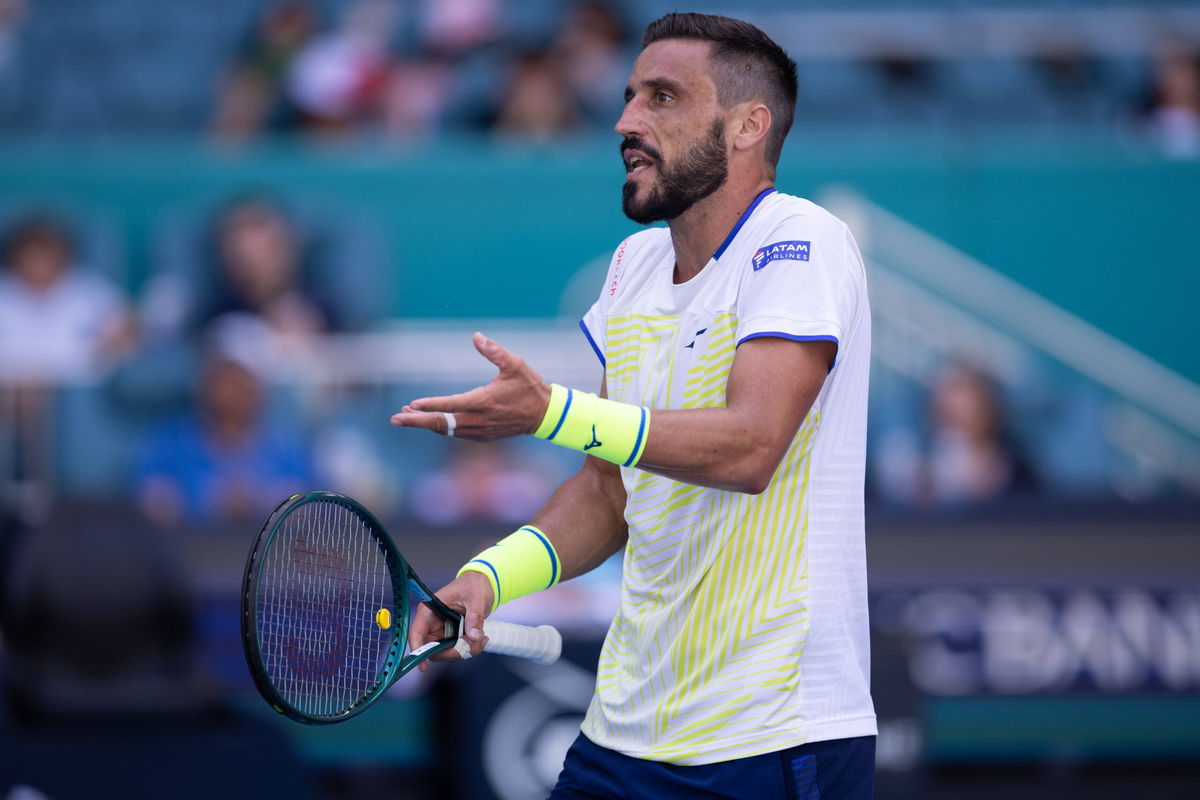
2026 Miami Open Presented By Itau – Day 6 Damir Dzumhur of Bosnia-Herzegovina reacts during his match against Jannik Sinner of Italy on Day 5 of the Miami Open at Hard Rock Stadium in Miami Gardens, Florida, on March 21, 2026. Miami Gardens FL United States PUBLICATIONxNOTxINxFRA Copyright: xMauricioxPaizx originalFilename:paiz-miamiope260321_npDbZ.jpg
Imago
2026 Miami Open Presented By Itau – Day 6 Damir Dzumhur of Bosnia-Herzegovina reacts during his match against Jannik Sinner of Italy on Day 5 of the Miami Open at Hard Rock Stadium in Miami Gardens, Florida, on March 21, 2026. Miami Gardens FL United States PUBLICATIONxNOTxINxFRA Copyright: xMauricioxPaizx originalFilename:paiz-miamiope260321_npDbZ.jpg
Tennis’ growing entanglement with online hate is turning sinister, as betting-driven rage continues to target players with alarming intensity. In recent months, Lucrezia Stefanini, Roman Burruchaga, and Panna Udvardy have faced chilling death threats that shook the tour. Now, after defeating Filip Cristian Jianu in Bucharest, Damir Džumhur is caught in a vicious online storm, pulling even his family into the crossfire.
Watch What’s Trending Now!
After Damir Džumhur’s hard-fought 6-3, 4-6, 7-6(4) win, a disturbing incident followed. His brother, Zlatan Džumhur, received a shocking message online. “I don’t know what @damirdzumhur means to you, but I wish him and his entire family a death in agonizing suffering,” the message read.
Zlatan decided to share the message publicly. He posted it on his Instagram Stories to highlight the growing issue. He also spoke about how such abuse has become normalized. “I get messages like this from time to time, and honestly, it’s wild how comfortable people became saying things they would never say face to face.”
He continued to explain the deeper impact of such behavior. “Now imagine what athletes and public figures deal with every single day. The intensity, the constant negativity, it’s on another level.”
Imago
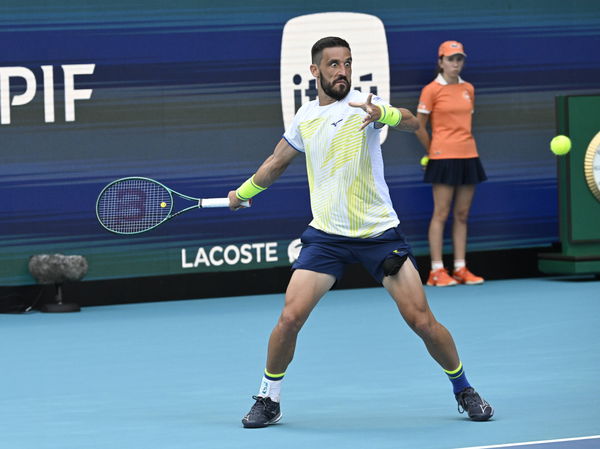
March 21, 2026, Miami Gardens, Florida, USA: DAMIR DZUMHUR BIH hits a forehand, during his match against Jannik Sinner ITA in a second round Men s Singles match against at the Miami Open at Hard Rock Stadium in Miami Gardens. Sinner defeated Dzumhur 6-3, 6-3. Tennis 2026: Miami Open: SINNER 6-3, 6-3 DZUMHUR PUBLICATIONxINxGERxSUIxAUTxONLY – ZUMAsd3_ 20260321_znp_sd3_137 Copyright: xMichelexEvexSandbergx
Zlatan further criticized how online platforms allow such behavior to grow. “We normalize this kind of behavior way too easily online. Don’t forget there’s a real person on the other side of every profile.”
Later, Damir himself reacted to the situation. He reshared his brother’s post on his own Instagram Story.
The Bosnian player strongly condemned the abuse directed at his family. “This is getting so sick! I accepted that I can’t change many things in life and one of them is this kind of persons texting me after matches with the worst possible words.”
He expressed frustration over how the situation has escalated. “But then they are not just texting me but my family as well. How sick you have to be to do this kind of things.”
Džumhur also questioned the state of society today. Where the world goes?,” he wrote while addressing the abuser directly. This is not the first time tennis players have faced such abuse. Similar incidents have been reported across both ATP and WTA tours.
Last year, Katie Boulter experienced a similar situation during the French Open. She had just lost a tie-breaker when she started receiving threats. It did not matter that she later won the match. The abuse continued to flood her messages.
“Hope you get cancer,” said one message. Another – laced with expletives – referenced damaging her “grandmother’s grave if she’s not dead by tomorrow” and “candles and a coffin for your entire family”.
A third message added: “Go to hell, I lost money my mother sent me.” These words highlighted the extreme nature of online abuse linked to betting losses. These repeated incidents show a worrying trend in tennis. Players are increasingly becoming targets of online hate.
The voices of players are not new in this matter. Such incidents are now happening more often and continue to create chaos across the tennis world.
Jessica Pegula urges tennis authorities to tackle rising online abuse
Last year, Jessica Pegula revealed the kind of abuse she receives online. She shared several disturbing messages after her loss at the French Open. She had suffered a shocking defeat against Lois Boisson, losing 3-6, 6-4, 6-4. After the match, she posted a series of Instagram Stories exposing the abuse.
“These [bettors] are insane and delusional,” Pegula wrote on her Instagram Story. She made it clear how extreme the situation has become.
She explained how she tries to avoid such negativity online. “And I don’t allow dms and try to remember when to shut my comments off during tournament weeks but they always find a way to my timeline.”
Pegula also questioned whether other sports face the same level of abuse. “This stuff has never really bothered me much but does any other sport deal with this to our level?”
She further added her concerns about tennis specifically. “I’d love to know because it seems to be [predominantly] tennis?? It’s so disturbing.” Before writing these comments, Pegula had already shared screenshots of the abuse. The messages she received were aggressive and deeply personal.
One comment called her a “trash can.” Another message told her to “just quit playing tennis and enjoy your father’s money! You are literally the most useless top 10 player ever.”
The abuse went beyond her performance on the court. One user even targeted her personal life in a cruel way. Under a post about the death of her dog Tucker, someone accused her of wrongdoing. The message claimed she had “sold” a match “on purpose.”
Another disturbing message crossed all limits. “Can’t wait until Karma spends the block back on you. Hopefully your firstborn child will be a still birth,” one comment read.
Later, Pegula, who is also a member of the WTA Players’ Council, called for action. “Online abuse is unacceptable, and something that no player should have to endure,” she said, adding, “It’s time for the gambling industry and social media companies to tackle the problem at its source and act to protect everyone facing these threats.”
With Damir’s case now in the spotlight, the pressure is firmly on tennis authorities to finally act and implement long-overdue measures to protect players and their mental well-being.
