
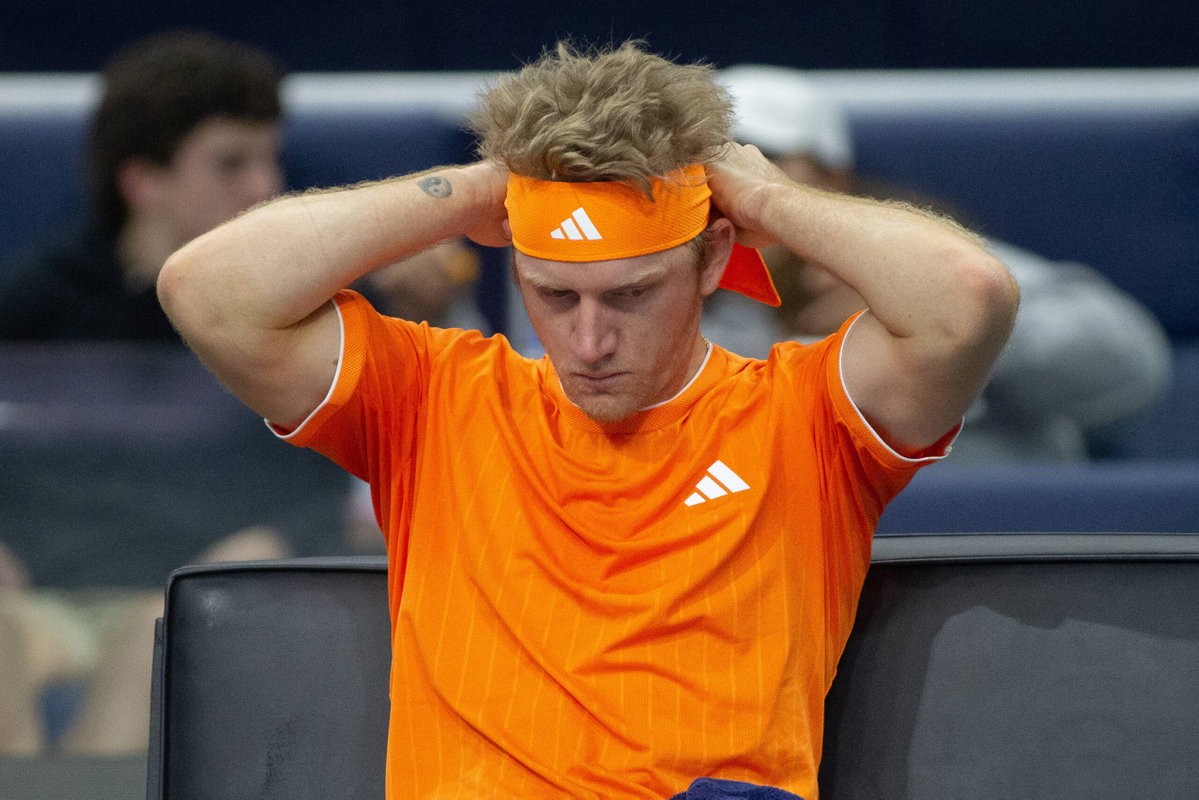
Mariano Puerta, who had been coaching Alejandro Davidovich Fokina since January 2026, left the tournament between the Spaniard’s first- and second-round matches at the French Open and headed to Miami. No face-to-face conversations. No parting of the team. Just a text message. Days after the incident, Puerta has now broken his silence to give his account of events.
Watch What’s Trending Now!
Speaking to Punto de Break, the former French Open finalist focused on a moment in the first round. Fokina was playing Damir Džumhur in a five-set match that lasted over four hours. At a critical juncture in the fourth or fifth set, Puerta tried to encourage his player, but the reaction he got was not what he expected.
“At one point I tried to encourage him, where I wanted to push him so he wouldn’t lose focus, Alex turned around with a look on his face like he was about to murder me: ‘Can’t you see I’m tired? That I can’t move? Don’t tell me anything else!’ He said it in a way that I still feel it,’ Puerta said in an exclusive interview to Punto de Break.
After the match, while Davidovich Fokina was on the exercise bike cooling down, Puerta sat with the player’s manager in the restaurant. He made his decision clear. “I told him very clearly: ‘Today is my last day, I feel bad, I have tachycardia.’ I don’t know if it was the sun, the pressure, or the bad blood from what had happened that left me drained, but I felt empty,” he said. He then returned to the hotel.
Three hours later, he sent Davidovich Fokina a message. Late that evening, around 10:30 PM, Davidovich replied after returning from the vet, telling him they would talk the next day. Puerta says he held on to hope. “I started thinking that maybe he was open to reflecting, or maybe suggesting we finish the tournament together. Do you think that if the next day we sat down to talk and he asked me to stay, I wouldn’t have stayed?” he said.

Mariano Puerta cuenta TODA LA VERDAD en @PuntoDBreak sobre lo ocurrido con Davidovich en Roland Garros. 🗣️ "Alex es un jugador que, cuando está en pista, es muy intenso, muy emocional, muchas veces puede tener reacciones un poco fuera de lugar. La gente que le conozca habrá Show more

That conversation never came. The next morning, instead of Davidovich calling, someone from the player’s team rang Puerta and told him to arrange his own flight to Miami and pay for it himself. “That set everything off, I froze. Two hours later I reacted, blocked him on my phone, blocked his wife too, packed my suitcase, checked out of the hotel, and that was that.”
The most telling aspect of the split is the context of the two men. Puerta is not an unfamiliar name in tennis. He made it to the 2005 Roland Garros final but suffered defeat at the hands of the 19-year-old Rafael Nadal in his first Grand Slam final. In the same year, Puerta received an eight-year ban for doping, which was later shortened to two years on appeal. His playing career ended in controversy. It would now seem as if his coaching career has its own set of patterns.
Davidovich, on the other hand, has never been known for being shy on the court. He’s a very passionate and intense kind of player, one who lets everything out on his face and seldom holds back in a game. Those attributes also make him challenging to train at times. He has reached a career-high of No. 14 in the world in 2025, made the quarterfinals of Roland Garros in 2021, and reached multiple finals across his career, but he has yet to win his first ATP Tour title.
The team-up with Puerta, who has a Grand Slam pedigree and clay-court experience in the box, seemed like a wise move to change that. It lasted only a few months and ended in a hotel corridor in Paris, where one of them was packing his suitcase while the other waited for a call.
Davidovich Fokina responds, loses to Thiago Tirante in the second round
Alejandro Davidovich Fokina’s account, delivered at his post-match press conference, paints a very different picture. The 21st seed reported that there was no tension, no argument, and no sign that anything was wrong.
“After the match against Dzumhur, we had lunch and then I went to calm down a bit. He said he was feeling bad and was going to the hotel. And in the afternoon, like two, three hours later, he texted me this long message and he will not continue,” Davidovich said.
He described the exit as unilateral and without warning to anyone on the team. “He didn’t say nothing to anybody. He just took the flight and flew to Miami without saying a word to us.”
On top of that, Puerta blocked both the player and his wife. “We had a very good relationship. He has blocked both my wife and me,” Davidovich said.
His conclusion on the whole episode was pointed. “Then I heard that he had already done it other times with other players. I thought he was a good person, but after this I discovered it was my fault for hiring him.”
Imago
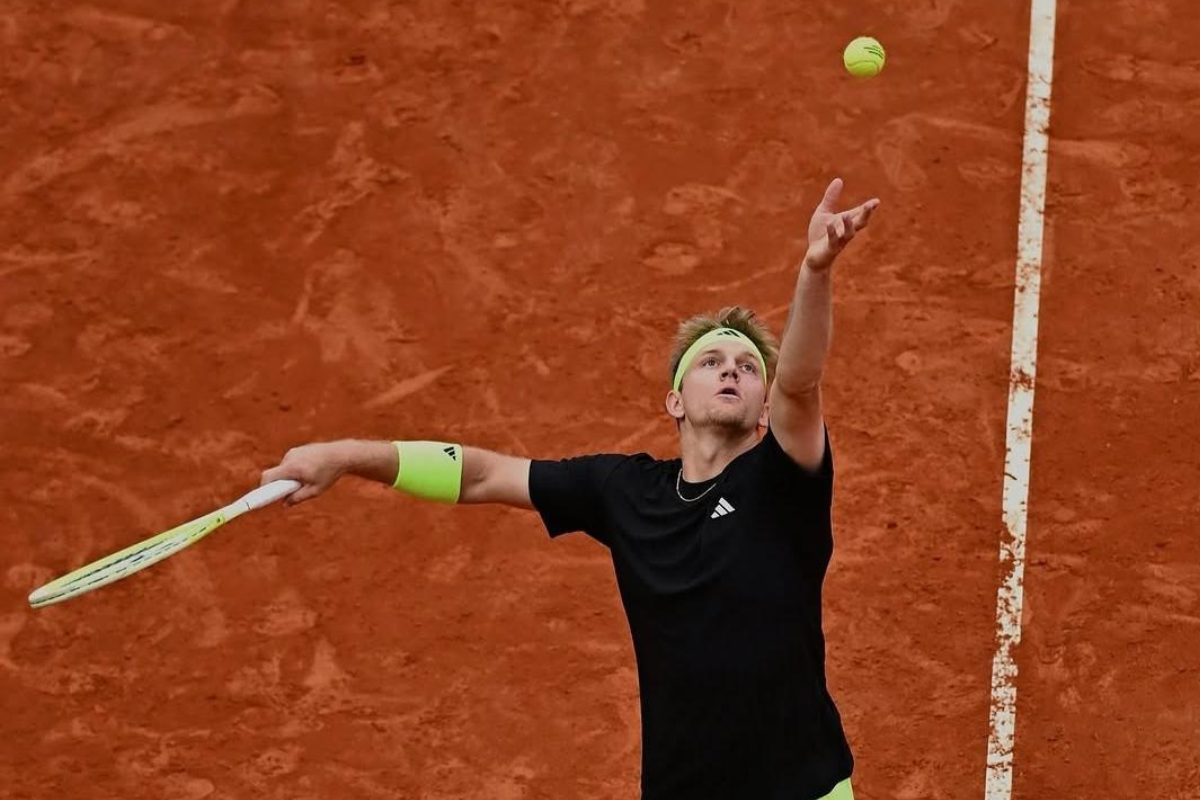
Alejandro Davidovich Fokina serving (via Instagram/@aledavidovichofficial)
Davidovich then lost his second round match to Thiago Tirante, 4-6, 6-7(7), 6-1, 6-3, without a coach in his box. Whatever happened between the two men clearly had an effect. His Roland Garros is over.
He has already moved on in terms of his coaching set-up. Spanish veteran José Manuel Clavet has taken over. Throughout a lengthy coaching career, Clavet has been part of the staff of great players such as Tommy Robredo, Feliciano López, and Fernando Verdasco. He is familiar with the surroundings.
Puerta, who reached the 2005 Roland Garros final before a doping ban cut his career short, has not been reached for further comment by several outlets. He had worked with Davidovich Fokina for almost 20 weeks. In his own words, he had had enough. It’s the coach’s word against the player; no one can surely say what happened there. Whether that justifies how the exit happened is a different question entirely, and one that only the two of them can fully answer.