Imago
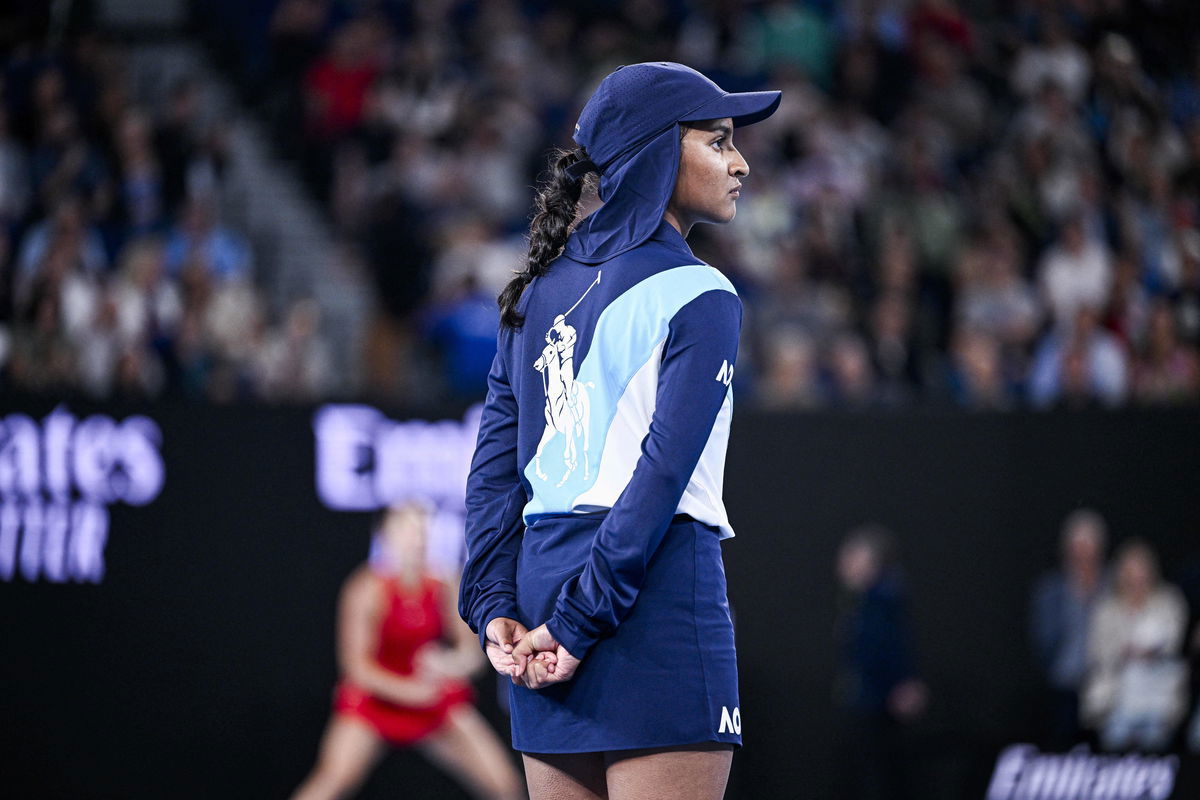
Australian Open Illustration shows a ball kid or ball girl during the Australian Open AO 2024 Grand Slam tennis tournament on January 25, 2024 at Melbourne Park, Australia. Photo by Victor Joly/ABACAPRESS.COM Melbourne Australia PUBLICATIONxNOTxINxFRAxESPxUKxUSAxBELxPOL Copyright: xJolyxVictor/ABACAx
Imago
Australian Open Illustration shows a ball kid or ball girl during the Australian Open AO 2024 Grand Slam tennis tournament on January 25, 2024 at Melbourne Park, Australia. Photo by Victor Joly/ABACAPRESS.COM Melbourne Australia PUBLICATIONxNOTxINxFRAxESPxUKxUSAxBELxPOL Copyright: xJolyxVictor/ABACAx
How many of you have really noticed how ball kids are treated on court? Some players are warm and friendly, while others scatter balls everywhere between points and toss their sweaty towels as if the kids are invisible. Adding to this, if a ball kid isn’t there within seconds, you can often see the frustration. This Australian Open, things have gotten tougher for the ball kids, with the brutal Melbourne heat adding to the challenge. Now, a former tennis pro is calling on tournament organizers to make a change.


With the Australian Open employing around 435 ball kids, aged between 12 and 15, to help keep the “Happy Slam” running smoothly, Mark Philippoussis has voiced a strong opinion. The tennis veteran is not happy seeing how the ball kids at the Australian Open are treated. He makes a strong case for why the kids should be paid.
When asked about the idea by the media, he didn’t hesitate. “Why not? Give them some pocket money,” said the former Wimbledon finalist and Australian Davis Cup hero. The 49-year-old also added, “It’s a great opportunity for these kids to get out there and enjoy the atmosphere, to walk around, to watch some matches. But I know that this tournament spends a lot of money to make sure everyone’s happy.” But does the Australian Open actually pay ball kids anything?
Craig Tiley explained why paying them isn’t as simple as it sounds. “It’s not a simple answer as yes or no, because there’s a lot of labor-related challenges that you’ve got to consider in it,” he said. He added that ball kids are instead compensated in other ways.
“The ball kids get paid in lieu of cash through tickets and transport, covering costs of food, and gifting,” the 64-year-old clarified. But how is that fair?
The job is physically demanding. Ball kids can spend around eight hours a day at the tournament, rotating through 45-minute to one-hour sessions on court. That often includes late nights and long days in extreme heat. While they do receive gift packs at the end of the event, and a select few are chosen to work at tournaments like the French Open and China Open, the role at the Australian Open remains unpaid.
The physical toll has already been visible this year. The temperatures hit 28°C, and a first-round match had to be delayed after a ball kid collapsed from the heat during Ekaterina Alexandrova’s match against Zeynep Sonmez. Both players rushed over as officials called for medical assistance.
There were more troubling moments, too. Another ball kid threw up during Stefanos Tsitsipas’ opening match. Others reportedly felt unwell during a qualifier between Luca van Assche and Moez Echargui, and even during a mixed doubles match. What’s worse, Novak Djokovic narrowly avoided disqualification after angrily striking a ball that almost hit a ball kid during a tense encounter.
The winners of the men’s and women’s singles titles in Melbourne will each take home a staggering £2.1 million ($2.89 million). And yet, the ball kids, despite the long hours, the heat, and the risks, walk away without any money. It’s no surprise that more and more voices are now speaking up in favor of paying them.
How are the ball kids treated at other tournaments?
While paying ball kids might sound like a good idea to many, the Australian Open isn’t alone in its approach. Roland Garros, better known as the French Open, also doesn’t pay its ball kids. Instead, they receive gifts as a token of appreciation for their work.
It is to be noted that at other Grand Slams, the ball kids are paid. In the U.S., they reportedly earn about $24 an hour. At Wimbledon, they receive a “stipend” of around $395 for two weeks of work. But at the Australian Open, despite a massive prize pool of AU$ 111.5 million ($78 million), up nearly 16 percent from 2025, the ball kids don’t get paid any cash, and the Australian Open CEO has a reason for that.
Former Australian star Alicia Molik has defended the policy of keeping ball kids unpaid. The 45-year-old, who once reached world No. 8 in singles and won two Grand Slam doubles titles, believes the role still carries real value, even without money involved.
“I just think it’s a great opportunity for the kids, irrespective,” Molik said. “It’s a great thing to have on your CV, isn’t it? The fact that you’ve worked at the Australian Open.”
As the debate intensifies, the Australian Open faces growing pressure to reconcile its massive profits with its reliance on unpaid youth, its a contrast that is becoming increasingly difficult for players and fans to ignore.
Written by

Edited by

Jayakrishna Dasappan