
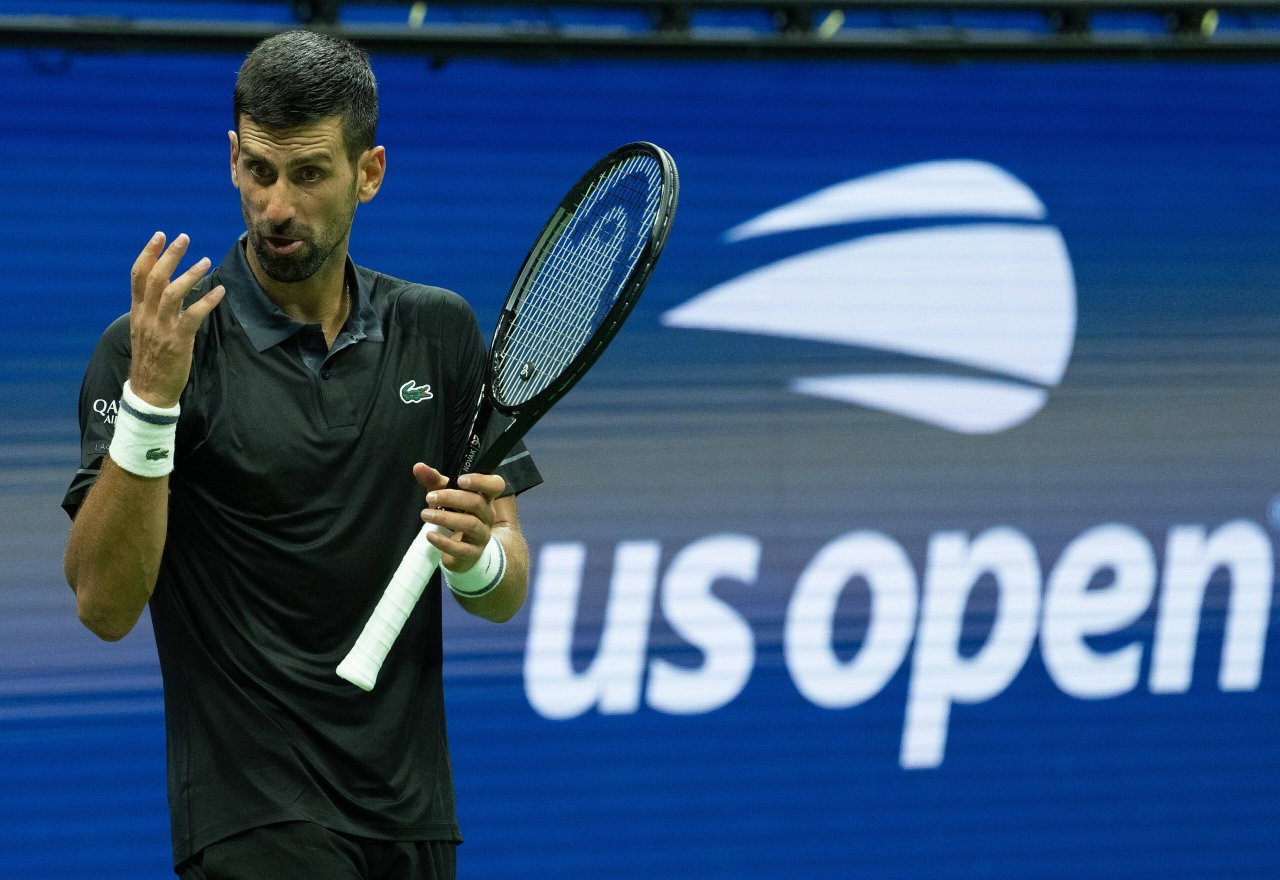
The US Open barely got started before Novak Djokovic delivered the kind of shock nobody saw coming. The four-time champion was dumped out in the first round of a Grand Slam for the first time in 20 years, losing to Mariano Navone after his body completely betrayed him. Djokovic somehow fought his way to a two-sets-to-one lead, but once the physical problems took over, Navone ran right through him in the final two sets. By the end, Djokovic could barely move, and one of the greatest fighters tennis has ever seen walked out of Arthur Ashe in tears.
“I think it was obvious that it was an awful feeling on the court for me,” said Djokovic. “It’s something that I’ve been carrying, unfortunately, pretty much every match this year. You know, vomiting, throwing up, a serious issue there. “Then my whole body, you know, starts to collapse, basically cramping and pain. Yeah, the back just gave up in the end and shoulder, and I couldn’t close it out,” said Djokovic.
“When it comes to the match itself and the overall feeling of how I felt with my body and playing, it was really not enjoyable. I pretty much despised every moment that I spent on the court for that.”
Djokovic’s own words tell the story. The problems started early, got worse with every set, and eventually his body gave out completely.
First set: Navone won 7-6(5)
Djokovic’s problems started almost immediately. He broke early to lead 2-0, but barely 15 to 20 minutes into the match, he was already coughing, bending over between points and looking uncomfortable in the humid conditions. By 5-4, the doctor had given him medication. His serve kept him competitive, but Navone eventually edged the opening-set tiebreak 7-6(5).
Second set: Djokovic won 7-5
Instead of fading, Djokovic somehow fought back. The physical discomfort remained, but his serve continued to bail him out and he found enough quality to take the second set 7-5. Suddenly, it was one set apiece, and Djokovic appeared to be finding a way through the match despite clearly not feeling right.
Third set: Djokovic won 6-4
Djokovic then pushed ahead, taking the third set 6-4 and moving within one set of escaping the first round. On the scoreboard, he had taken control at two sets to one. Physically, though, the opposite was happening. As the match moved past the three-hour mark, he was panting heavily, struggling with his balance and vomiting during the contest.
Fourth set: Navone won 6-2
For a brief moment, Djokovic still looked capable of finishing it. He broke Navone early and led 2-1, putting himself in position to close out the match. Then everything changed. His legs became noticeably heavier, his movement deteriorated, his first serve started losing effectiveness and cramps became increasingly difficult to fight. Navone sensed it and took complete control, winning five of the next six games to take the fourth set 6-2.
The numbers made the turnaround even harder to believe. Djokovic entered the match with a 42-12 record in five-setters, while Navone had never won one, sitting at 0-4. The Argentine was also just 12-29 in tour-level hard-court matches. But once Djokovic began fading, those numbers meant nothing. Navone won 11 of the final 12 games to run away with the match.
Fifth set: Navone won 6-1
By the deciding set, there was very little Djokovic could do. After hours of vomiting, cramping and struggling with his movement, his back and shoulder were also causing him pain. Navone raced ahead while Djokovic struggled simply to stay competitive in the rallies. When Djokovic finally won a game to make it 1-3, he became emotional behind the baseline as the Arthur Ashe crowd roared in an attempt to lift him. But there was no comeback left.
Navone closed out the fifth set 6-1, completing a 7-6(5), 5-7, 4-6, 6-2, 6-1 victory after four hours and 36 minutes. Djokovic eventually walked off Arthur Ashe in tears.
Speaking after the loss, Djokovic also thanked the New York crowd for trying to pull him through the match. “They were trying to lift me up in important moments. The love and appreciation they gave me in the end really touched my heart.”
Djokovic also admitted he is still trying to figure out the problem and how long he can continue dealing with it. “I’m trying to address what’s happening to me and see how far I can go like this.”
This loss created a lot of unwanted firsts for the 24-time Major champion, who is all set to go out of the Top 10 for the first time in almost eight years.
And the night ended with even more unwanted history for Djokovic. At four hours and 36 minutes, it was the longest first-round Grand Slam match of his career. More significantly, after advancing past the opening round in each of his previous 19 US Open appearances, this became his first-ever first-round loss at Flushing Meadows.
Djokovic’s US Open Disaster Ends 20-Year Run and Sparks Ranking Fall
This was Djokovic’s first opening-round exit at a Grand Slam in 20 years, with his previous first-round loss coming at the 2006 Australian Open. It was also his first-ever opening-round defeat at the US Open.
The Serb’s loss will have big ranking implications for him as well, as he is out of the Top 10 on the live rankings.
The first-round loss has seen Djokovic lose 790 points and drop to No.11 on the rankings.
This is the first time the Serb has been out of the Top 10 since 2018, when he was sidelined for almost a year due to an elbow injury, from mid-2017 to mid-2018. The rankings falloff will hurt Djokovic’s future Grand Slam ambitions as it will also affect his seeding going into Melbourne this year.
It remains to be seen whether the Serb will play at any other event this year, now that the Grand Slam season is over. Including the Navone match, Djokovic has played only 21 matches this year, his lowest in a season by some distance. Notably, the 24-time Major champion still has the tennis ability to match opponents more than a decade younger than him, as seen in matches against the likes of Fonseca, Felix Auger-Aliassime, and even Jack Draper at Indian Wells.
However, he seems to be losing his five-set stamina in the Slams, which is understandable at his age.