
Remember last year when Ons Jabeur laid bare tennis’ growing crisis, saying, “People are hopeless behind screens,” as betting-fueled abuse began taking a serious toll on players’ mental health? A year later, little seems to have changed, with the issue still casting a dark shadow over the sport. Now, the current world No. 2 Elena Rybakina, has added her voice to the conversation, opening up about the online harassment athletes continue to endure after taking a bold step on her social media.
Watch What’s Trending Now!
“It’s impossible to control it any other way, and of course it’s not the nicest thing. I usually don’t pay much attention, but at that point it felt important,” Elena Rybakina shared before her Berlin Open clash while explaining why she chose to step away from social media. “A lot of it is connected to the job, and I felt that if these people can’t stop in the moment because they lost some money, I’d rather give the option to comment nothing and then bring the account back,” she continued.
The current AO champion also admitted that distancing herself from social platforms brought a sense of relief. “I’m not there to spend all day cleaning my Instagram. I have a little help with the content, but it’s not full-time. So, I thought it’s better even for me to spend less time on social media,” she said.
The 26-year-old further stressed that reducing her social activity was always something she preferred. “Sometimes you don’t even notice, and it becomes too much of your time. For me it’s ok not to be on social media, and if I weren’t a public figure, I don’t think I’d post much or do a lot on it,” she explained.

Reuters
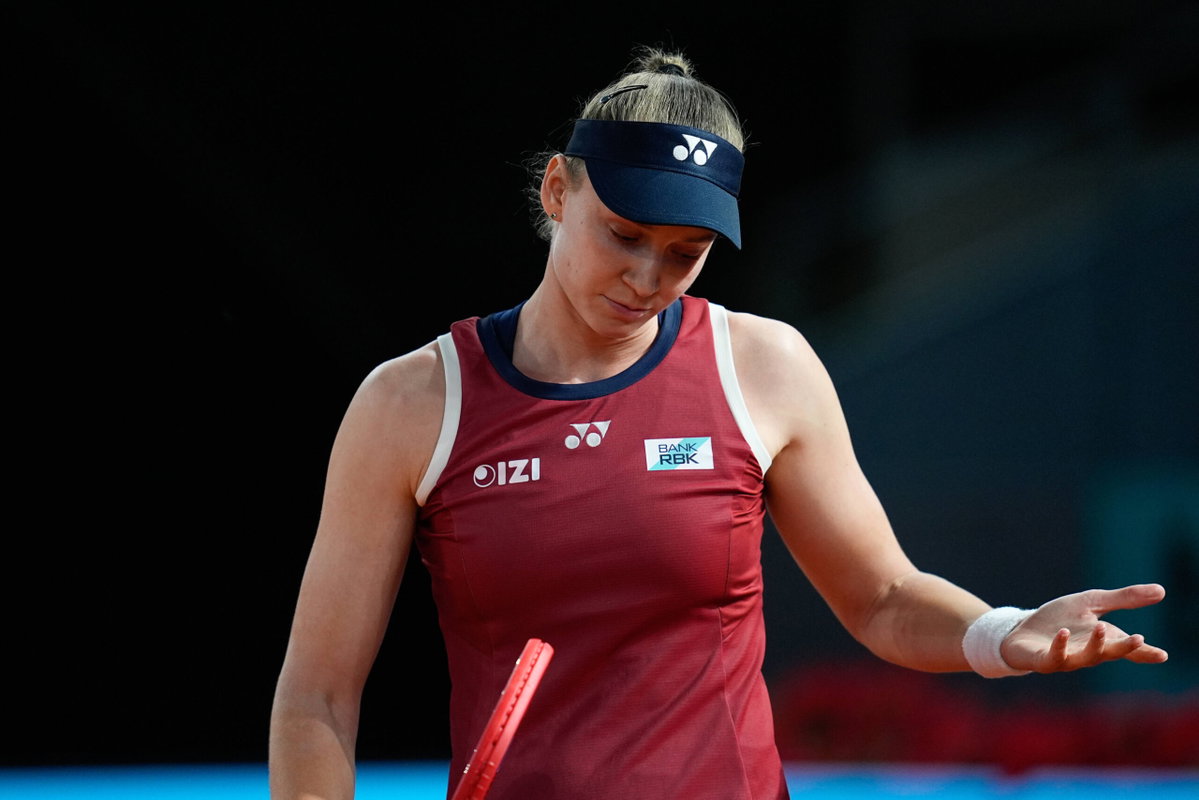
Tennis – French Open – Roland Garros, Paris, France – June 1, 2024 Kazakhstan’s Elena Rybakina reacts during her third round match against Belgium’s Elise Mertens REUTERS/Stephanie Lecocq
And Rybakina’s comments came shortly after her disappointing defeat in the HSBC Championship last week. The Kazakh ace was beaten by the 29-year-old Katie Boulter, who was contesting her 2nd match of the day.
The Briton produced one of the biggest victories of her career, defeating the top seed 7-5, 2-6, 6-4 to secure her 1st win over the Kazakh in 3 meetings.
The match itself also raised concerns when Elena Rybakina suffered a worrying fall on the grass court. The incident came only days after 19-year-old Canadian Victoria Mboko’s heartbreaking injury, adding to growing concerns around player safety during the grass-court season.
In the aftermath of the loss, her fans quickly noticed another significant development in her social media account, which might be due to online abuse she got. The former SW19 champion had deactivated her IG account after previously disabling comments on her posts following her 2nd-round exit at the French Open this year.
As the tennis world continues to grapple with the impact of online abuse, the Kazakh’s experience has once again brought the conversation into focus. And while the two-time Grand Slam winner has now taken steps to limit the outside crowd from her life, she is far from the only player to have endured the same situation in recent times.
Lorenzo Musetti and Iga Swiatek expose online harassment impact on players
If anyone believes that only WTA players on the tour are subjected to online harassment from bettors, the reality tells a very different story. Even ATP players have also found themselves dealing with the same disturbing experiences over the years.
Lorenzo Musetti is among those who have spoken openly about the issue. “It happened a lot of times, not just in Italy, but in every part of the world. Unfortunately, there’s still this problem that we see sometimes, especially in some matches, which is pretty clear that there are some people from the crowd who bet and that they are cheering for the ones that maybe at that time it’s not the home favorite, or they disturb the game,” Musetti said last month.
And along with the ATP side, the WTA Tour has also witnessed similar cases in recent years. Alongside Elena Rybakina, former world No. 1 Iga Swiatek has also spoken about becoming a target of abuse linked to betting. “Nowadays, this is a sad part of our reality in sports. Bots. Betting. But also ‘fans’,” the 6-time Grand Slam winner had shared on IG.
The issue has stretched even further across the tennis landscape. Earlier this year, even the 34-years-old Damir Džumhur found himself caught in a vicious wave of online abuse that even dragged members of his family into the online controversy.
With betting-related harassment now impacting athletes across both WTA and ATP tours, tennis’ governing bodies may have to act more decisively. Stronger safeguards and stricter measures are needed if the sport hopes to better protect players’ mental health in the years ahead.