
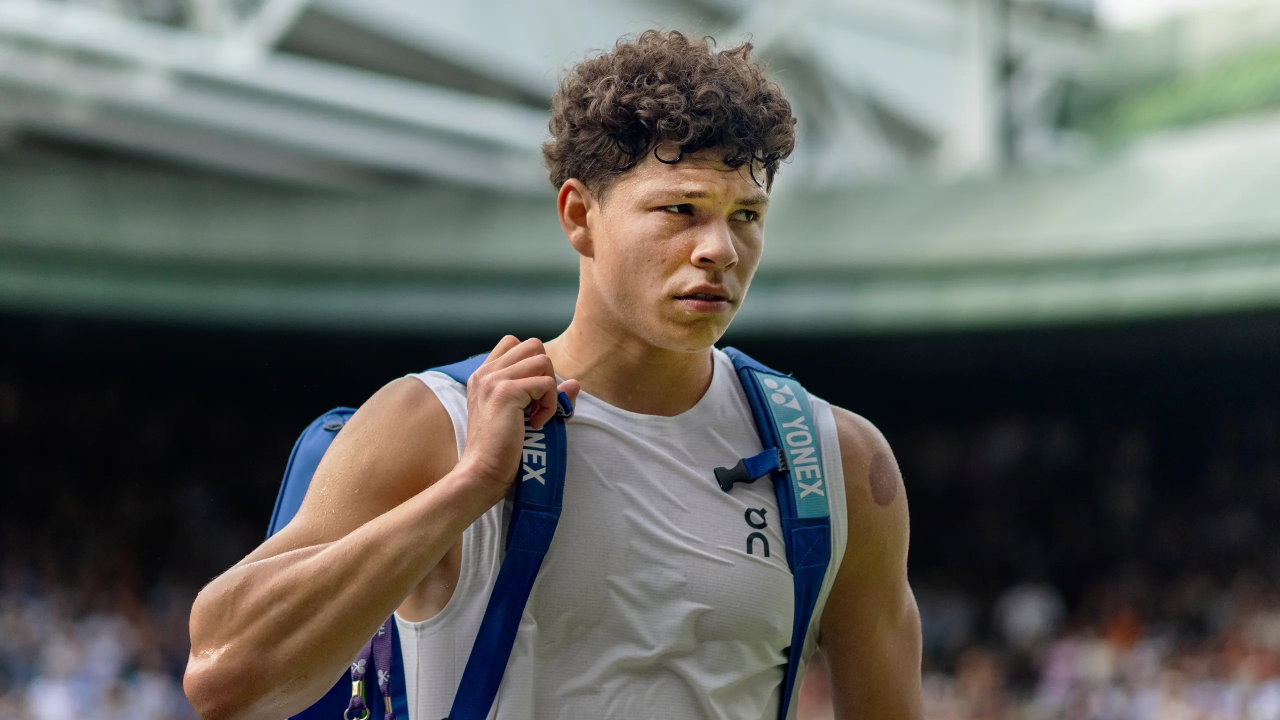
Throughout the first week of Wimbledon, the world’s top players will limit their media appearances to 15 minutes per press conference, as they did at the French Open. The number chosen is deliberately to mirror the percentage of revenue Wimbledon allocates to prize money. The All England Club announced a 20% increase in the total prize fund this year, raising it to £64.2 million ($84.8 million), the highest annual increase in the tournament’s history. Players recognized it as progress. They are protesting anyway, pushing for 16% this year as an interim step toward 22% by 2030, arguing that the current allocation still falls below the 14.9% figure paid out in 2015. The All England Club has called that target unrealistic. The gap between those two positions is where the protest lives.
Watch What’s Trending Now!
Ben Shelton, the world No. 5, is backing the players. But when he spoke about the issue at the Giorgio Armani Tennis Classic in London to Tennishead, he made clear that what is driving his support is not primarily the money.
“I think that from the surface and the outside, a lot of people just see it as a money thing. For me, it’s more some of the other decisions that happen without player input, really having a player council, if you will, for the slams and a seat at the table.”
There is a disagreement over the prize money. In Shelton’s opinion, the more essential question below it is that of governance. Players deserve a structured means to voice concerns that directly impact their lives, whether it’s a longer tournament length or the consequences of a schedule expansion for their welfare. The 15-minute protest is an expression of that frustration. A seat at the table is the demand behind it.
Imago
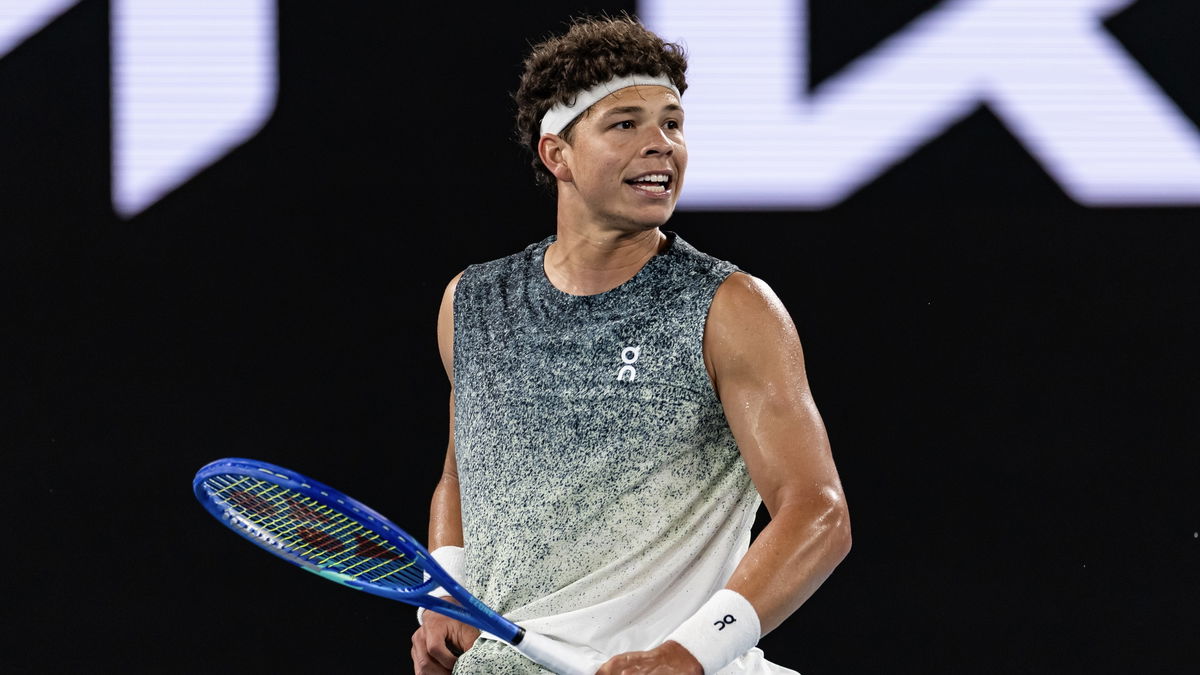
Jan 28, 2026; Melbourne, Victoria, Australia; Ben Shelton of United States in action against Jannik Sinner of Italy in the quarterfinals of the menís singles at the Australian Open at Rod Laver Arena in Melbourne Park. Mandatory Credit: Mike Frey-Imagn Images
Players have also petitioned for a formal player council and a separate fund for players’ welfare, but they say they’ve received no meaningful reply from the Grand Slams to date. Shelton pointed specifically to the US Open as an example of how the scheduling question has grown beyond what was originally agreed. “The US Open is basically a three-week event at this point, 21 days,” he said.
The Masters 1000 events exacerbate the situation. Seven of the nine Masters events now take place over the best part of two weeks, with only Monte Carlo and Paris remaining as one-week events. The cumulative effect on the bodies of players competing at the top of that system is no longer a theoretical concern. It is a documented reality unfolding in real time.
Ben Shelton did not identify names regarding the injury toll, but the list is self-explanatory. Carlos Alcaraz, Lorenzo Musetti, Holger Rune, Tomas Machac, Sebastian Korda, and Reilly Opelka are among the players who have withdrawn from Wimbledon this year. Alcaraz, the defending champion at Roland Garros, was forced to withdraw from the French Open in the lead-up to the tournament with a wrist injury. For Shelton, it all connects.
“I think it’s no secret that the tennis tour has become, you hate to say it, but unsustainable for a lot of players. A lot of big talents too, players at the top of the game,” he said.
He was careful to acknowledge the limits of his own position. “I wish I had all the answers. I don’t have all the answers to what the solution is or what that looks like. It’s tough for me to see other players who’ve been on fire, playing really good tennis, and also friends be on the sideline for so long because the body can’t handle the amount of stress that this tour puts on,” he said
The American will not be coming to Wimbledon as a neutral player on these issues. He’s coming in as a man who has seen the surrounding field dwindling, and he is hoping that people who make scheduling decisions are aware of what it’s actually costing to the players.
Shelton’s own Wimbledon record heading into 2026
The protest is the context. Tennis is still what matters on the court. Ben Shelton has been making steady improvement at the All England Club since his first time on the court in 2023, where he made it to the second round before falling to Laslo Djere in four sets. In 2024, he reached the fourth round, where he defeated Mattia Bellucci, Lloyd Harris, and Denis Shapovalov, and finally lost to Jannik Sinner in straight sets. Last year, he went one better, reaching the quarter-finals with wins over Rinky Hijikata and Marton Fucsovics, before running into Sinner again, who went on to claim his first Wimbledon title.

Imago
Tennis: Wimbledon Championships Jul 1, 2025 Wimbledon, UNITED KINGDOM Ben Shelton of the United States returns a shot during his match against Alex Bolt of Australia on day two at the All England Lawn Tennis and Croquet Club. Wimbledon All England Lawn Tennis and Croquet Club ENTER STATE United Kingdom, EDITORIAL USE ONLY PUBLICATIONxINxGERxSUIxAUTxONLY Copyright: xSusanxMullanex 20250701_jla_au2_364
The pattern of Sinner’s defeats is one he will be desperate to break. He has started this year’s grass campaign with a title in Stuttgart by defeating world No. 7 Talor Fritz in the finals. This was his first title on the surface and made him the first player to win titles on all surfaces this year. The 23-year-old traveled to Halle and reached the quarterfinals, losing to Fritz in a three-grueling tiebreaker sets, the same opponent he defeated last week. With solid match practice on grass and an impressive season record of 25-10 before SW19, he is set for a strong Wimbledon performance.
The All England Club responded to the protest announcement by saying they were surprised and disappointed, adding that Wimbledon puts players at the heart of all decisions and invests significantly in them every year. The success or failure of the discussions the Club has promised to pursue after the tournament will be the key to the size of the protest next year. For now, Shelton is playing Wimbledon and backing his fellow players at the same time.