“Broken-Hearted” ATP Pro Makes Emotional Public Plea After Controversial Umpire Call

Add us on Google
“Broken-Hearted” ATP Pro Makes Emotional Public Plea After Controversial Umpire Call
Add us on Google
Imago
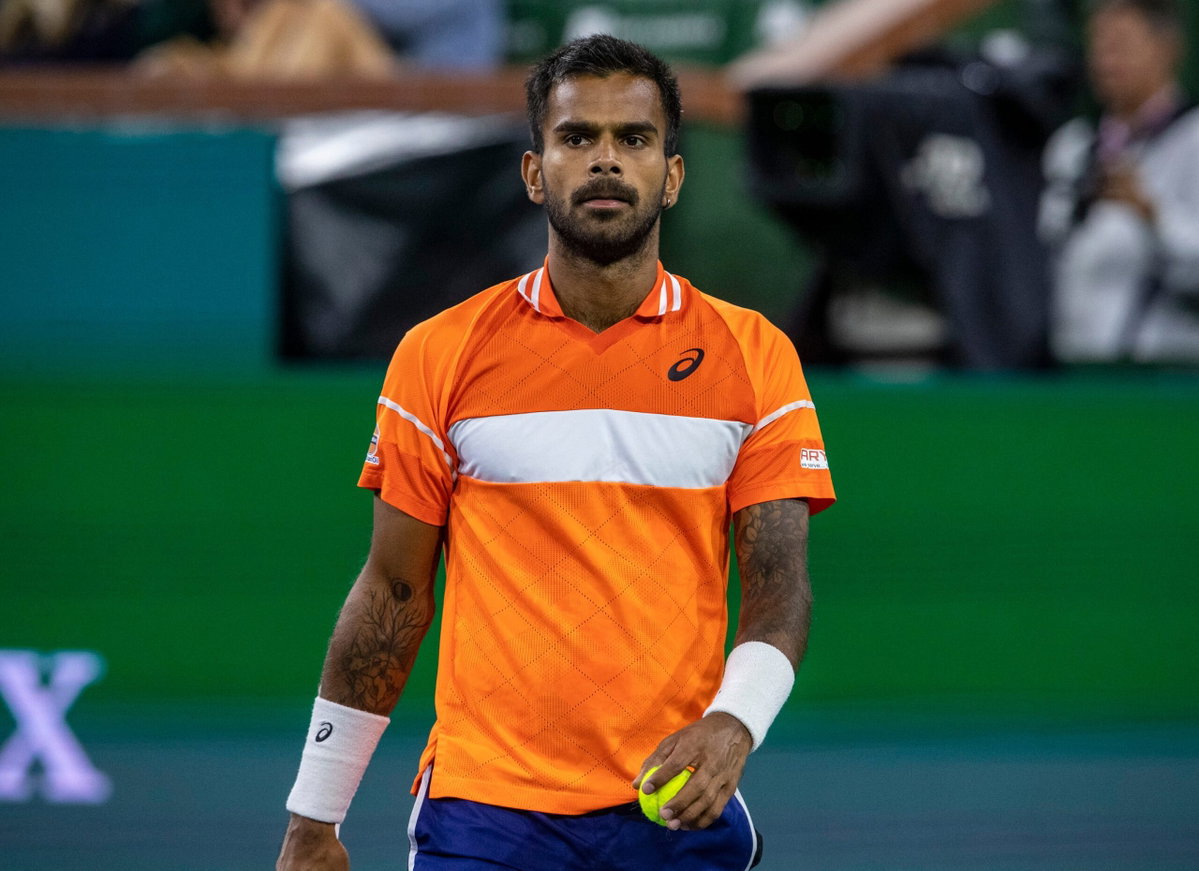
Sumit Nagal walks back for a changeover against Milos Raonic during round one of the BNP Paribas Open in Indian Wells, Calif., Thursday, March 7, 2024.
Imago
Sumit Nagal walks back for a changeover against Milos Raonic during round one of the BNP Paribas Open in Indian Wells, Calif., Thursday, March 7, 2024.
India’s top-ranked player, Sumit Nagal, was trailing Petr Brunclik 6-4, 5-4 at the Poznan Challenger in Poland on Sunday when the match came to a halt for all the wrong reasons. Nagal thought that the ball was definitely out, but it was not called by either the line man or the chair umpire. He immediately raised his hand to appeal, as ATP rules allow, but the umpire said that she had not seen that hand signal and would not get down from her chair to check for the ball mark. It was a big controversy that ended with Nagal being disqualified from the match. The Indian took his complaint public in a long statement on Monday morning, accusing the process of tennis officiating as a fundamental flaw.
Watch What’s Trending Now!
“Today I felt so hopeless and broken-hearted because I couldn’t even defend myself. It was emotionally tough for me to get past that point afterwards. I got three wrong calls in a single point, where no call came, the referee refused to come down to check, and the referee didn’t see me appeal,” Nagal wrote on social media.
His statement highlighted three issues: both the officials missed the call when they should have seen it, it was the duty of a chair umpire to check the mark, but she didn’t. Lastly, ATP’s rule that allows a player to appeal a call even after hitting the ball, provided the shot did not affect play, which Nagal argued was precisely what he had done.
Dear all, I am speaking on something that happened yesterday in Poznan, which highlights a massive flaw in our sport
There are three distinct points I want to raise regarding this incident:
1) I was playing a point, where I ran towards the ball, which was clearly out – as (1/n) pic.twitter.com/u9bshGouVX
— Sumit Nagal (@nagalsumit) June 16, 2026
The section of his statement that drew the widest reaction was his challenge to the accountability structure that governs officials. “Players are penalised for mistakes that happen knowingly or unknowingly. But why do players get penalised with money when we make mistakes, and not chair umpires? Players have the added pressure of needing to win to make money. Umpires have comparatively less pressure because they don’t need to win to get paid. Why should they face no pressure? For players, one wrong call can decide a match or even a tournament,” he wrote.
He closed with a direct appeal to the governing bodies: “I humbly request ATP and ITF to make a change that would enable us players to defend ourselves as well. I believe matches should not be dependent on merely referees in 2026 when you can leverage technology,” he added.
Nagal, 28, is currently ranked world No. 277, but reached a career-high of No. 68 in July 2024. He is still India’s number one singles player and is next on the list to lead the Indian team during the Asian Games in Aichi-Nagoya during September this year. It’s been a difficult season for him so far, and the decision to disqualify him from the Poznan has been an embarrassing one after early exits at both the Bengaluru Open and the Delhi Open. He has, however, built a reputation for speaking out on issues beyond the court.
He went public earlier this year after his Australian Open qualifying visa was denied for no apparent reason in a social media posting, sparking a resolution. The Poznan incident, on the other hand, is a bigger and more systemic issue, one that a social media post cannot solve, but that Nagal has been open to calling out.
Nagal’s plea comes as tennis faces its biggest Officiating reckoning in years
Nagal isn’t well-known worldwide; however, the problem he is raising is. The 2026 Roland Garros fortnight was the most closely watched in memory for its officiating, however, as the only Grand Slam that still doesn’t employ electronic line calling.
Imago
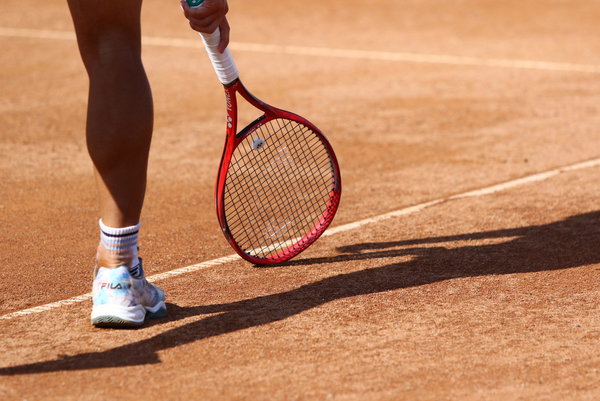
KYIV, UKRAINE – SEPTEMBER 7, 2021: Sebastian BAEZ of Argentina shows the ball mark on a clay court during ATP Challenger Kyiv Open game against Illya BELOBORODKO of Ukraine at Kyiv Tennis Park in Kyiv
The highlight came on a crucial set point in the second-set tie-break of the fourth-round clash between Joao Fonseca and Casper Ruud. Fonseca hit a forehand that was seen in by Louise Engzell, the chair umpire, after she checked the clay mark. Hawk-Eye graphics, which are displayed to millions of viewers around the world, indicated the ball was out of play. Since there was no electronic review system, the original call was still in effect. Ruud lost the set and the match.
Former world No. 1 Jim Courier described it as a “huge controversy”, while Steve Johnson was scathing about the absurdity of showing Hawk-Eye data to the viewers when the technology is not being used to make corrections on court. The reaction from the public was swift and universal as fans demanded a change of match referee and an overhaul of the system.
In a press conference, Roland Garros’s tournament director Amelie Mauresmo directly addressed the issue, explaining the reasons for continuing to use human officiating on clay.
“What we observed at the clay-court tournaments leading up to Roland Garros is that the reliability of this system is not absolute. As of today, the machine is not 100 percent reliable, so we continue to place our confidence in human officials,” she said.
She did, however, leave the door ajar for the future, adding: “We’ve made that choice for 2026. As for 2027, we’ll see.”
The ATP and WTA already use machine-generated rulings for the lower levels of the tour in clay events, but the Grand Slam hosts can decide what rulings they use. That disconnect between what there is and what is actually being utilized at the sport’s biggest venues is what Nagal was referring to in the Challenger court in Poznan. His disqualification may disappear from the headlines quickly. His question will not go away.
