
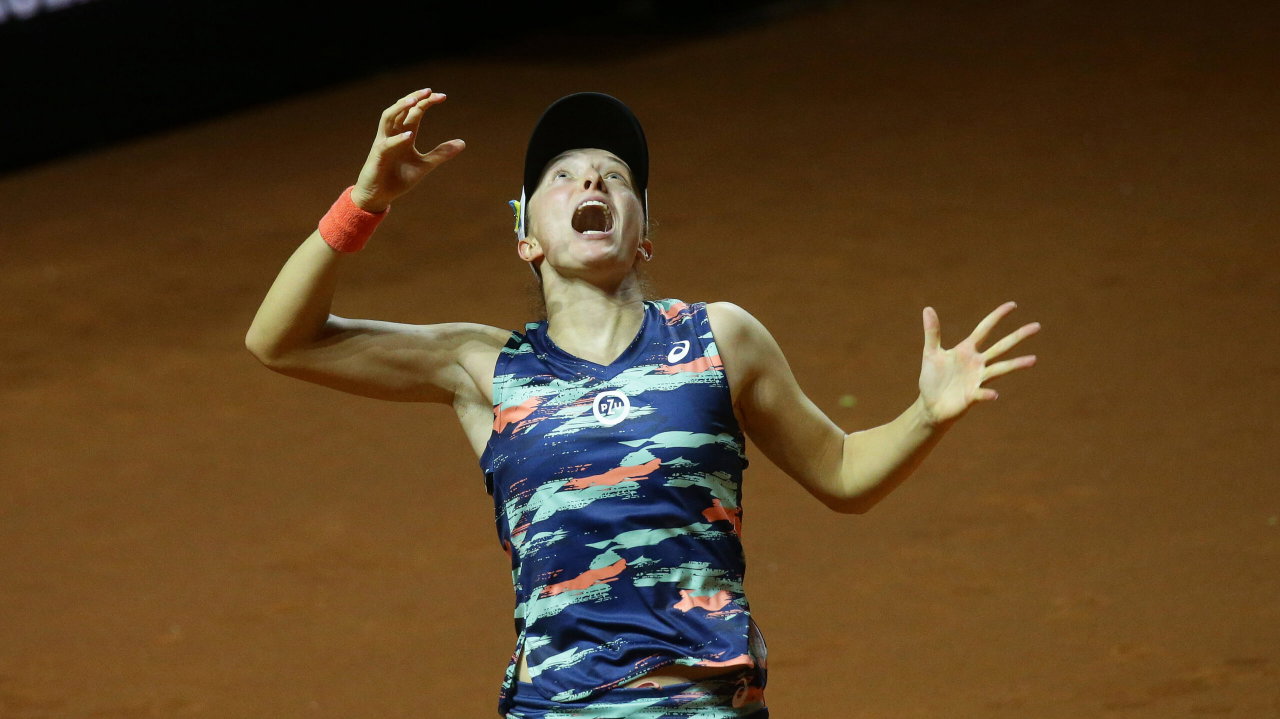
For years, Iga Swiatek made tennis look easy. Her heavy topspin pushed opponents back, while her forehand helped her control rallies. Her movement also helped her defend and attack quickly. Beating her on clay often seemed almost impossible.
But tennis keeps changing. Opponents study top players to find weaknesses, while young players bring fresh ideas and confidence. Even small weaknesses can become costly against strong rivals.
Swiatek’s 2026 season has shown this clearly. She won the Canadian Open in August, beating Elena Rybakina 6-2, 6-3 in the final. However, she struggled at the Grand Slams. Alexandra Eala beat her at Wimbledon, while Zheng Qinwen recovered from a 5-0 deficit to defeat her at the US Open.
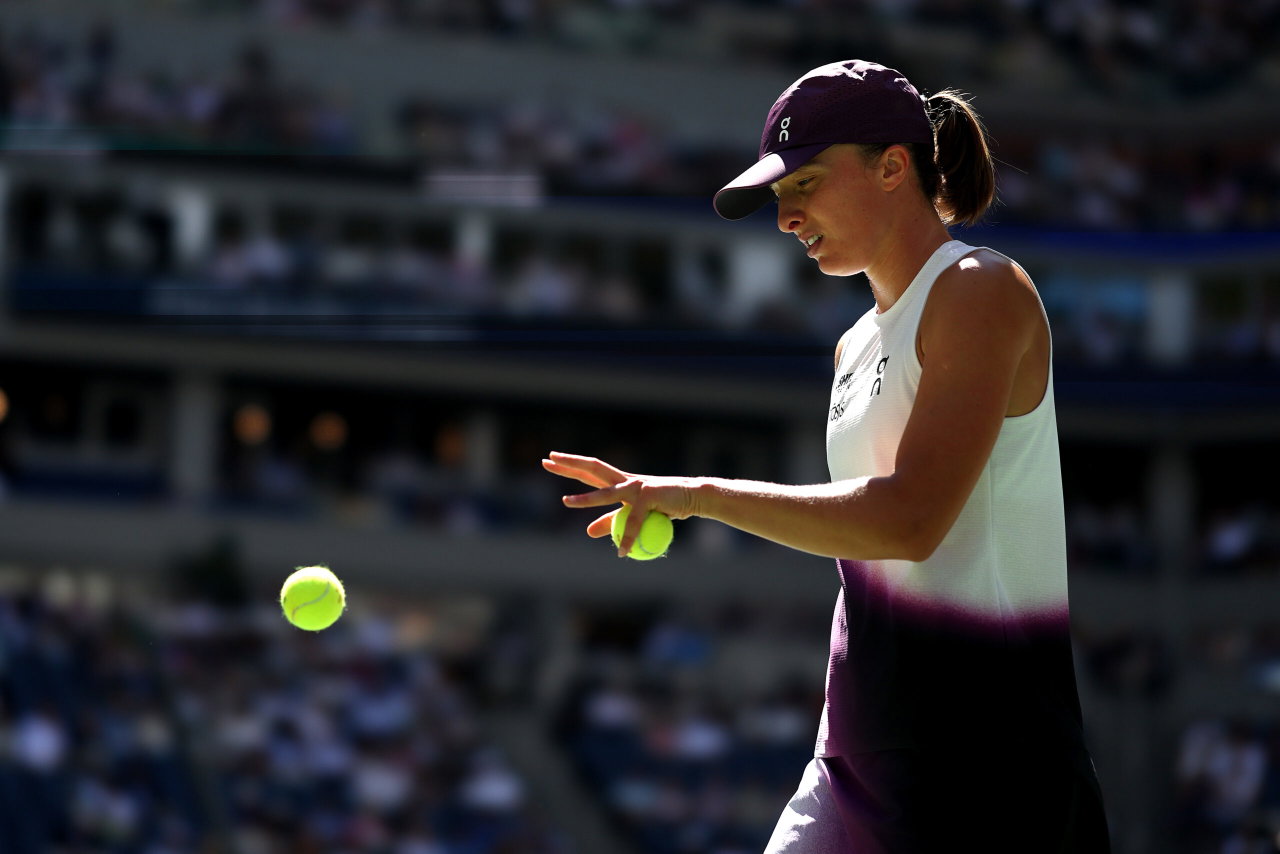
Getty
NEW YORK, NEW YORK – SEPTEMBER 07: Iga Swiatek of Poland looks to serve against Qinwen Zheng of China in their Women’s Singles Fourth Round match on Day Nine of the 2026 US Open at USTA Billie Jean King National Tennis Center on September 07, 2026 in the Flushing neighborhood of the Queens borough of New York City. (Photo by Al Bello/Getty Images)
In October, Maja Chwalińska also beat her in the Wuhan Open semifinals, although Świątek was dealing with a left-leg injury.
These results do not mean Swiatek has lost her ability to dominate. Her Canadian Open win proved she can still beat top players comfortably. The bigger challenge is maintaining that level when opponents disrupt her rhythm.
Swiatek’s heavy topspin forehand has played a big role in her success. She does not rely only on power. She also uses spin, depth, and placement to push opponents behind the baseline.
The ball bounces high after hitting the court, making it harder for opponents to attack comfortably. This also gives Swiatek more time to prepare for her next shot.
Her forehand is especially effective on clay. The surface allows her to build rallies, move opponents around the court, and use the high bounce to her advantage. Her four French Open titles show how well she uses these strengths.
However, Swiatek offers more than a strong forehand. She also has a powerful backhand, excellent movement, good returns, and the ability to attack from defensive positions.
The challenge is that opponents now have years of footage to study. They know how she builds points and what she prefers to do during rallies. They also understand that giving her time to find her rhythm can be dangerous.
Some players hit the ball earlier to reduce her preparation time. Others change the direction of their shots or use flatter strokes to disrupt her rhythm. Their goal is not always to hit harder. They want to stop her from controlling the rally.
This does not mean Swiatek’s forehand has become weak. Instead, it becomes less effective when opponents prevent her from using it comfortably.
Swiatek must keep her forehand at the heart of her game while finding new ways to attack. She could build longer rallies, change direction earlier, move towards the net, or use shorter shots to bring opponents forward.
She does not need to abandon her successful style. She needs to make it harder for opponents to predict her next move.
Iga Swiatek’s recent defeats show why she needs to adapt
Swiatek’s fourth-round match against Zheng Qinwen at the 2026 US Open showed how quickly momentum can change. Swiatek took a 5-0 lead in the first set, but Zheng fought back to win seven games in a row and take the set 7-5. She then won the second set 6-3 to complete the comeback. Zheng deserves credit for staying focused after returning from injury and coming through qualifying.
For Swiatek, the biggest problem was that she could not turn a huge lead into a set win.
“I let her back into the match,” she said.
These defeats show why players must adjust when opponents start playing better. Swiatek may control the early games with powerful shots and deep returns, but she needs patience when rivals begin returning more balls and changing directions. Trying to finish points too quickly can lead to mistakes.
At Wimbledon, Alexandra Eala beat Swiatek 7-6(9), 6-2 in the third round. Swiatek had two set points in the first-set tiebreak but failed to convert them. Eala then took control, hitting 24 winners and making 21 unforced errors. Swiatek hit 32 winners but made 44 unforced errors.
These numbers show that Swiatek hit more winners but also made many more mistakes. Neither defeat proves that opponents have solved her game. Zheng made an excellent comeback, while Eala played well on grass.
However, both matches showed that Swiatek needs to adapt when her original plan fails. Winning through dominance matters, but finding a way back when things go wrong matters just as much.
Women’s tennis has many young players with powerful shots, good movement, and growing confidence. They are no longer just trying to compete with top players. They are ready to take their chances and win.
21-year-old Alexandra Eala’s Wimbledon victory showed this clearly. She stayed calm during key points, saved set points, and stopped Swiatek from controlling the match. She also handled pressure well and made fewer costly mistakes.
Mirra Andreeva has also shown that she can challenge top players. Young rivals are gaining experience and learning that a player’s reputation does not guarantee victory.
Swiatek cannot expect opponents to lose confidence because she has won more Grand Slam titles (6). She must be ready to respond when they challenge her.
Adding variety could help. If she repeats the same shots, opponents can predict her next move. Changing the pace, direction, and height of her shots could make rallies harder to control.
This will not guarantee wins, as every player has difficult days. However, a more flexible game could make it harder for opponents to maintain their best level throughout a match.
Swiatek’s groundstrokes often receive the most attention, but her serve also plays an important role.
Her serve has gained more power over the years, but it remains an area she wants to improve. In April 2026, The Guardian reported that she had been working on her service motion with new coach Francisco Roig.
A strong serve can help Swiatek control points from the start and reduce the pressure on her groundstrokes. However, she needs more than power. Good placement, variation, and a reliable second serve are equally important. Opponents can attack her second serve before she gets a chance to use her forehand.
Her movement also needs attention. Although she moves well, she has admitted that she sometimes puts too much effort into her footwork. Taking too many small steps can affect her balance and make it harder to prepare for the next shot.
Moving more smoothly could help her reach the ball in a better position and recover faster. This would be useful against opponents who hit early and change direction quickly.
Swiatek could also approach the net more often, use drop shots, and change the pace to keep rivals moving.
She does not need to become a different player. Her baseline game remains her biggest strength. She needs more options to keep opponents guessing.
Can Francisco Roig help her find the right balance?
Swiatek appointed Francisco Roig as her coach in April 2026 to improve her consistency. Effectively, this is her third main coach.
Roig worked with Rafael Nadal for many years and understands how to use heavy topspin, strong movement, and physical strength. Świątek also trained at the Rafa Nadal Academy in Mallorca, where Nadal helped her improve different parts of her game. However, the focus is not just on hitting harder.
According to The Guardian, Nadal and Roig wanted Swiatek to move more efficiently around the ball. Despite her athletic ability, she sometimes took too many steps and reached shots while off balance.
Swiatek also explained why she needed to change her approach.
“Last year, I was trying really hard and nothing really clicked. So, for sure, I was trying too hard, yeah. I felt like I wanted to be more ready and lower, but that made me quite heavy on the ground, Iga said. “You need to find a balance. Tennis is about smoothness and being fluid, adapting to different kinds of situations.”
Her words show that improvement does not always require more effort. Sometimes, players need to remove extra movements, trust their preparation, and play naturally.
If Iga Swiatek thinks too much about every part of her technique, she could lose the freedom that helps her play well. Movements that feel easy during practice can become difficult under pressure.
Roig must help her balance discipline with freedom. She needs to maintain her intensity without becoming too rigid.
The results have been mixed since they started working together. Swiatek won the Canadian Open and reached the Cincinnati semifinals, but her Grand Slam performances fell below her usual standards.
However, this does not mean their partnership has failed. Technical changes take time to become natural, especially for experienced players.
The real test is whether Iga Swiatek can use these improvements comfortably on different surfaces and against different opponents.
Swiatek’s tactics and mental approach go hand in hand. When a player takes an early lead, they may try to finish the match quickly. However, this can lead to rushed shots and mistakes when an opponent fights back.
Her US Open loss to Zheng showed how hard it can be to regain control after losing momentum. Her Wimbledon defeat to Eala also showed how missed chances can boost an opponent’s confidence. Both rivals played well, but these matches highlighted the importance of making smart decisions under pressure.
In her interview with The Guardian, Swiatek spoke about the importance of trusting her consistency.
“You need to have this feeling in your head that you’re not going to miss a ball,” she said.
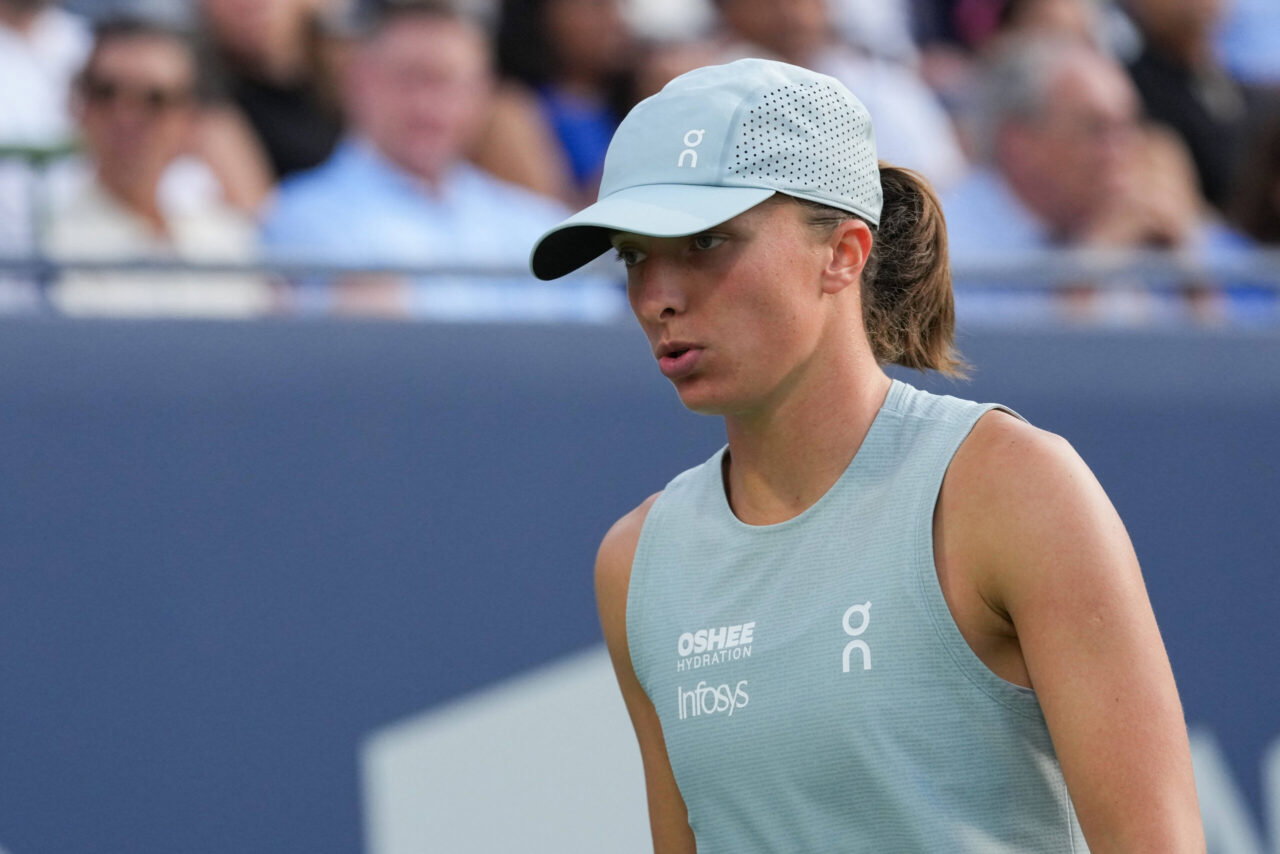
Imago
WTA, Tennis Damen Masters 1000 National Bank Open Toronto 2026 – Final Match – Day 13 Iga Swiatek of Poland reacts during the Womens Singles final match against Elena Rybakina of Kazakhstan on day 13 of the WTA Masters 1000 National Bank Open at Sobeys Stadium on August 13, 2026 in Toronto, Canada. Photo by Leonardo Ramirez/ Eyepix Group Copyright: xLeonardoxRamirezx/xEyepixxGroupx LR_13082026_10524
This does not mean Iga Swiatek expects to avoid mistakes. Instead, she needs to build points patiently and wait for the right chance to attack.
Finding this balance is not easy. Playing too safely can let opponents control rallies, while attacking too often can lead to unforced errors.
She must know when to stay patient, change direction, or hit a winner. Her best tennis combines patience with aggression, and she needs to maintain that balance under pressure.
Tennis history shows that even the best players face challenges as their rivals learn more about their games. Successful players make changes while keeping their biggest strengths.
Aryna Sabalenka offers a good example. Her powerful shots and serve have made her one of the top players in women’s tennis. However, double faults and serving problems affected her earlier in her career. She worked on her service technique to improve this weakness without changing her aggressive playing style.
Iga Swiatek can learn from this approach. She does not need to copy Sabalenka, as their games are different. Instead, she needs to identify her weaknesses and find ways to make her strengths more effective.
Rafael Nadal also offers a useful example. His heavy topspin forehand was a major weapon, but he also relied on movement, defence, patience, and smart shot selection. He knew how to use his strengths in different situations.
Swiatek’s work with Nadal and coach Francisco Roig follows a similar idea. She needs to use her strengths more efficiently instead of simply trying to hit harder.
However, she must avoid making too many changes after every defeat. Constant changes could reduce her confidence in the shots that brought her success.
The best approach is to fix repeated problems while protecting her playing style. For Swiatek, this means improving her serve, moving more smoothly, choosing the right moments to attack, and staying patient during long rallies.
These changes could make her game harder to predict without weakening her baseline strengths.
Clay is the surface where Swiatek has enjoyed the most success. It gives her more time to prepare, helps her use heavy topspin, and allows her to control rallies. Her four French Open titles show how well she plays on clay.
However, grass and hard courts bring different challenges. Grass produces a lower bounce and gives players less time to react. Hard courts can favour opponents who hit the ball early and change its direction quickly.
Iga Swiatek must adjust her position and shot selection to suit each surface. Her Wimbledon loss to Eala showed her struggles on grass, as Eala handled key points better and made fewer unforced errors.
However, Swiatek’s Canadian Open title proved that she can still dominate on hard courts. Her straight-sets win over Rybakina showed that rivals have not completely figured out her game.
Her main challenge is to maintain that level more consistently and adapt when conditions become difficult.
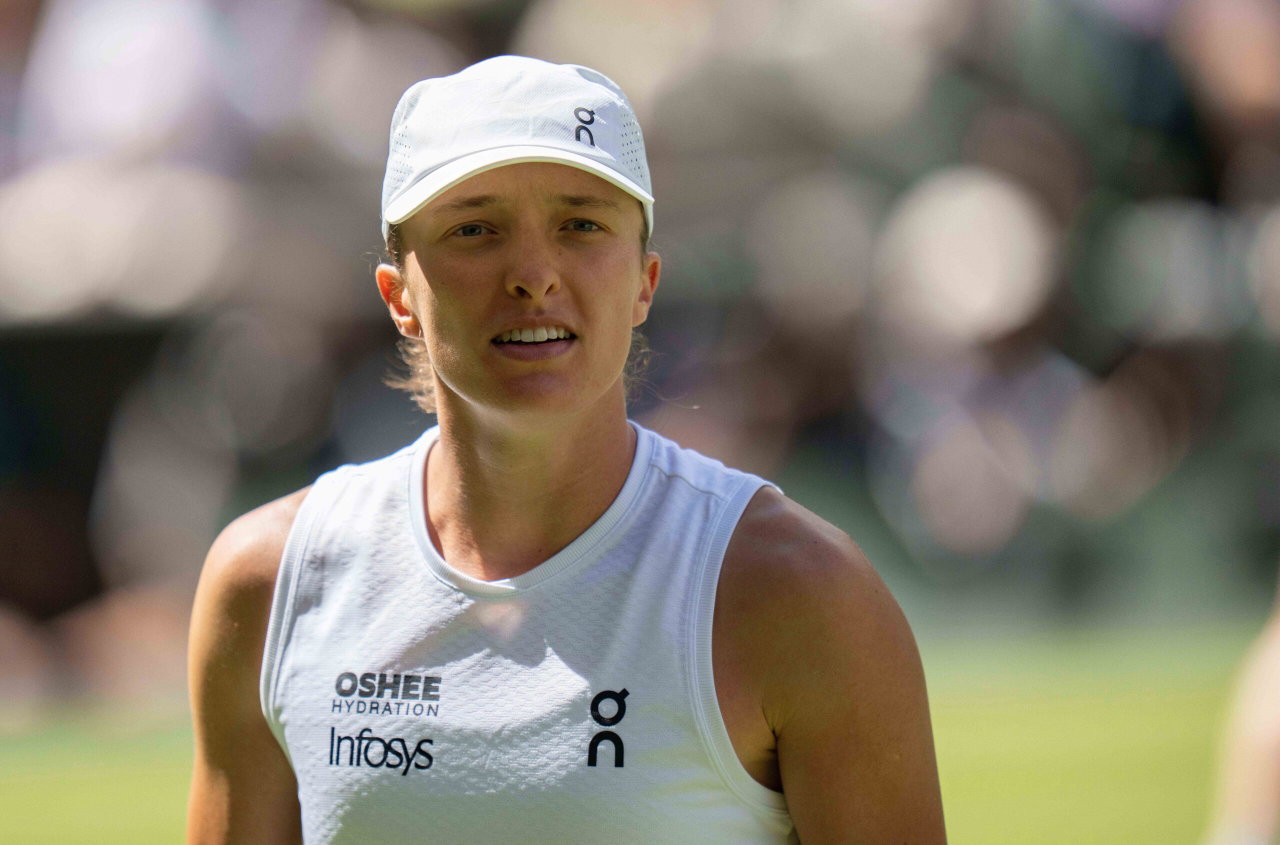
Imago
Jun 30, 2026; London, United Kingdom; Iga Swiatek of Poland during her match against Taylor Townsend of the United States on day two at All England Lawn Tennis and Croquet Club. Mandatory Credit: Susan Mullane-Imagn Images
She does not need to play the same way everywhere. She needs a strong game that works across different surfaces.
Swiatek’s forehand, movement, and strong baseline game helped her win six Grand Slam titles. She must keep these strengths at the heart of her game.
If she changes too much to deal with her rivals, she could lose what made her successful. She does not need to stop attacking. She needs to choose the right time to do so.
The same goes for her serve and movement. Technical changes should give her more options, not make her think too much about her technique during matches.
Once these changes become natural, she can focus on her opponents and make better decisions.
Her Canadian Open title proved that her strengths still work. However, her other defeats showed that she needs to use them more consistently.
Swiatek and Roig must find the right balance. They need to fix her weaknesses while protecting her confidence and the playing style that made her a champion.
Women’s tennis is becoming more competitive. Experienced players are improving, young rivals are gaining confidence, and more opponents understand Swiatek’s playing style.
However, she does not need to change her entire game. Her Canadian Open title proved that she can still beat top players. Her losses at Wimbledon and the US Open showed that she needs better solutions when her usual approach fails.
Working with Roig could help her improve her serve, movement, shot selection, and patience during rallies. These changes could make her game harder to predict.
The biggest challenge is finding the right balance. Iga Swiatek must keep the aggression and discipline that made her a champion while learning to adjust when matches become difficult.
She once forced opponents to find ways to beat her. Now, she must find ways to counter their plans.
If she improves her movement, makes smarter decisions, and stays calm under pressure, she can remain a tough opponent. But she must avoid overthinking her technique.
Can Iga Swiatek adapt quickly enough to stay ahead of her rivals without losing the qualities that made her a champion?
Let us know your thoughts in the comments.