
Imago
Image credit- Imago
Imago
Image credit- Imago
Carlos Alcaraz is fighting on two unforgiving fronts: battling through the brutal clay swing to defend his 4,300 ranking points and the world No. 1 spot. At the same time, he is locked in a quieter, more awkward struggle, trying to keep intrusive cameras at bay, echoing the same unsettling moment Coco Gauff endured in January.
Watch What’s Trending Now!
“For the fans, it’s great. They love seeing what happens behind the scenes, what we do, what the facilities inside the tournaments are like,” he added, speaking to Punto De Break at the Monte Carlo Masters. His tone was balanced, but the concern was clear.
Alcaraz then explained how constant surveillance affects players mentally. “But for the players it’s a bit strange, because we no longer have anywhere to relax, because we are constantly thinking that there are cameras and that everyone is watching us.”
He went further and addressed what he believes crosses the line. Cameras capturing deeply personal moments are where the problem intensifies.
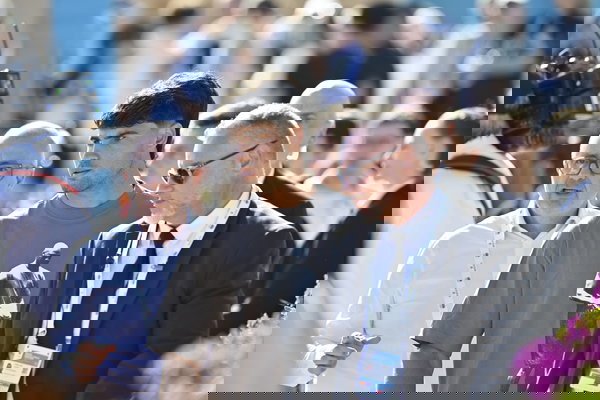
Imago
Tennis – Monte Carlo Rolex Masters 2026 – ATP, Tennis Herren – 05/04/2026 – Tennis – Monte Carlo Rolex Masters 2026 – ATP – 05/04/2026 – Carlos Alcaraz – Espagne Monaco PUBLICATIONxNOTxINxFRAxBEL Copyright: xChryslenexCaillaudx/Psnewzx
“Having cameras so close, being able to see what we are looking at on our phones, seems excessive to me. We already don’t have much privacy in tournaments, and I think this is too much. We should have spaces where we can be alone without being filmed.”
This concern is not limited to one player. It reflects a broader issue across the ATP Tour. The balance between access and privacy is becoming increasingly fragile.
The driving force behind this shift is financial. Sports governing bodies are pushing for higher broadcasting revenue. Networks demand “unprecedented access” to justify the money they invest.
This debate already gained attention earlier this year. It surfaced during the Australian Open. A moment involving Coco Gauff brought it into focus.
The situation escalated after Elina Svitolina defeated Gauff in the quarterfinal. The match lasted just 59 minutes and was one-sided. It became one of the toughest losses of Gauff’s career.
Frustration followed immediately after the match. Gauff smashed her racket in the tunnel as she left the court. Cameras captured the moment, and it was broadcast widely.
The footage spread quickly and became a major talking point. At her press conference, Gauff addressed the situation directly. She revealed that she had tried to avoid being filmed. “I tried to go somewhere where there are no cameras. I kind of feel like I have a thing with the broadcast.”
Despite these concerns, little appears to be changing. Major tournaments continue to defend their approach. For now, both Alcaraz and Gauff’s push for fewer cameras remains largely unaddressed.
Wimbledon responds to player complaints with final camera access decision
After the Australian Open incident involving Coco Gauff escalated, more players began supporting her stance. The call to remove cameras from backstage areas started gaining traction. It quickly turned into a wider player concern.
Jessica Pegula openly backed Gauff. She made it clear that constant filming is uncomfortable. “I’m not a fan of the cameras,” Pegula said.
“You’re just going about your day and feel like someone’s constantly filming you. I saw online that people were zooming in on player’s phones. Literally the only time you’re not being recorded is when you’re going into the shower and going to the bathroom.”
Amanda Anisimova also echoed similar frustration. She acknowledged that while some moments are enjoyable for fans, others are deeply personal.
“There are good moments, obviously, that people see, and that’s fun. When you lose, there are probably not-so-good moments. I think the fact that the video of Coco that was posted is tough because she didn’t have a say in that.”
Even Novak Djokovic weighed in, though with a sarcastic tone. His comment underlined how extreme the situation already feels. It also hinted that things could get worse.
“It’s only going to be as it is or even more cameras. I’m surprised we have no cameras while we’re taking a shower. That’s probably the next step,” said Djokovic.
Despite all these concerns, tournaments are not backing down. The commercial value of behind-the-scenes footage remains too high. Broadcasters continue to push for more access.
Wimbledon has made its position clear. There will be no changes to camera coverage. The decision comes despite growing player backlash.
According to Tom Kershaw in The London Times, the stance is firm. “Wimbledon has told players it will not be making any changes to its camera set-up at this year’s championships despite a backlash over behind-the-scenes access at the Australian Open.”
The list of concerned players is also growing. Carlos Alcaraz has now joined the conversation. That adds more weight to the issue.
At this point, the conflict is unresolved. Players want privacy, while tournaments prioritize broadcasting value. The real question now is when, or if, tournaments will finally reduce coverage to respect player boundaries.
