
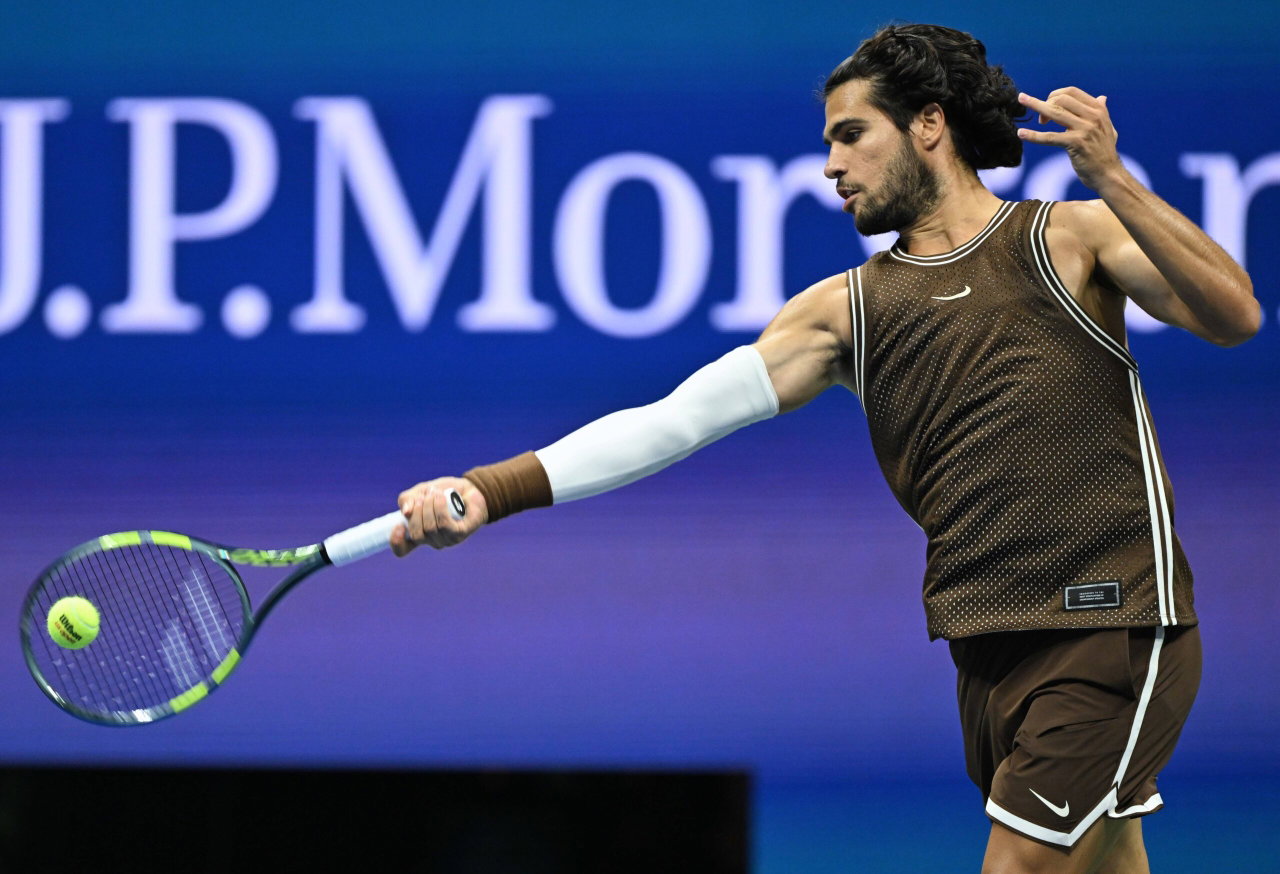
The players’ fight for a bigger slice of Grand Slam money is starting to look less united. Carlos Alcaraz had already made it clear he was fed up with a schedule that keeps grinding players down and said he plans to skip tournaments rather than keep pushing his body. Now comes the bigger blow. He has reportedly walked away from the revenue campaign itself.
Watch What’s Trending Now!
As per The Times’ report, Alcaraz’s long-time representative Albert Molina “informed the group the seven-time Grand Slam champion would not be a part of the campaign shortly before this month’s US Open.” After missing almost five months with a wrist injury, the Spaniard is now also questioning whether the tennis calendar itself is asking too much.
The fight over Grand Slam revenue began in March 2025, when leading ATP and WTA players pushed the four majors for a bigger share of the money they generate. Carlos Alcaraz, Jannik Sinner, Aryna Sabalenka and Coco Gauff were among the names backing the campaign.
The group wanted players’ share of Grand Slam revenue to rise to 22% by 2030, along with better welfare support and more say in decisions affecting the sport.
The dispute stayed mostly behind the scenes for more than a year. By the 2026 clay season, that changed, with Sabalenka even suggesting players could consider a boycott and Sinner making the frustration clear. “It’s more about respect, you know? Because I think we give much more than what we are getting back.”
At the French Open, players cut their pre-tournament media duties to around 15% of the allotted time, a symbolic reference to the share of Grand Slam revenue they believed players were receiving.
Alcaraz was not there. A wrist injury ruled him out of Roland Garros and later Wimbledon, keeping him away while the campaign became increasingly public.
Wimbledon raised prize money to a record £64.2 million, but the player group still felt it fell short. By the US Open, there had been more movement.
The USTA increased total player compensation by 20% to $108 million, including a new $2 million Player Support Program, while the four Slams agreed to create a Grand Slam Player Council.
Now, with the Spaniard’s exit, the image of a united player front has weakened. Sinner, Sabalenka and others remain in the revenue fight, while Alcaraz appears more focused on the ATP calendar after warning that players cannot keep competing for close to 40 weeks a year without injuries and fatigue catching up with them.
“In the future, I’m going to take some breaks, some long breaks,” Alcaraz said. “Maybe not four months, but one month, two months, missing some tournaments, because it’s impossible to play them all.”
And analysts have largely backed the players’ argument that simple prize-money increases are no longer enough.
Jon Wertheim explained that the real demand is a fixed percentage of gross Grand Slam revenue, so players benefit whenever the tournaments grow.
Wertheim called revenue sharing the “big sticky point.” Wimbledon and the US Open may be willing to raise prize money, but they have resisted giving players a direct cut of the business.
The French Open went further with an actual revenue-sharing proposal, but even that comes with a catch. As Wertheim warned, the accounting can change everything. What counts as revenue, what gets written off as expenses, and how capital spending is treated could decide whether players are really getting a better deal or just a better-looking one.
That is why the debate has moved beyond headline purse increases.
That is why this fight is no longer just about bigger prize-money checks. Players want a permanent share of the business as the Grand Slams keep growing.
For Alcaraz, the focus now appears to be workload. After losing months to injury, he is making it clear he would rather skip tournaments than risk another long absence.
Carlos Alcaraz Is Back and Already Making Noise
Interestingly, Alcaraz’s return could hardly have gone better. The defending US Open champion has reached the quarterfinals after dropping just one set, beating Roman Safiullin, Jaime Faria, Wu Yibing and Tommy Paul along the way.
Against Paul, he produced one of his sharpest performances yet, winning 6-4, 6-3, 6-4 in two hours 21 minutes while striking 33 winners.
Now comes Ben Shelton. The American reached the quarterfinals with a 6-2, 6-3, 6-4 win over Stefanos Tsitsipas and believes Alcaraz is already close to his best.
“We practiced together before the tournament,” Shelton said. “I’ve been watching his matches. I think he’s been playing at an extremely high level.”
Shelton also believes he has improved since their previous meeting, pointing to his serve, return, baseline consistency and movement.
For Alcaraz, though, the bigger story goes beyond one quarterfinal. He is back, winning and looking sharp, but his recent comments suggest he is already thinking about how to avoid another long spell away.
His reported exit from the player revenue campaign may weaken that movement, but his stance on workload is becoming clearer. After missing months with injury, Alcaraz appears increasingly willing to play less if that is what it takes to stay healthy.