
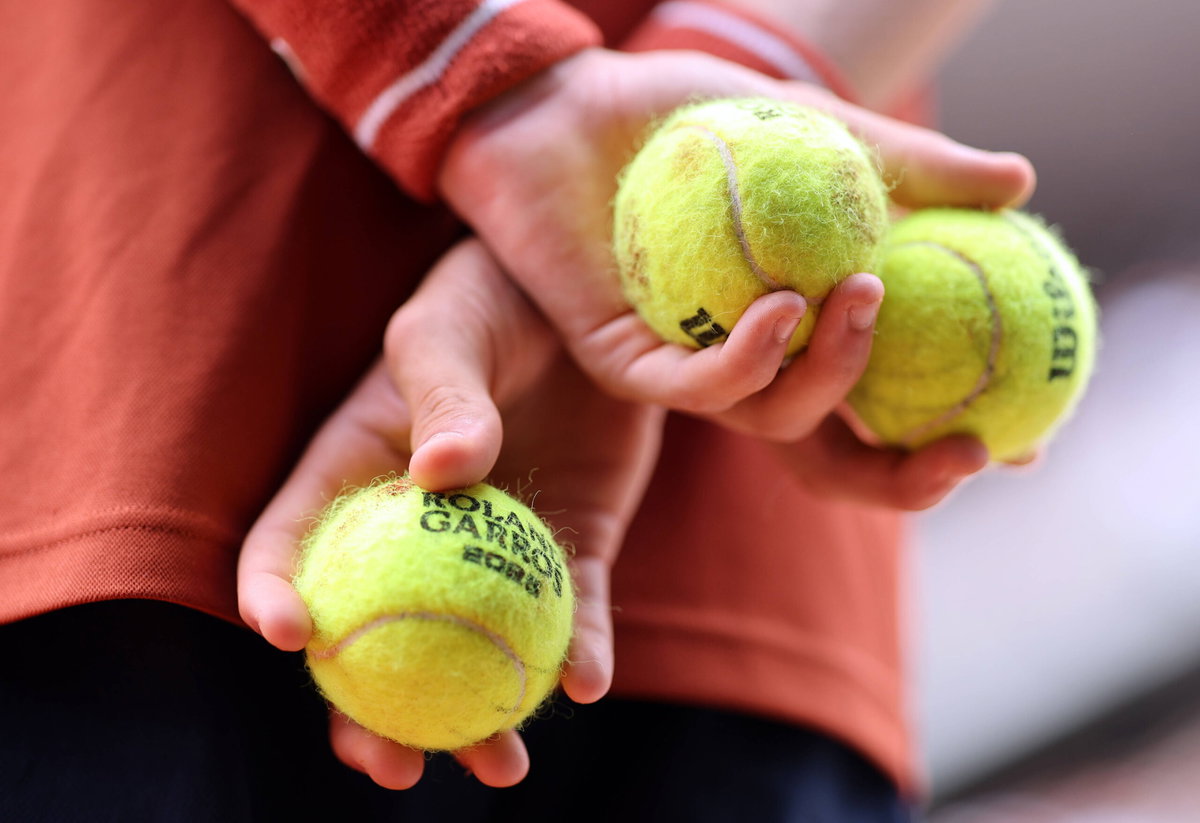
Tennis is blistering fast, and yet the very thing at the core of the game is proving to be a major hindrance for the elite. Complaints are coming in from the Grand Slams right down through the ATP and WTA circuits about the tennis ball. The issues are all the same: inconsistent bounces, a sudden loss of pace, and massive amounts of wear.
Watch What’s Trending Now!
The boiling point came during the Asian swing, with Carlos Alcaraz and Taylor Fritz both quite vocal about their frustration. It’s no longer just a question of the look of the game. It’s now a discussion about the quality of the match, the length of a player’s career, and the business model of the game.
Frustration on Tour: Alcaraz and Fritz Sound the Alarm
The Rolex Shanghai Masters really exposed the extent of the players’ frustration. Alcaraz, having just won a title at the Japan Open, was in disarray in his third- round match against Zizou Bergs. He was caught on camera going absolutely ballistic at his box. His issues with the equipment were completely laid bare.
“I don’t understand a thing. It can’t be that one ball bounces and the other slides on me. I can’t, man, I can’t play like this, man. Damn it!” Alcaraz said.
Alcaraz’s Shanghai frustration shows that the ball was behaving in a completely unpredictable manner, which was disrupting his timing.

Imago
260927 — LONDON, Sept. 27, 2026 — Team World s Taylor Fritz reacts in the singles match against Team Europe s Carlos Alcaraz during the Laver Cup tennis tournament between Team World and Team Europe in London, Britain, on Sept. 26, 2026. SPBRITAIN-LONDON-TENNIS-LAVER CUP LixYing PUBLICATIONxNOTxINxCHN
Fritz had a similarly unflinching take on the situation after his win over Matteo Arnaldi. Having seen the courts at Shanghai speed up, Fritz maintained the equipment effectively negated any benefit from the new ball shine, which was lost after a few games.
“Just when the balls get worn out, I can hit the ball on a line as hard as I can,” Fritz stated. “Then on the other line as hard as I can, and then he just passes me and hits a full shot.”
His comments came in after the victory over Matteo Arnaldi, where Fritz won in two straight sets.
“Thank goodness they fixed the courts this year. They’re faster, so at least you can still play, but, I mean, these balls are super fast when they’re new, and then they wear out super quick…” he concluded.
Why Balls Differ Across Tournaments and Brands
The ATP Tour, the WTA Tour, and the four individual Grand Slams all have their own separate commercial deals. Tournaments therefore used to go from one manufacturer to another over the course of the calendar year. (e.g., Dunlop to Wilson to Head to Penn to Technifibre to Yonex, etc.) Each manufacturer uses their own proprietary mix of natural wool and nylon, which expand and absorb the moisture in the atmosphere at very different rates.
That being said, the tours have also brought in ball centralisation to try and phase out weekly changes.
These technicalities make international travel a complete operational nightmare for the players. When they go from New York to Beijing and then on to Tokyo or Shanghai, they’re effectively having to recalibrate their sensory reflexes and muscle memory from scratch every week.
The modern tennis ball degrades at a much faster rate under today’s extreme strike speeds. When the high tension of the polyester strings grips the felt, the fibers shear and bulge outwards, creating a parachute effect which in itself changes the aerodynamics of the ball. The rapid swelling creates huge amounts of atmospheric drag, which slows the ball in flight and effectively removes the flat hitter’s ability to get through and finish the point.
Further, the dynamic spin character changes once the ball has fluffed up. Rather than biting into the hard surface and skidding or kicking forward, the swollen ball squashes on contact and just sits up passively in the mid-court. The attacker finds it extremely difficult to hit winners through the agile defensive counter-punchers and the attacking sequences are thus invariably going to devolve into 20-shot baseline wars of attrition.
The player has to swing with maximum muscle force to get the same pace. That in turn puts a massive amount of vibrational shock through the wrist, elbow and into the rotator cuff. Wrist surgery and chronic tendinitis have seen a number of players ruled out over the past few seasons as a direct result of the mechanical load. The constant structural shock across the nine-month calendar leaves the joints open to repetitive stress injuries.
Global shifts in the supply chain, changes to the felt weaving and rubber compound over the last few seasons have seen an increase in batch inconsistency. It’s a common complaint that balls taken from the same case will behave in completely different ways. So equipment reliability has become a weekly lottery which continues to breed player resentment.
The ITF set out the official technical specifications (mass, diameter, deformation under compression). But the regulatory corridors are extremely wide. The mass is allowed to vary from 56.0g to 59.4g. This results in a very wide range of dynamic swing weights. The rebound is allowed to vary from 135 to 147cm, giving rise to a very wide range of shoulder-high kick bounces and low skids.
Individual tournament directors negotiate their own highly lucrative ball partnerships. The manufacturers are more interested in their own brand, in tournament margins and in consumer sales than in tour-wide consistency.
Whether Standardizing Balls Could Solve the Problem
Unifying the game under one standard tour ball is a perfectly sensible solution in theory. However, in practice it runs up against enormous environmental obstacles.
The red clay of Roland Garros, the grass of Wimbledon, the high altitude clay of Madrid, the humid coastal hard courts, etc will react in utterly different ways to rubber and felt. A ball that bounces beautifully on the European clay would be completely unplayable in the dry heat of the desert.
A workable compromise would be regional cluster standardisation. Instead of having one single ball standard across the whole year, we could have the same ball standard across a cluster of tournaments in a region. Later, combine that with much tighter manufacturing tolerance bands. This way players will have no sudden weekly shocks, just a very gradual transition from one ball to another.
Racket engineering, the use of advanced string composites, and athlete conditioning have all progressed enormously over the past 20 years. Pro players today can achieve racket head speed that simply wasn’t possible in previous generations. Thus, it puts a huge amount of rotational stress on the ball. The opposite is true with the tennis ball itself, though. The core and felt manufacturing process is still essentially based on the old-school methods. Meanwhile, weaving techniques were developed decades ago.
Until ball engineering catches up with the current power in the game, players are going to keep carrying the physical and competitive load. Alcaraz and Fritz’s frustration is one of many cases on tour. The ball issue in tennis is a persistent one.