
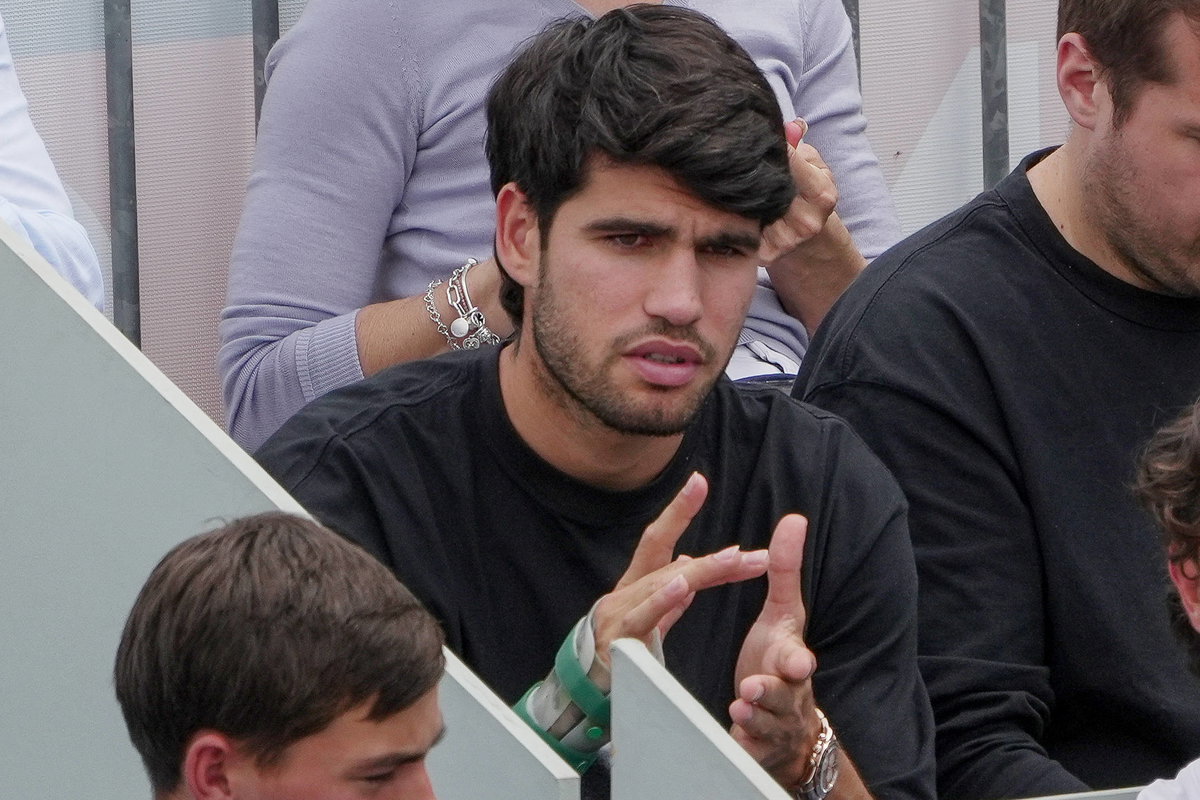
In January 2025, Martina Navratilova was already making the same argument she is raising now: tennis gives its top players far too little time to recover. A top player can play 60 to 80 matches, sometimes close to 90, while the season stretches from early January to late November. So when Carlos Alcaraz said he would start skipping tournaments and taking longer breaks to protect his body, Navratilova backed him.
Watch What’s Trending Now!
“ These 12-day events are great for the tournament, for making $ and great for the fans; they are horrible for the top players,” Martina Navratilova posted after Alcaraz revealed his plan to start skipping tournaments.
“In the future, I’m going to take some long breaks, maybe not four months but one or two months, missing some tournaments because it’s impossible to play them all. I’m going to miss some tournaments in the future for sure,” said Alcaraz.
Well, you can already see the problem. Carlos Alcaraz skipped Wimbledon because of his wrist injury and returned at the US Open only after four months away, while Jannik Sinner is not even back for New York because of knee inflammation. That alone tells you how little room players are getting to properly recover. And after beating Jaime Faria, Alcaraz made it clear that the packed calendar and its constant demands are becoming impossible to ignore.
Alcaraz said, “In a way, they’re making us to play… We’ve been out playing 40 weeks if we’re going to play every mandatory tournament that the ATP required us to play.”
With seven of nine Masters 1000 events now lasting 12 days, recovery windows are shrinking. Indian Wells, Miami, Madrid, Rome, Canada, Cincinnati and Shanghai all use the longer format.
Even Alcaraz’s coach Samuel López has acknowledged the problem.
In April, El Confidencial reported that his team understood it was “impossible to be at your peak in every tournament,” adding that the demanding schedule forces them to choose where to focus their efforts. Alcaraz himself was even more direct during the clay swing: “It’s very demanding, both physically and mentally,” while admitting that Barcelona was probably the week he should have rested.
And Alcaraz is hardly alone in saying it.
Iga Świątek has previously admitted, “For sure it’s a calendar thing. Like, we’re not going to be able to be consistent for many years playing week by week… the calendar is not helping. Again, like, we need to switch continents, we need to switch surfaces, we need to switch the balls. Yeah, it’s not easy,” while Alexander Zverev has complained, “We don’t even get a full month off from tennis. How can you take the time to prepare your body for the new season?”
The frustration has been building for years, and analysts are now saying the same thing the players are.
Andy Roddick called the expanded Masters 1000 events an “unforced error,” arguing that “everyone knows that the season is too long” and that 12-day tournaments leave players with even less flexibility to recover.
He also pointed out that one or two rest days at a tournament are nothing like spending a week or two at home rebuilding the body.
The PTPA has gone further, saying its study of more than 30,000 professional matches found that “the season is too long, recovery time is shrinking, and injuries are occurring earlier and becoming more severe.”
And the US Open withdrawal list is making that warning harder to ignore.
Twenty-four players have withdrawn from the singles draws in total, including 14 men and 10 women. Jannik Sinner, Casper Ruud, João Fonseca, Holger Rune, Sebastian Korda and Jack Draper are among those missing from the men’s field, while Victoria Mboko and Emma Raducanu are among the women ruled out.
Eighteen withdrew before the draws were made, while six more pulled out afterward before playing their opening matches. Thanasi Kokkinakis and Tereza Valentova were among the latest injury-related withdrawals.
That looks even worse when you compare tennis with other major sports,
- NBA players who reached the 2026 Finals finished in June and do not report for training camp until late September, giving them more than three months without competitive games.
- The NFL season ended with the Super Bowl on February 8, while most veterans did not report to training camp until late July, roughly five and a half months later.
- MLB full squads did not begin spring workouts until mid-February after the previous season ended in the fall.
Tennis, meanwhile, can take a top player from late-November competition straight into a new season in early January.
That is why Navratilova’s complaint hits so hard: other major sports have an offseason, while tennis barely has one.