
The Wimbledon build-up is in the hands of a heat wave in London, and it’s a situation that nobody anticipated. The LTA’s National Tennis Center in Roehampton reached 33°C (91.4°F) with 51% on Wednesday, forcing the electronic line-calling system to overheat and shut down mid-match, bringing qualifying matches to a halt just around 12:15 pm. While the cancellation was temporary and the play eventually resumed after technicians restored power, the Met Office has warned of an exceptional spell of hot and humid weather with impacts to the general population highly likely across the region. Temperature forecasts are predicting a further climb as the week goes on. It’s an issue that the majority of the participants in London now have to deal with. For two of them, though, it is not that inconvenient.
Watch What’s Trending Now!
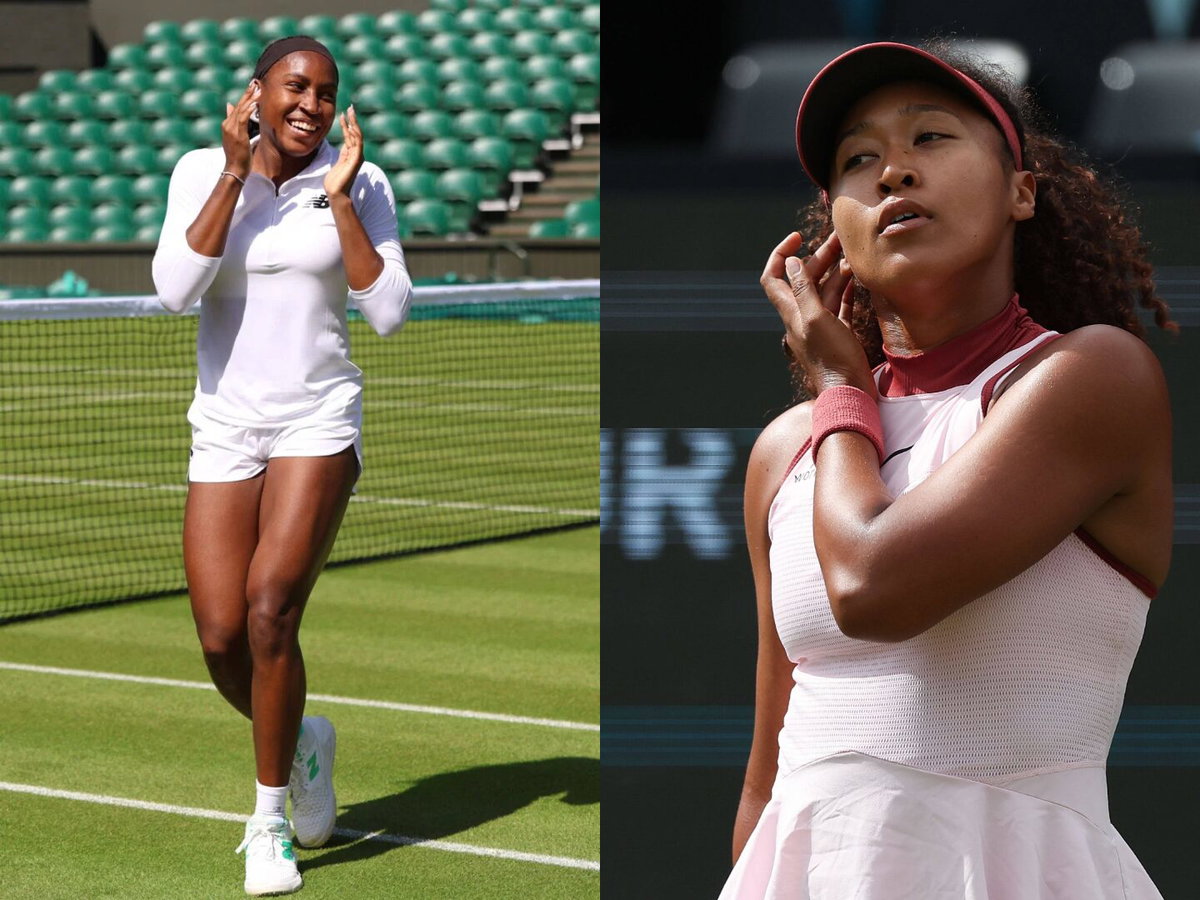
Coco Gauff and Naomi Osaka have both weighed in on the heatwave. Gauff, who hails from Florida, has a different experience with excessive heat than most of her European peers.
“Playing in it is not too bad, because I’m from Florida, but just existing in it is rough, because the AC is not in all places,” Gauff said.
It is a small but revealing distinction. She can handle the conditions on the court. It is everything around the tennis, the hotels, the transport, the interviews, the daily life of being in a city that was not built for this kind of summer, that creates the friction. Naomi Osaka, on the other hand, is not only tolerating the heat, but she’s actively welcoming it.
“Honestly, I’m pretty heat-tolerant. Aside from doing interviews or stuff like that, I really love the heat. I kind of prefer it. It was hot in Paris a few weeks ago and I also enjoyed that. So I kind of want it to be hot,” Osaka admitted.
View this post on Instagram
The two players are coming to Wimbledon from vastly different grass-court campaigns. Coco Gauff’s build-up has been difficult. At the Berlin Open, she fell to Paula Badosa 1-6, 6-3, 6-2 in the second round, marking her third successive singles loss on grass going back to last year’s Berlin Open. She dominated the opening set but became frustrated by the surface as the game progressed, dropping her first serve percentage with each set.
In doubles, she and Jessica Pegula beat Anastasia Potapova and Diana Shnaider in their opening round, before losing to Asia Muhammad and Fanny Stollar in the quarterfinals. Gauff is one of the most threatening players on the hard court and clay, but she has not cracked grass yet. Her best Wimbledon showing remains the fourth round, something she has reached three times in her career now. With no more tournament tennis before the main draw begins on June 29, she heads into the All England Club on the back of a run she will want to forget quickly and put last year’s memories of a first-round exit behind her.
The trajectory to Wimbledon is different for Osaka. She had not gone to Berlin and went directly to Bad Homburg, taking an extra week of preparation on the surface. The decision appears to have been the right one. She beat Magdalena Frech 6-4, 6-1 in her opening match and then dismissed Elise Mertens 6-3, 6-3 to reach her first quarterfinal of the 2026 season.
It is also her first grass-court quarterfinal since ‘s-Hertogenbosch in 2024. The numbers from the Mertens match were notable: seven aces, 86 percent of first-serve points won, 22 winners to just eight unforced errors. It’s remarkable efficiency for a player who’s always struggled the most with grass.
It arrives following a season in which she has delivered the best Grand Slam performance on clay of her career. At Roland Garros, the four-time Grand Slam champion reached the fourth round for the first time, becoming the first Japanese women’s singles player to make it that far at the French Open since Shinobu Asagoe in 2004. She lost to world No. 1 Aryna Sabalenka in straight sets, but the direction seems to be evident.
It’s a surface-specific knowledge that’s being acquired match by match, and that hasn’t always been the case for her on grass or clay. Her best performance at Wimbledon was reaching the third round three times. The Bad Homburg quarterfinal suggests she is building towards something better.
Osaka opens up on her complicated relationship with grass
The heat is the easy part for Naomi Osaka. Her journey on the grass has been the more complex one. She spoke candidly after her win over Mertens about a relationship with the surface that has taken years to untangle. “When I was younger, like my first grass season, I injured myself. I slipped, and it kind of scared me a lot from moving on grass,” she said.
The injury left a mark beyond the physical. It gave her a hesitancy while moving, a disinclination to go all-in when playing on a surface that had hurt her, and that hesitancy stuck with her throughout her grass-court years. “My relationship with grass, I’m learning to love it a little bit, like clay. But I think everyone says I have a lot of potential on grass and they’ve been saying that over the years. I’m just trying to adjust myself,” she said.
The progress in Bad Homburg is the clearest sign so far of the adjustment taking place. After winning 86 percent of her first-serve points against Mertens, she credited her movement as the element she was most pleased with. “Coming from clay, it’s a lot different. Just getting used to moving on here and giving my body a little bit of time to adjust to the surface,” she said.
That is not the language of a player still afraid of slipping. It is the language of one gradually making peace with a surface that has given her so little, despite the widespread belief that her game, built around power serving and clean groundstrokes, should thrive on it.
In Bad Homburg, she will play Ekaterina Alexandrova in the quarterfinal on Thursday at 1 pm local time. If she gets a run to the final, she’ll get more grass-court match practice in that fortnight than she’s had in several seasons. In either case, she comes to Wimbledon fitter and happier about the surface than she’s been on for years. The heat is not an issue, she says. Whether the grass finally delivers on its long-standing promise is the more interesting question.