
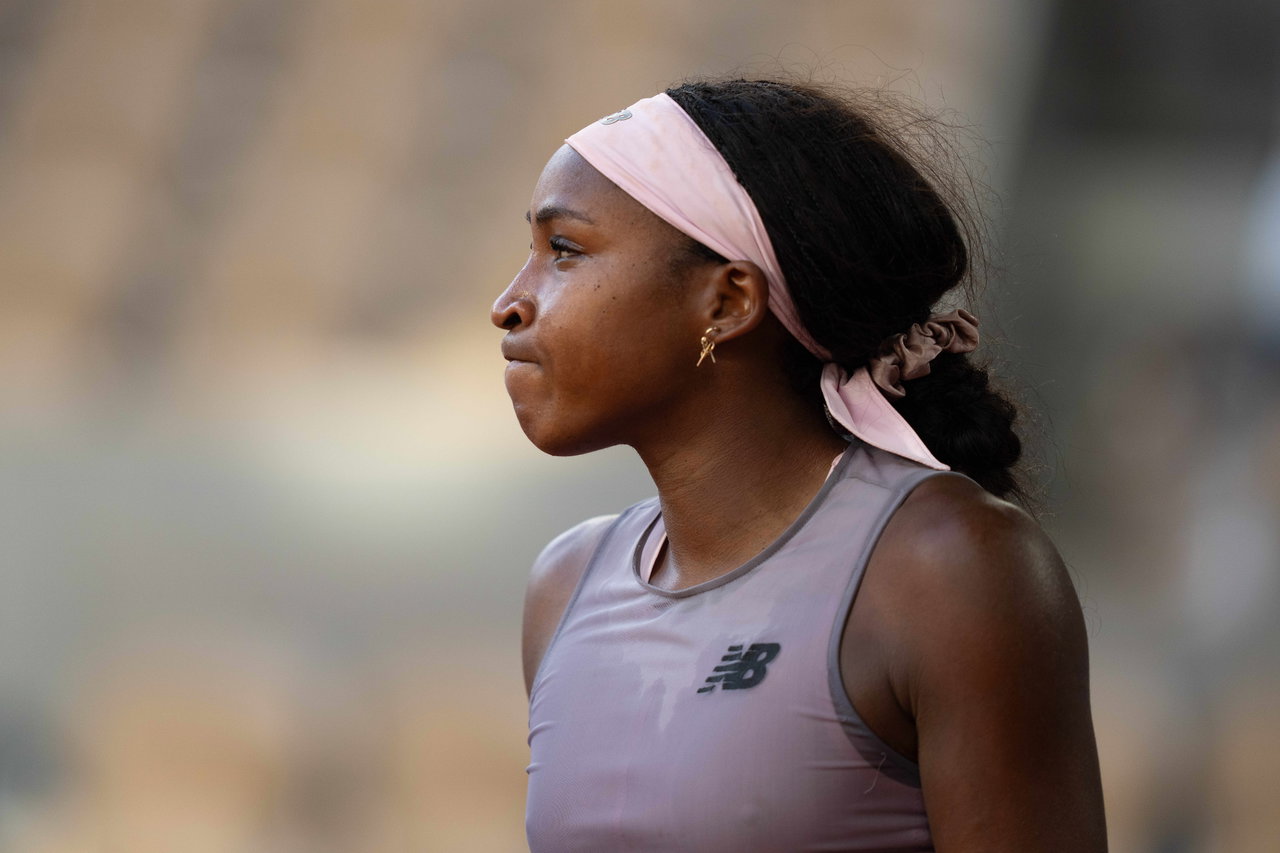
The intense standoff between the top ATP and WTA players and the Grand Slams over prize money is at a delicate standstill. Despite Wimbledon increasing its total prize money by 20 percent to $85 million, Coco Gauff believes it is the start of a long journey but not an end.
Watch What’s Trending Now!
“I think it’s still a long way. We are grateful for the progress that has been made”, said Gauff during her interview ahead of the Berlin Open. “But there is a lot more that we can do, not only at Wimbledon but at the other Grand Slams as well”.
Gauff’s pointing towards other Majors has obviously been at play during the French Open, where, even though the Paris Major increased its prize pool by 9.5 percent, the players’ revenue share was at 15 percent.
The players took the matter seriously, and the top-ranked players, which included the likes of Jannik Sinner, Aryna Sabalenka, and Gauff, led a media boycott which saw none of the top-ranked heavyweights spend more than 15 minutes on their media obligations, a number which was symbolic of the financial divide.
A similar statement from the players also went out regarding the Wimbledon raise, which currently gives its players a 14.4 percent revenue share despite a 20 percent increase in prize money, which has pacified the players to some extent.

Getty
QUEENS, NEW YORK – AUGUST 25: Coco Gauff attends a press conference at the USTA Billie Jean King National Tennis Center on August 25, 2023 in Queens, Borough of New York City. US Open 2023 celebrates 50 years as the first sporting event in history to give equal prize money for men and women competitors (Photo by Maria Velez/VIEWpress) Image Credits: Getty
Even at the Australian Open, the situation was similar: the tournament officially announced a 16 percent increase in the prize pool from last year, but the revenue share was only 16 percent. Even though the players’ group did not agree with the number, they still used it as a standard measure for the other Majors of the year.
However, given the players’ recent statement, one has to assume that, even though the players have been momentarily satisfied, they are not going to back down from the bigger fight.
Players Still Want the Broader Issues Within the Grand Slam Pay Structure to Be Addressed
The players have appreciated the $85 million move, but in a recent joint statement, they still had outstanding concerns. Despite the massive 20 percent increase in prize money, the projected revenue share is not where the players want it to be. The top players have always maintained that this was not just a cash grab by the rich to get richer, but a holistic change in the sport, with demands for transparency, a player welfare fund, and greater player involvement in how a Grand Slam operates.
Players have also pointed out that ATP/WTA Tour-level events have a revenue share of almost 22 percent, while citing examples from other sports, such as the NBA, where the revenue split is almost 50-50. That is what the likes of Sabalenka emphasized at the French Open, stating this movement by the players was not for personal gain, but for the collective improvement of the players. The Grand Slams are the sport’s prized assets, and through ticket sales and sponsorship deals, these events earn hundreds of millions of dollars, of which a key part goes to the players.
The Grand Slams have stated that they need a large share of the revenues to fund grassroots development and stadium infrastructure, including roofs. Earlier this year, the former CEO of the Australian Open, Craig Tiley, announced that the tournament had not only increased its prize money but had taken care of travel costs for the lower-ranked players to provide them logistical ease, while also putting $135 million into the grassroots tiers of the sport in the country.
With the current increase at Wimbledon, the singles champion is slated to receive $3.6 million, while a player making a first-round exit earns $80,000. However, it still seems to be falling short of the players’ expectations, with the likes of Jannik Sinner already talking about boycotting the mixed doubles event at the US Open.
Having seen the impact of a lack of stars on the viewership numbers, the Grand Slams can ill afford any of their stars boycotting the events. They will be looking forward to opening a dialogue and sealing a satisfactory deal to keep all parties happy.