

Tennis exists in a space few sports dare to occupy, where rivals share locker rooms, warm-up zones, and silent pre-match meals, erasing the boundary between tension and coexistence. The atmosphere feels charged, intimate, and quietly unsettling, a mental battlefield before the first ball is struck. It’s no surprise it’s called the “least favorite place in the world,” as Maria Sharapova said, with Coco Gauff and Jannik Sinner revealing its raw truth today.
Watch What’s Trending Now!
“[With] the people I know really well, it’s not really that awkward. We’ll talk and be, ‘OK, see you out there,’ and that’s fine. But always with people you don’t know, you don’t know whether to say hi to them or not.” Coco Gauff captures the delicate balance players navigate inside the locker room. “I’m someone who usually always says hi, but the responses vary. And I understand – get in the moment.”
Her words reflect a space where familiarity can ease tension, but uncertainty often lingers. Not every interaction comes naturally, especially when competition is only moments away.
For Belinda Bencic, certain situations feel even more uncomfortable than the locker room itself. Shared moments outside the court can sometimes heighten the awkwardness.
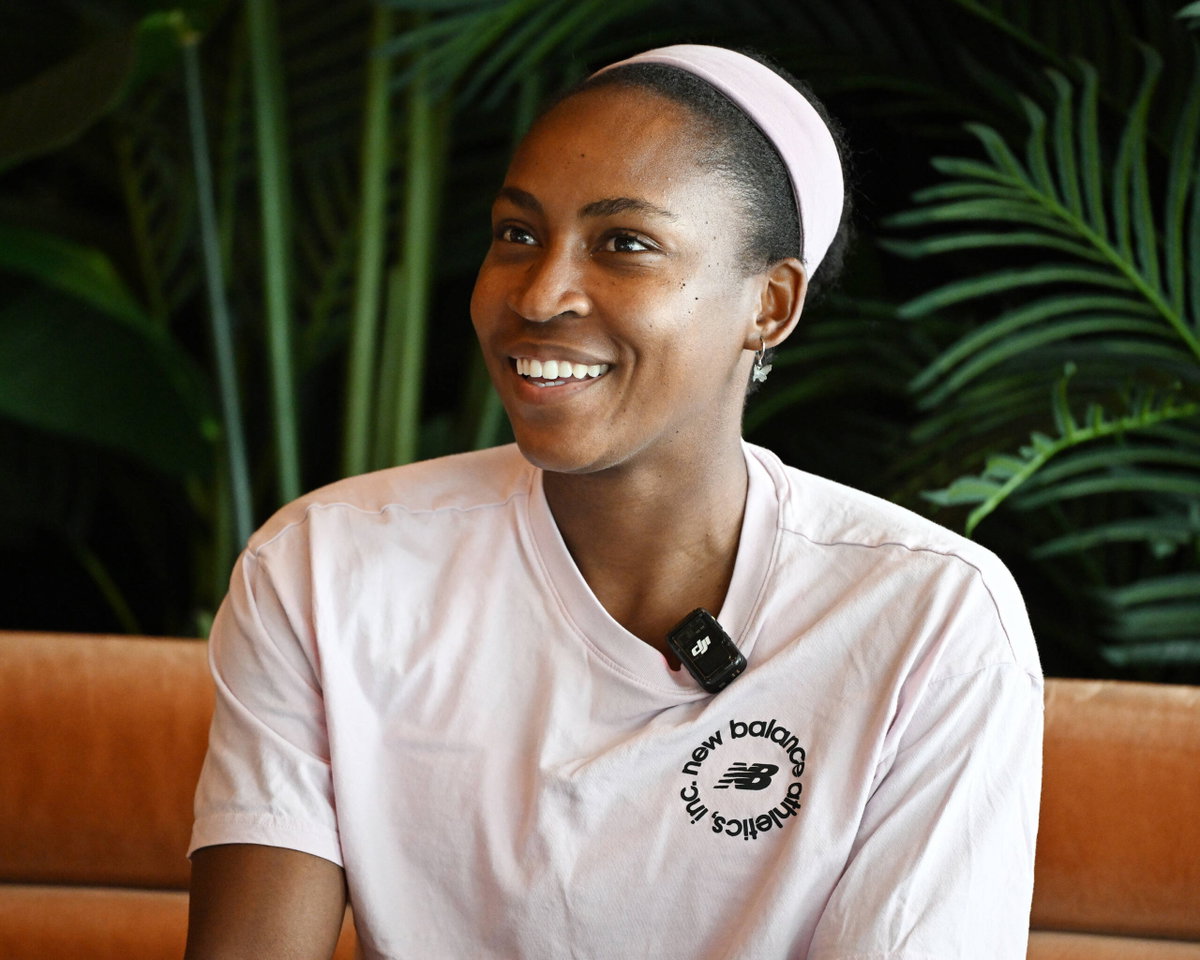
Imago
MIAMI GARDENS FL – MARCH 17: Coco Gauff pictured during Media Day at The 2026 Miami Open at Hard Rock Stadium on March 17, 2026 in Miami Gardens, Florida. Copyright: xmpi04/MediaPunchx Copyright: xIMAGO/MediaPunchx
She points to instances like traveling together in a golf cart before a match. Those close quarters create a different kind of pressure.
“Sometimes you are doing your hair or getting ready for the match, and your opponent is right there,” she says. “You don’t know if you should say small talk or not. Everyone is different.”
Bencic highlights how personalities shape these interactions. “Some players are very relaxed – we are talking – and some players don’t want to talk to you before the match.”
One way players deal with this environment is by limiting their time in it. Jannik Sinner has developed a routine that avoids unnecessary exposure. “When I started to come on tour, I was on-site a lot,” he says. “I would spend a lot of time in the locker room, a lot of time in the restaurant area.”
“Now I’m a bit different. Especially on training days, I come here [and] when the training is over or I eat something very fast here, then I leave or I leave straight away.” His approach reflects a shift toward efficiency and focus.
Stefanos Tsitsipas believes most players maintain good relationships overall. Still, he notices changes in behavior among some competitors.
He points out that not everyone acknowledges others the same way once success arrives. That shift in attitude does not sit well with him.
“One thing I don’t understand is how they develop a bit of an attitude and a bit of an ego once they make one or two good results. Their whole personality changes. I wouldn’t say arrogant – perhaps some of them.”
Tennis, often compared to a gladiatorial contest, forces rivals to share the same space even on the biggest stages. This dynamic makes it unlike most other individual sports.
Even on finals day, players preparing to compete for a title occupy the same facilities. The proximity adds another psychological layer to the contest.
Given what is at stake, the locker room could easily become a place filled with tension and anxiety. Building genuine friendships in such an environment is not straightforward.
“It’s tough for me to imagine being friendly and having a friendship with someone and then the next day going out on the court and trying to beat them,” Maria Sharapova explained in an interview with Larry King in 2013. “I don’t think that’s fair.”
Time and again, players have spoken about these realities. The locker room remains a complex space, where the chaos beneath the surface mirrors the intensity seen on the court.
Nick Kyrgios reveals locker room dynamics between tennis players
After spending so much of their lives in shared locker rooms from their junior days, players gradually become accustomed to the interactions. What might seem unusual from the outside often becomes routine within the sport.
For Madison Keys, the experience feels natural. “I quite enjoy it because even though you’re sharing a locker room with your opponents, you’re also sharing a locker room with friends,” she says.
Others echo a similar sentiment. Daniil Medvedev has often heard stories from his coaches about how tense relationships between players used to be.
His coaches, Rohan Goetzke and Thomas Johansson, have described a far more chaotic environment in earlier years. Compared to that, Medvedev believes today’s locker rooms are calmer.
He says the atmosphere is now largely peaceful and free from drama. The sport itself brings together players from different cultures, customs, and backgrounds.
Nick Kyrgios once offered a revealing perspective on the reality of tennis life. Speaking on the program Good Trouble with Gordon Ramsey, he explained how the environment truly works.
“The interesting thing is that everyone thinks that tennis is an individual sport. But in the end, you shower with everyone else, everyone showers in the same place, and eats in the same place. So we meet a few minutes before entering the court, and it’s the most incredible thing about this sport.”
He later added more detail about those moments before matches. “Usually, the changing rooms are separated, you don’t see the opponent all day.”
“For example, at the US Open, Daniil Medvedev and I are about to take the court, we are together in the same locker room, we watch the end of the previous matches, and we are preparing together.”
For Sloane Stephens, the experience was very different at the beginning. She still remembers her early days stepping into WTA locker rooms. She was just 16 when she made her main draw debut. Walking into that space felt overwhelming, surrounded by players she had long admired.
Now she would have to compete against them. That reality added another layer of pressure. What stands out most to Stephens today, now 33, is how silent the environment felt. There was no casual conversation, and interaction was minimal.
Players rarely spoke, not to her and often not to each other. The top names did not even glance in her direction.
As locker room dynamics continue to evolve, the space remains complex and often polarizing. In many ways, it still feels like a hidden world within tennis, understood fully only by those inside it.