
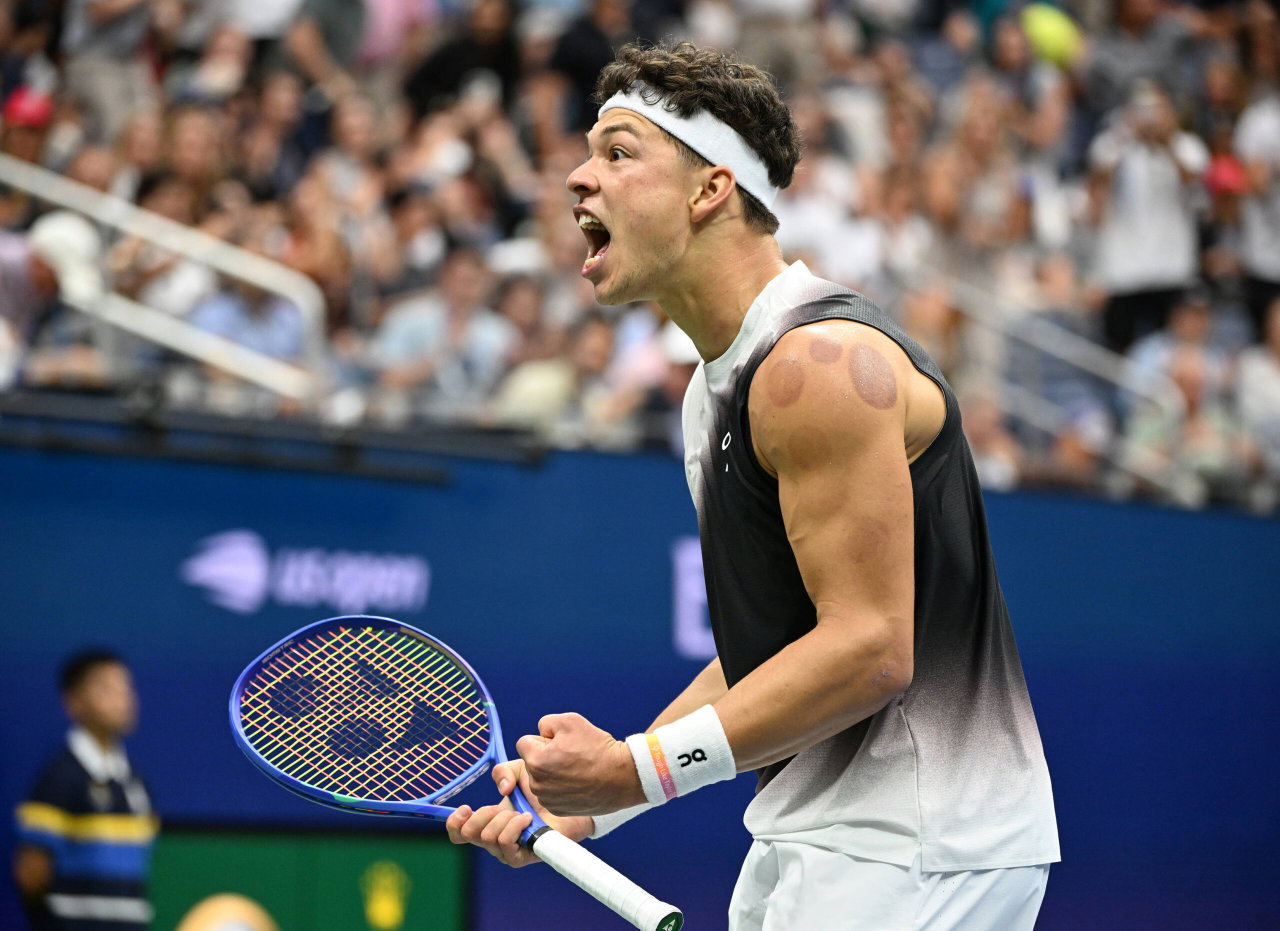
Ben Shelton’s stunning upset of Carlos Alcaraz in the quarterfinal of the US Open did not just end in a shock result, but in a piece of tournament history. The eighth-seeded American defeated the defending champion in the deciding tiebreak after 4 hours and 28 minutes, with the final ace struck at 3:33 a.m.
Watch What’s Trending Now!
This was the latest finish ever at the US Open. It broke a record previously held by an Alcaraz match, the 2022 marathon quarterfinal against Jannik Sinner, which finished at 2:50 a.m. And following the titanic clash Serena Williams’ coach Rennae Stubbs summed up the night’s absurdity on social media.
“Finishing at 330am is bonkers and I hope like hell Ben can recover,” she wrote on X. “BUT the Q is, on this 1, how could it have avoided? Every match went the distance! Sadly this is tennis for u. It was arguably the greatest match day in tennis history and to the crowd that stayed till 330am, bravo!”
That question of how it could have been avoided was not about one wrong call. All four quarterfinal games went deep that day. The afternoon began at 11:30 a.m. with Aryna Sabalenka needing 2 hours and 22 minutes to escape Linda Noskova, before Frances Tiafoe and Alex Michelsen played a 4-hour, 39-minute epic on the same court. Then Jessica Pegula’s win took another 2 hours and 21 minutes over fellow American Emma Navarro. By the time Shelton and Alcaraz stepped onto Arthur Ashe, it was already past 11 p.m and nearly 14 hours of tennis had been played before the last match began.
There are several fixes that could have been used to avoid such a late finish. A possibility was to split the four singles quarterfinals over two courts and use doubles matches to fill the gaps, which would have significantly made the duration shorter. They could also start the day early and even impose a curfew like Wimbledon.
Unlike the US Open, Wimbledon has a rigorous 11 p.m. curfew, requiring matches to be suspended and completed the next day if necessary. Even without a curfew, better scheduling could have avoided this late finish. But it would still have been difficult on a day where every match went to the ultimate distance.
Shelton, for his part, at least has time to recover, with two full days off before his semifinal against Frances Tiafoe. He would not fall asleep before 6-7 a.m. when taking into account his media obligations, treatment, and cooldown.
Despite all that, about 8,000 fans stayed until the last was struck, turning what could have been a scheduling debacle into, in Stubbs’ words, one of the greatest days tennis has ever produced.