
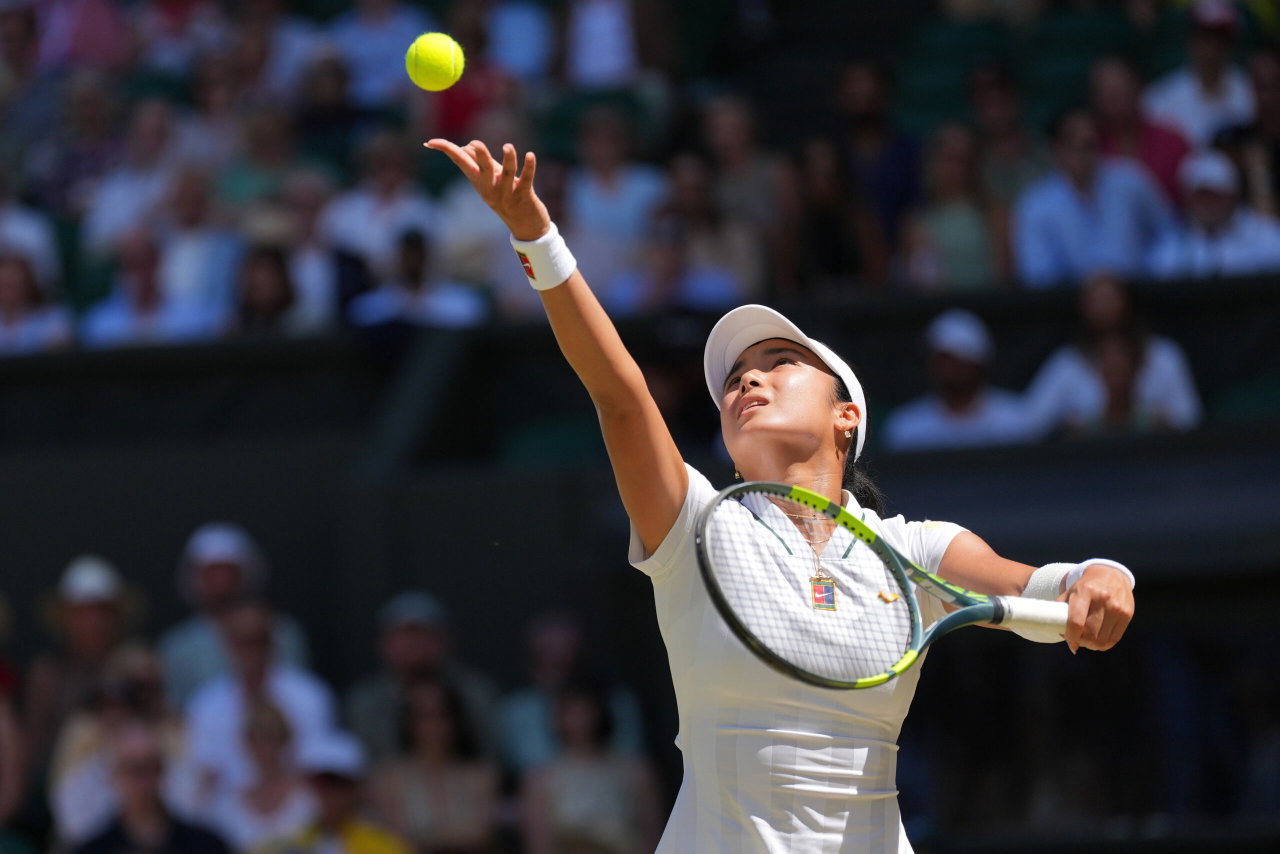
A slow serve should not beat a six-time Grand Slam champion. Alexandra Eala did exactly that at Wimbledon, and now she has to keep defending it. The Filipina faced pointed questions about her serve at a Nike fan event in Bonifacio Global City, despite coming off the best fortnight of her career.
Watch What’s Trending Now!
“I think this is an important question about having that balance,” she said. “How confident are you in the work you put in? I know that I put so much work into my serve. People don’t know how much work I put into my serve. So when I have a bad serve day, it’s okay, because I know I did my best.”
Eala pushed back further on how outsiders judge a single bad result.
“I’m confident in my mentality. I know I did everything I could during that specific match,” she added. “People don’t know what happened in the lead-up to that match. They never know the full story.”
She credited the people around her for helping her manage that outside noise.
“If you have good people around you who tell you the truth when you need it, and hype you up when you need that too, you should hold them close and trust them the most,” she said.

Imago
Image courtesy – Imago
That support system was tested during her deepest Wimbledon run yet. Eala reached the Round of 16, the first Filipino player, male or female, to get that far at the tournament. She lost there to 2024 finalist Jasmine Paolini in a tight three-setter, 6-4, 4-6, 6-3, after getting there by beating defending champion Iga Swiatek in the third round.
That win over Swiatek is the moment that changed everything.
Eala took down the Polish star 7-6(9), 6-2 on Centre Court, a result that ended Swiatek’s title defense in stunning fashion. She broke down in tears afterward, visibly carrying the weight of a nation that had never seen one of its own reach this stage.
The numbers behind the serve that keeps getting questioned
The criticism of her serve is not baseless, even when the conclusions built on it often are. Eala’s first serve typically sits between 86 and 98 mph, with her second serve dropping into the mid-60s, both well below tour average. She currently ranks 128th on the WTA tour for first-serve points won this season, trailing well behind names like Aryna Sabalenka, Coco Gauff, and Iva Jovic in nearly every serving category.
Those numbers alone miss what actually makes Eala hard to beat. Her placement and angles make her serve difficult to attack cleanly, and her movement around the court closes whatever gap the raw speed opens up. Against Swiatek, she committed just 21 unforced errors to the Pole’s 44, added four aces, and did not double fault once.
Swiatek herself admitted afterward that the unusual pace had thrown off her rhythm entirely.
“I think it was tougher mentally for me to accept these missed returns from the slow serves,” Swiatek said. “I got to say it’s much tougher to return a serve like that than a normal serve.”
When Eala was told what her opponent had said, she could not hide her amusement.
“Maybe Iga today… She said that?” she asked, before breaking into a smile. “I guess I did my job well, yeah!”
Eala moves next into the hard-court swing, where faster surfaces will test her serve against a different set of returners. The US Open follows in late August, the next Grand Slam where her Wimbledon breakthrough will be measured against the tour’s biggest hitters.