
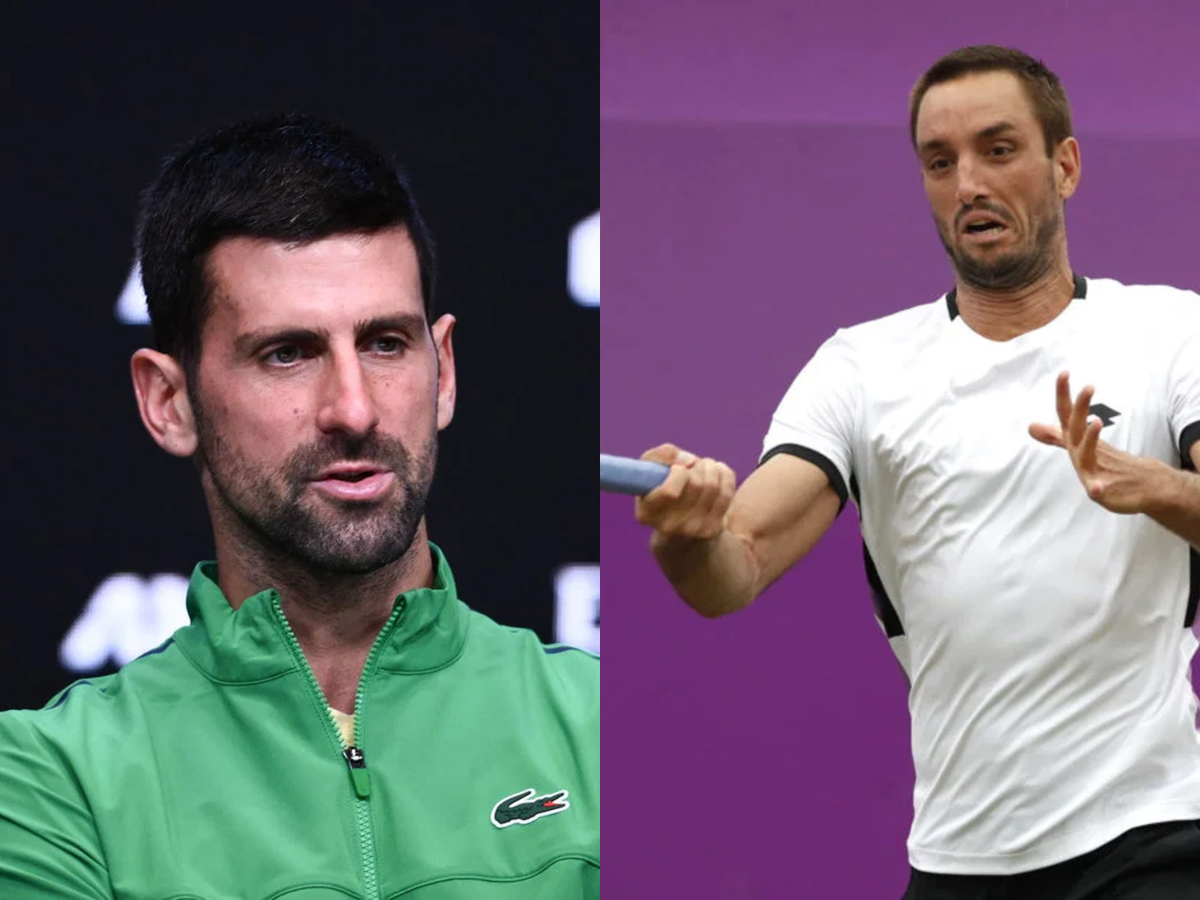
Novak Djokovic hired Viktor Troicki as a coach. In the wake of the change, many tennis fans began asking themselves, “Didn’t Viktor Troicki get a doping ban at some point?” The short answer is yes. However, there is a lot more to this story than the headline seems to indicate.
Watch What’s Trending Now!
Back in April 2013, Troicki was selected for in-competition testing at the Monte Carlo Masters. Troicki provided urine but refused blood, claiming illness and prior permission. The ITF tribunal disagreed.
It concluded that the doping control officer had not given him any such assurance, and that she told him she could not advise him on whether his reason was valid. On that basis, Troicki was found guilty of failing to provide a sample, which is an anti-doping rule violation. He was therefore handed an 18-month ban in July 2013.
Troicki took his case to the Court of Arbitration for Sport (CAS), and the ban was shortened to 12 months. The CAS panel acknowledged that the tournament’s doping officer “should have informed the player in clearer terms of the risks caused by his refusal to undergo a blood test.” It also noted there was “no suggestion that Mr. Troicki intended to evade the detection of a banned substance in his system.” His fault, in the court’s own words, was “not significant.” The panel maintained the ban because the rules called for a minimum sanction, whether or not the subject had intended to fail to provide a sample.
Troicki was docked 12 months and was able to play the tour again in 2014. His urine sample from that day in Monte Carlo tested negative.
Years later, Troicki spoke candidly about the lasting frustration of the episode. “I want everyone to know that I never refused anything. I just asked for permission, and I was allowed by the doctor that day not to give a blood test,” he said. He described being punished for following what he called the wrong instructions from the doping control officer, a person who faced no consequences herself. “She was giving me instructions, wrong instructions, and she was not punished at all. That hurts me,” he added.
Troicki later acknowledged the ITF made procedural changes in response to his case. So when people see the words ‘doping ban’ attached to Troicki’s name, the reality is that he was never found to have used a prohibited substance. The violation he’s been charged with is procedural and came when he was ill on a day he was supposed to meet with a CAS official, where he misunderstood her instructions. The violation itself, CAS told the world, was a failure of communication on both sides.
For Djokovic, the decision to bring in a longtime friend and former Davis Cup teammate is a personal one. Troicki was part of Serbia’s 2010 Davis Cup-winning side, winning the decisive rubber against France. There’s a trust that goes beyond mere words. Whether the coaching partnership delivers on court is the question that matters now.
Viktor Troicki joins a coaching setup built around trust and Serbian familiarity
Novak Djokovic’s decision to bring Troicki on board is rooted in a bond that goes back decades. The two have been playing together since their junior years and won the Davis Cup in 2010 together, with Troicki taking the final rubber in a match-up against France’s Michael Llodra. When Djokovic shared the news on Instagram, “Welcome, my friend, teammate, and now coach,” the word “friend” came first for a reason.
At Roland Garros, Troicki was already spotted on Court Philippe Chatrier, with Boris Bosnjakovic and other Serbian support staff. His job doesn’t replace anyone; it’s complementary to the existing structure. Since the day of Ivanisevic, Djokovic has developed a seamless coaching system that is flexible with the situation rather than slavishly mimicking a template, and Troicki is in that mould.
It’s also a reflection of Djokovic’s understanding of the conditions at Roland Garros at 38. He has only featured in three tournaments in 2026, missed the Miami, Monte Carlo, and Madrid events due to a shoulder injury, and only played one clay-court match this season, losing to Dino Prizmic in three sets in Rome before he arrived in Paris. “It’s not ideal preparation, to be honest. There’s always something. Kind of a new reality that I have to deal with,” he said.
In that context, having someone in his corner who knows him as well as Troicki does carries weight that goes beyond tactics.