
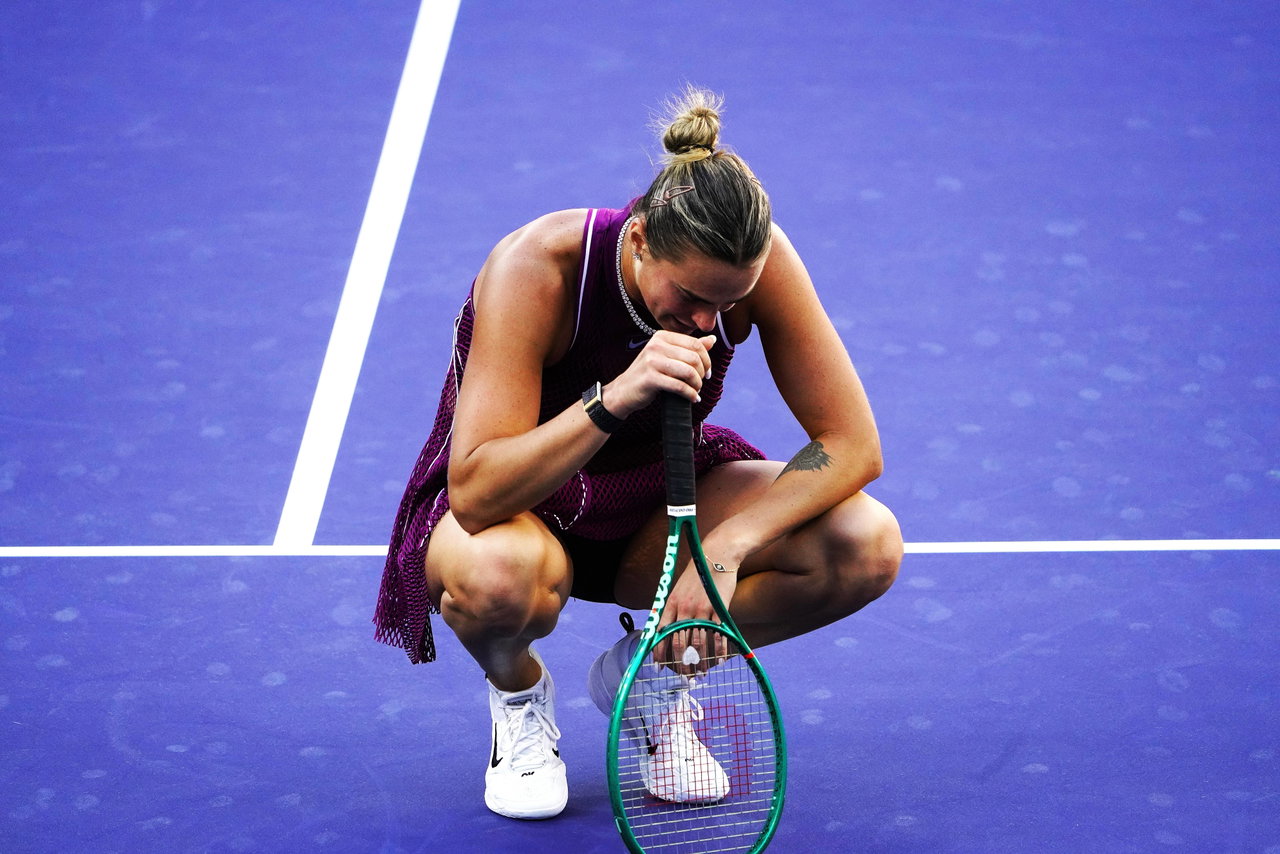
Four-time Grand Slam champion Aryna Sabalenka has walked off the court following a 6-4, 6-0 group stage defeat to Mirra Andreeva at the 2026 WTA Finals, leaving a very disbelieving crowd and a broken 99-week reign as World No. 1. For nearly two years, she had been the undisputed force of the WTA Tour, a dominant baseline player with a nearly unshakeable consistency.
Watch What’s Trending Now!
She now sits at World No. 3 heading into the 2027 off-season, with zero major titles for the first time this year since 2022, and is being subjected to some rather harsh criticism from eight-time Grand Slam champion Jimmy Connors. There’s a growing sense in the game that this might just be the end of the Sabalenka era at the very top of the game.
Jimmy Connors’ Stark Ultimatum and New Threat
On his Advantage Connors podcast, Jimmy Connors was quite frank about Sabalenka’s 2026 campaign. He pointed out that commercial and celebrity commitments can very easily siphon away the competitive desire of a player.
“Tennis is a 365-day-a-year job. If you’re going to be the best, or one of the best, and if you’ve got outside interests that are taking your mind away from that, and I know everybody does, but it’s how you handle that,” Connors said.
Connors then pointed to young star Mirra Andreeva as the immediate threat to Sabalenka’s commercial and competitive supremacy. “Has that become more important than winning? Because once you’re not winning anymore, and you’re not selling out 25,000-seat stadiums, you know what the one word you’ve got to get used to? Bye. And I hate to say it like that, but it’s true,” he stated.
Zuma
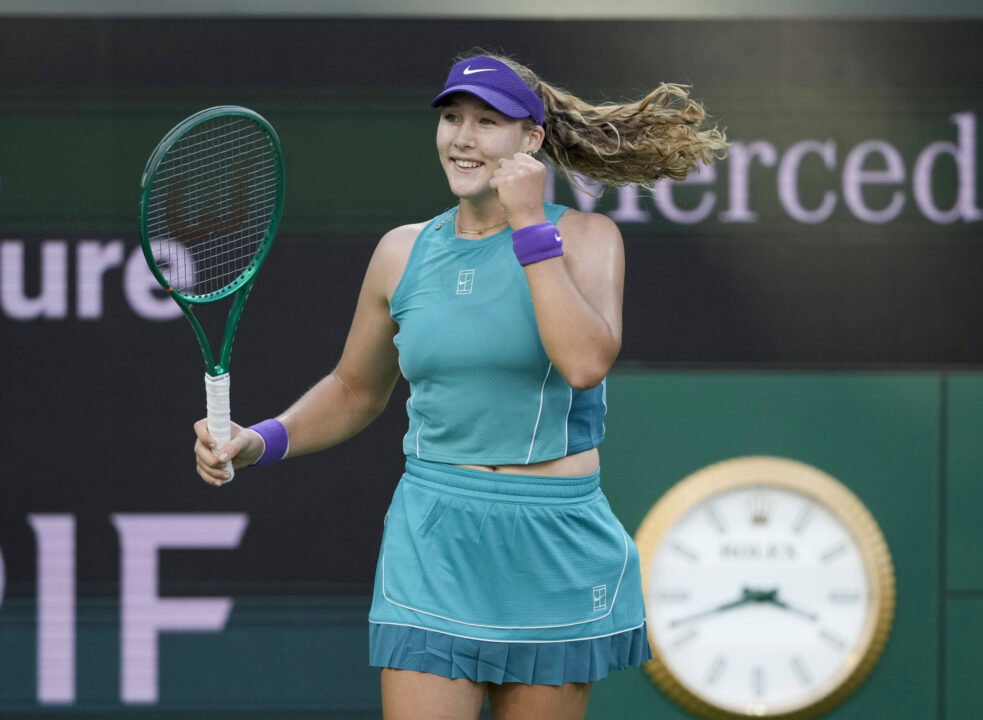
Tennis 2026: WTA, Tennis Damen Finals NOV 09 Nov 9, 2026 Mirra Andreeva reacts to winning match point against Elina Svitolina during day two of the FAGE WTA Finals at Indian Wells Tennis Garden in Indian Wells, CA USA Mandatory Credit: Charles Baus-Cal Media Credit Image: Charles Baus/Cal Sport Media Indian Wells Ca USA EDITORIAL USE ONLY Copyright: xCalxSportxMediax ZUMA-20261109_zma_c04_044.jpg CharlesxBausx csmphotothree549649
Andreeva’s 2026 season has been a breakthrough one, and Connors’ comments are very much on the money. She won her first Grand Slam at the French Open in June, beat Sabalenka in straight sets at the WTA Finals in November after being 4-1 down in the first set, and then beat Svitolina to win the final and overtake Sabalenka in the world rankings. While Sabalenka leads their head-to-head by 4-3, Andreeva has won the last two meetings, including 6-4,6-0 in the 2026 WTA Finals group stage.
However, Sabalenka still had a very high level of performance across the majority of the year. In 2026, she won 48 matches and three titles in Brisbane, Indian Wells, and Miami, the Sunshine Double in March. But she lost two Grand Slam finals to Rybakina at both the Australian Open and US Open. The defeat in New York in September saw her lose the World No.1 spot.
The damage to her reputation was done in a late-season dip where she went 1-2 in Beijing and Wuhan and then failed to progress from the round robin at the WTA Finals for the first time since 2021. It wasn’t a case of her just getting physically worse.
The problem was that when it came to the close of the most important matches against the very best players in the world, she simply couldn’t close them. Connors pointed out that being the player who is being hunted is a very difficult position to be in and that she should just accept the target on her back and deal with it through sheer discipline.
Why Past Tennis Titans Prove Legacy Survives a Slump
Tennis history is full of examples of players having a frustrating, trophyless major season and yet still going on to have a dominant second act. The modern-day greats have had far steeper falls than that and still come back to win the big one.
Novak Djokovic had a well-documented dip between 2017 and early 2018. After having all four Grand Slams in his pocket in June 2016, he went through a very real physical and mental downturn. The constant elbow pain, the coaching changes, and the early exits at the 2017 AO and French Open (QF) led a lot of people to believe that the Djokovic era was over. By June 2018, he was down to World No. 22.
Rather than just go away, he had elbow surgery, got back together with his long-time coach Marian Vajda, and worked on his serve. He came roaring back in 2018, won Wimbledon and the US Open, and was back at World No. 1 at the end of the year, with 12 more majors in the years that followed.
Serena Williams went through the same thing in 2011 and the early part of 2012. After the life-threatening pulmonary embolism and the foot surgery, she was out of the game for nearly a year, and her ranking had plummeted to outside the top 150 in 2011. She came back and lost the 2011 US Open final to Sam Stosur and had a massive shock at the 2012 French Open, going down in the first round to Virginie Razzano who was ranked 111.
Imago
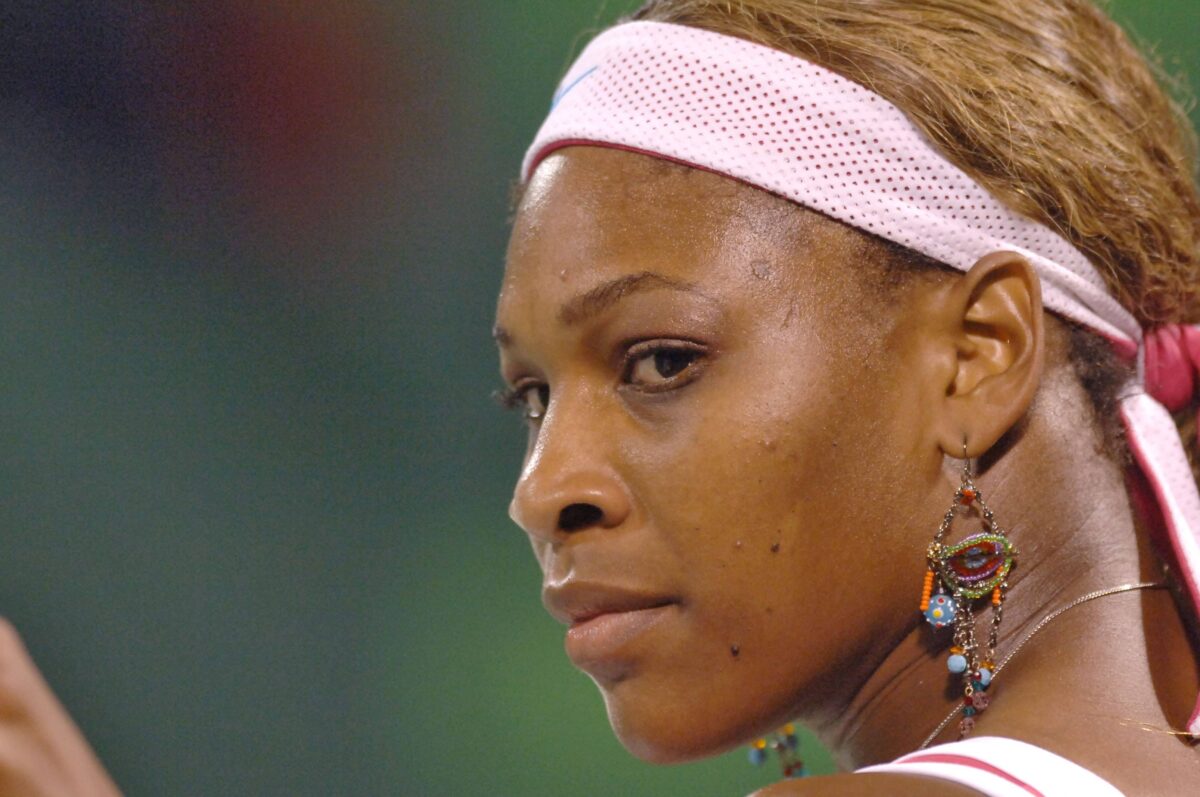
Tennis File Pictures American player Serena Williams lost 6/1, 7/6, against American player her sister, Venus Williams , at Key Biscayne tournament, in Miami, Florida, USA, on March 29, 2005. Photo by Corinne Dubreuil/CAMELEON/ABACA. Miami FL United States PUBLICATIONxNOTxINxFRAxESPxUKxUSAxBELxPOL Copyright: xDubreuilxCorinne/ABACAx 75604_12 DubreuilxCorinne/ABACAx 75604_12
There was a lot of questioning as to whether the 30-year-old could ever really be the same as the younger players. She responded by completely reworking her preparation under Patrick Mouratoglou and went on to win Wimbledon, Olympic gold, and the US Open in the summer of 2012. She went on to win 10 Grand Slam singles titles after turning 30.
Sabalenka’s current situation is a lot less dire than the valleys Djokovic and Williams have had to negotiate. She’s still in the top three, she’s got one of the most dangerous baseline games on tour, and she’s still getting to the majors. At 28, she’s absolutely in her prime athletically, and she’s got four Grand Slams under her belt.
Ultimately, Connors’ warning is very much a wake-up call rather than a eulogy for Sabalenka’s career. Andreeva’s rise is a perfect illustration of the fact that the WTA Tour doesn’t wait for anyone. Hence, Sabalenka and her team can’t afford to have any gaps in her concentration if she’s to take the World No.1 spot from Rybakina.
A 48-win season with two Grand Slam finals and two WTA 1000 titles is in no way the end of the story, though. Just as previous greats have turned periods of relative obscurity into some of the most iconic comebacks of all time, Sabalenka has all the tools to go back and re-establish herself as a force in 2027. She can prove that one poor season is just a detour on the path to the Hall of Fame.