Imago
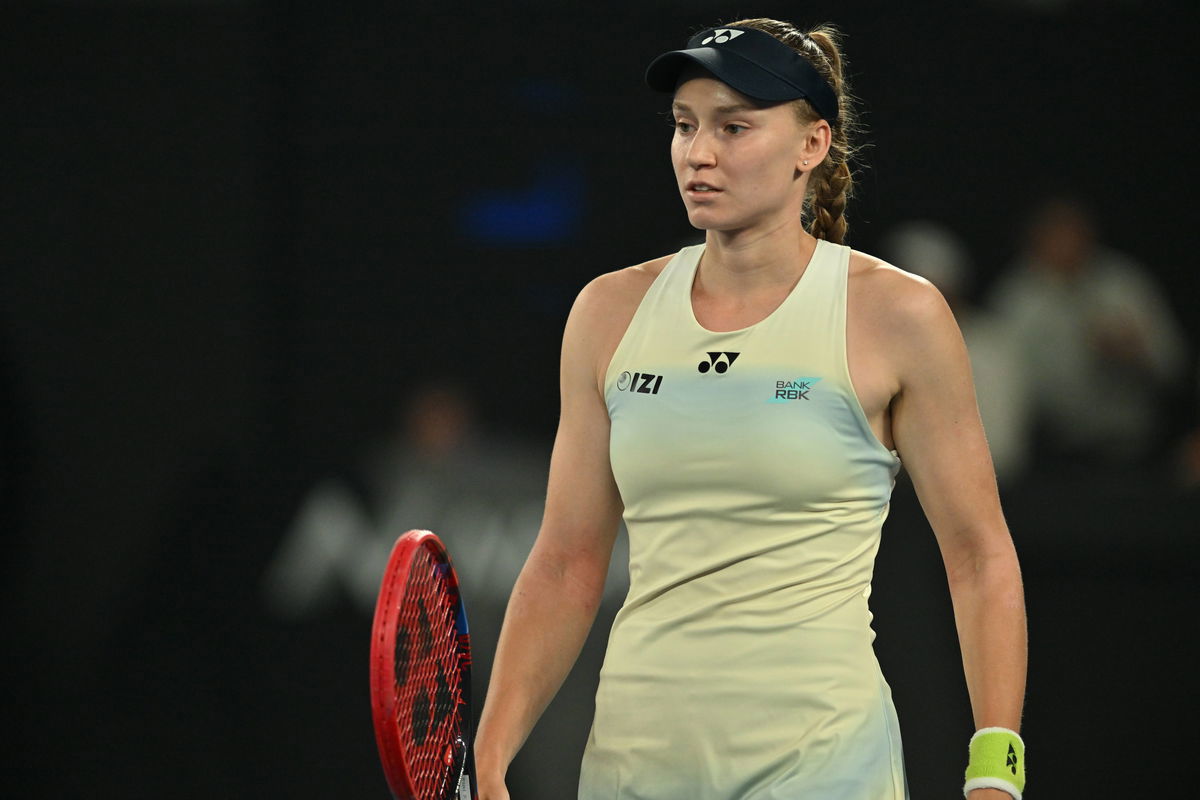
Australian Open 2026 – Finals MELBOURNE, AUSTRALIA – JANUARY 31: Elena Rybakina of Kazakhstan in action against Belarus Aryna Sabalenka not seenduring the final match at the Australian Open grand slam tennis tournament at Melbourne Park in Melbourne, Australia on January 31, 2026 Mark Avellino / Anadolu Melbourne Australia. Editorial use only. Please get in touch for any other usage. PUBLICATIONxNOTxINxTURxUSAxCANxUKxJPNxITAxFRAxAUSxESPxBELxKORxRSAxHKGxNZL Copyright: x2026xAnadoluxMarkxAvellinox
Imago
Australian Open 2026 – Finals MELBOURNE, AUSTRALIA – JANUARY 31: Elena Rybakina of Kazakhstan in action against Belarus Aryna Sabalenka not seenduring the final match at the Australian Open grand slam tennis tournament at Melbourne Park in Melbourne, Australia on January 31, 2026 Mark Avellino / Anadolu Melbourne Australia. Editorial use only. Please get in touch for any other usage. PUBLICATIONxNOTxINxTURxUSAxCANxUKxJPNxITAxFRAxAUSxESPxBELxKORxRSAxHKGxNZL Copyright: x2026xAnadoluxMarkxAvellinox
The tension around Elena Rybakina and her coaching setup has never fully faded, no matter how often she has tried to quiet it. Even with her own words of assurance and control, doubt has lingered among fans, waiting for the smallest moment to resurface. In the 2026 Australian Open final, Rybakina was winning this time, but that unease followed her, pulling attention away from the court and toward the edges, where her coach Stefano Vukov stole the spotlight once again for all the wrong reasons.


Despite the strong start, cameras caught Rybakina’s coach Stefano Vukov shouting and yelling at the Kazakh international several times during the first set.
Watch What’s Trending Now!
Rybakina won the first set 6–4 against four-time Grand Slam champion Sabalenka in the 2026 Australian Open women’s singles final. It was the first set Sabalenka dropped in the tournament. The match is a rematch of the 2023 Australian Open final, which Sabalenka won in three sets. This time, however, Rybakina returned to Melbourne Park with a different edge, reversing that result in a three-set battle that underlined how far her game has evolved since that defeat. But beyond the scoreline, it was Vukov’s coaching style that was once again under scrutiny.
Vukov shouting at her when she’s winning… he’s so gross
— J. ✌️ (@p3hagz) January 31, 2026
Stefano Vukov is a former Croatian tennis player. He began coaching Elena Rybakina in 2019. He was part of her team when she won the 2022 Wimbledon championship.
In early 2025, the WTA suspended Vukov. The action followed allegations that he violated the tour’s code of conduct. The investigation focused on his behavior toward Rybakina.
The WTA examined claims of derogatory remarks and excessive physical and mental demands. As a result, Vukov received a one-year ban from coaching at WTA events. He was also required to complete training related to coaching behavior. A confidential summary of the investigation later characterized his conduct as an abuse of authority, citing behavior that allegedly compromised Rybakina’s psychological and emotional well-being, including harassment and repeated attempts to reassert control after being dismissed.
Despite the ban, Vukov continued to work with Rybakina away from official tournaments. When the suspension was lifted in August, he returned to her player box. Rybakina welcomed his comeback.
Speaking in late August, she said, “It’s just nice to see him in the box. We obviously have good communication. We never had issue, so…” Her comments showed comfort and trust in their working relationship. The investigation’s findings, however, described the dynamic between player and coach as one of “dependence,” warning that the relationship itself had become unhealthy, even as Rybakina continued to publicly defend it.
After the ban, Goran Ivanisevic was briefly appointed as Rybakina’s coach. That partnership did not last long. Sources familiar with the situation later indicated that Ivanisevic felt sidelined, with Vukov remaining an influential presence despite his suspension, ultimately contributing to the abrupt end of that arrangement.
Now, as Rybakina competes on Rod Laver Arena, fans have turned their anger toward both Vukov and the player.
Fans criticize Stefano Vukov’s coaching during the heated Australian Open final
Fans across the social media platform X have started criticizing Stefano Vukov’s coaching behavior during the Australian Open final. Many viewers shifted their focus from the match to the player box.
During the opening phase of the match, one fan wrote, “Want sabalenka to win because I don’t want rybakina’s vukov partnership to be rewarded.” Another added, “Vukov shouting at her when she’s winning… he’s so gross.” These comments reflected growing frustration with his presence and conduct.
Fans pointed to past matches as examples. One notable case was last year’s US Open match against Emma Raducanu in the third round. Cameras caught Vukov repeatedly shouting instructions during points, which many felt crossed a line.
More criticism followed online as the match continued. One netizen commented, “Vukov should team up with sabalenka that would be the most annoying duo on the planet.” Another bluntly said, “Vukov talks way too damn much.” The tone on social media grew sharper with every game.
The criticism has not come only from fans. Vukov’s approach has also drawn attention from former players and coaches. Hall of Famer Pam Shriver also voiced concerns back in 2023.
Shriver wrote, “I hope she finds a coach who speaks and treats her with respect at ALL times and does not ever accept anything less.” Her statement added weight to the debate surrounding Vukov’s behavior and influence from the sidelines.
Rybakina strongly defended her coach at the time. She responded on social media, saying, “[Vukov] is a passionate coach, with a lot of knowledge about tennis. Unlike people that are making these comments, he has great knowledge about me as a person and as an athlete. Those who know me well, will know that I would never accept a coach that didn’t respect me and all our hard work.”
Even after the WTA previously barred Vukov over allegations of abusive behavior, Rybakina denied the claims.
She said she made no “any complaints” and added, “I don’t agree with a lot of things the WTA does in the sense of my relationship with Stefano.” As the match stayed tied and tense, one fan summed up the mood: “Stefano Vukov has main character syndrome. Let her play kurac.”
And now, with Elena Rybakina winning the 2026 Australian Open final, Stefano Vukov has undeniably drawn intense attention from fans once again.
Written by

Edited by

Cherry Sharma