
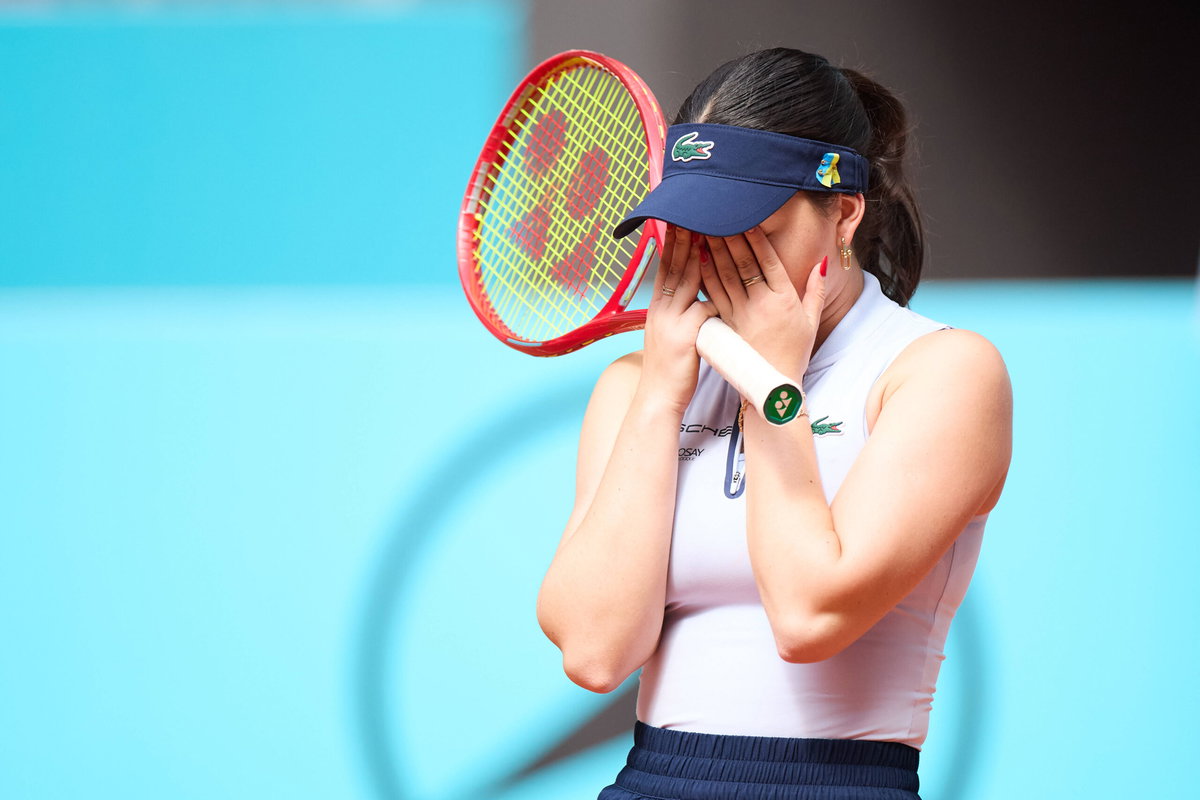
Remember when Iga Swiatek admitted she avoids Polish media because she finds some coverage “ridiculous”? The backlash intensified when she skipped Billie Jean King Cup ties and endured scrutiny before ending her 13-month drought at Wimbledon. She even faced intense scrutiny during her dip in form, with Polish media widely speculating about the reasons behind her inconsistent results. Now, Eva Lys, who is facing a similar ordeal with the German media, has openly challenged the harsh tone of coverage.
Watch What’s Trending Now!
“I am increasingly wondering where German sports journalism is developing,” she wrote in her latest Instagram stories (translated from German).
“Basically, I welcome any form of reporting. Especially in women’s sports, which haven’t gotten the attention it deserves in a long time. However, even more important would be a differentiated and respectful tone.”
To illustrate her argument, Lys shared recent headline examples. These included translations such as ‘Eva Lys can’t get out of her slump–Struff can’ and ‘German tennis hope Eva Lys is sinking deeper and deeper into crisis.’
She then pointed to what she sees as a recurring issue. “What I always notice is the consistently negative grounding of many headlines and comments.” Lys made it clear that she accepts criticism as part of professional sport. However, she questioned how that criticism is often delivered.
Imago
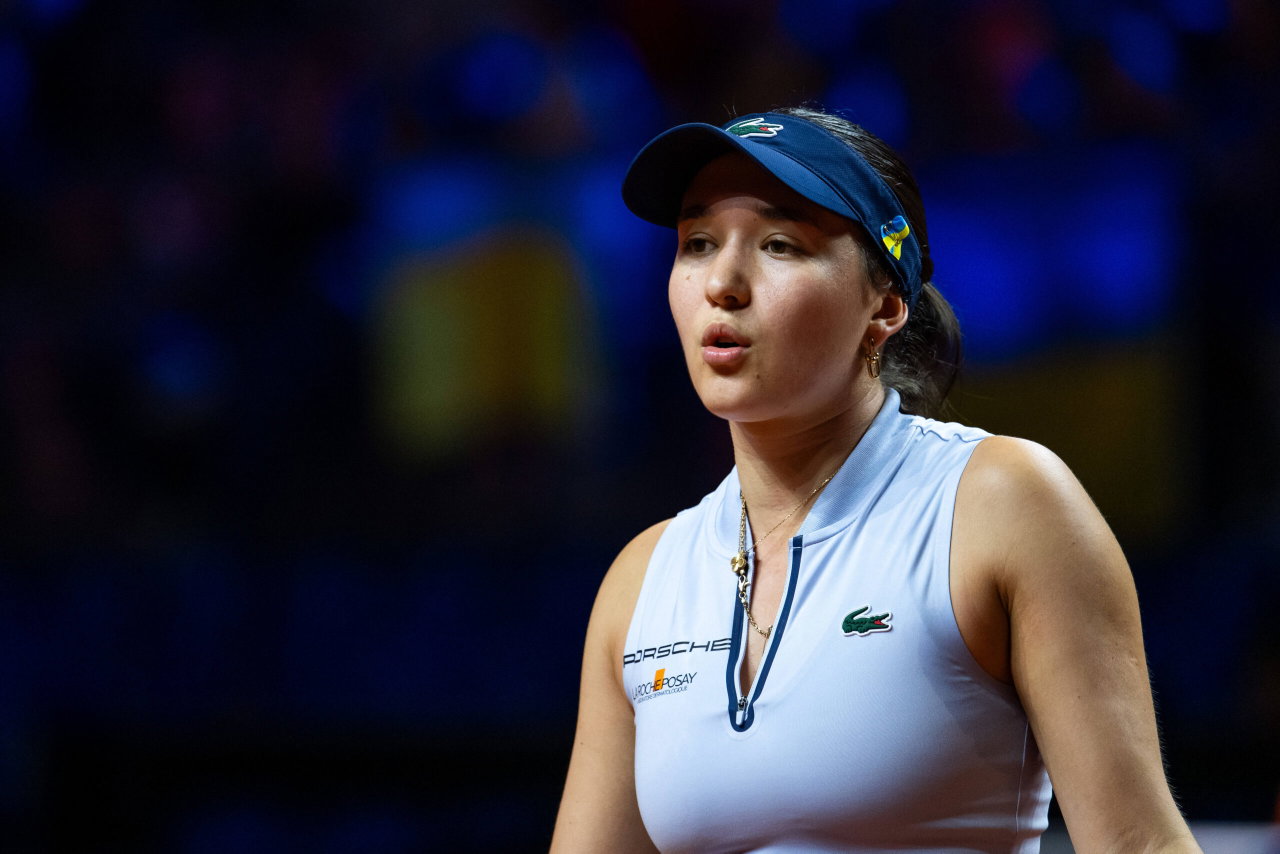
Eva Lys Deutschland im Bild am Ball, Eva Lys Deutschland vs Elina Svitolina Ukraine, Runde 2, GER, Porsche Tennis Grand Prix Stuttgart, WTA, Tennis Damen 500, 15.04.2026 GER, Porsche Tennis Grand Prix Stuttgart, WTA 500, 15.04.2026 Stuttgart *** Eva Lys Germany in the picture on the ball, Eva Lys Germany vs Elina Svitolina Ukraine , Round 2, GER, Porsche Tennis Grand Prix Stuttgart, WTA 500, 15 04 2026 GER, Porsche Tennis Grand Prix Stuttgart, WTA 500, 15 04 2026 Stuttgart Copyright: xEibner-Pressefoto/Memmlerx EP_MMR
“Criticism is, of course, part of sports. But the way it is often formulated seems much more devaluing than constructive.” Her concern centered on language that diminishes rather than builds.
She also highlighted a gap between perception and reality. According to her, the way athletes are judged often ignores the complexity of elite performance.
“I find it questionable when female athletes are judged with a self-evident that has little to do with the reality on the field. Performance sports are complex and can’t always be squeezed into simple evaluations.”
Lys emphasized that her view is not isolated. She suggested that many athletes in Germany feel the same pressure.
“From many conversations with other German athletes, I know I am not alone in this perception. Obviously, I’m not in my best shape right now, after having to lay off for 2.5 months. Nevertheless, it should be possible to talk about it factually and fairly.”
At the same time, she clarified that her criticism is not directed at all journalists. She acknowledged that there are balanced voices within the media. “It’s important for me to say that I don’t mean all journalists. Especially in one’s own country, support and order should be at the forefront, not lump negativity.”
Her current form must also be understood in context. Lys has been working her way back from a serious knee injury suffered earlier this year in Sydney. The injury involved a hyperextension that caused a completely torn lateral tendon. It forced her out of action for more than two months and disrupted her momentum.
Before that setback, she had been building a strong trajectory on the WTA Tour. She had reached a career-high ranking of No. 39. The injury kept her out of key tournaments, including the Middle East swing and Indian Wells. Missing those events slowed her progress significantly.
Her return has been gradual rather than immediate. She came back at the Miami Open but lost in the first round. She later secured her first win after the injury at the Porsche Tennis Grand Prix. That moment marked a small but important step forward.
Even so, early exits have continued. At the Madrid Open, she lost to Zhang Shuai 4-6, 3-6 in the opening round. This pattern stretches back to her last deep run at the China Open in 2025. There, she reached the quarterfinals before losing to Coco Gauff.
Adding to her challenges, Lys is managing spondylarthritis. This chronic inflammatory condition affects her joints and requires careful control of her workload.
Against this backdrop, her frustration with the media tone becomes clearer. Similar debates have surfaced in tennis before, as players continue to question how sports journalism shapes narratives around performance.
Barbora Krejcikova slammed journalist over an inappropriate forehead comment
Back in 2024, a moment during a Tennis Channel broadcast sparked widespread debate. During coverage of the WTA Finals, renowned journalist Jon Wertheim made a remark about Barbora Krejcikova’s forehead.
The comment quickly drew criticism for focusing on appearance rather than performance. It became a flashpoint in the ongoing conversation around professionalism in sports media.
Krejcikova addressed the issue publicly on X. “You might have heard about the recent comments made on Tennis Channel during the WTA Finals coverage that focused on my appearance rather than my performance,” 28-year-old Krejcikova posted.
Her response reflected both disappointment and frustration. “As an athlete who has dedicated herself to this sport, it was disappointing to see this type of unprofessional commentary.”
She also made it clear that this was not an isolated case. “This isn’t the first time something like this is happening in [the] sports world.”
Krejcikova explained why she chose to speak out this time. “I’ve often chosen not to speak up, but I believe it’s time to address the need for respect and professionalism in sports media.”
Following the backlash, Wertheim responded to the controversy. He called his remarks “deeply regrettable” and issued an apology to Krejcikova. Tennis Channel also took action by removing him from the air “indefinitely.” The incident became a clear example of the scrutiny athletes continue to face.
Similar concerns have been raised by Iga Swiatek. When discussing the issue in a post-match press conference after she won Wimbledon last year, Swiatek said, “For sure, the past months, how the media sometimes described me, I gotta say, unfortunately, Polish media, how they treated me and my team, it wasn’t really pleasant.”
She went further by asking for space to focus on her work. “So, I hope they will just leave me alone and let me do my job. Because obviously, you can see that we know what we’re doing. I have the best people around me. I have already proved a lot.”
Now, with Eva Lys voicing similar frustration, the issue has resurfaced once again. The spotlight has returned to how media narratives are shaped and whether they cross the line.
As more players speak out, the debate around respect and responsibility in sports journalism continues to grow.