
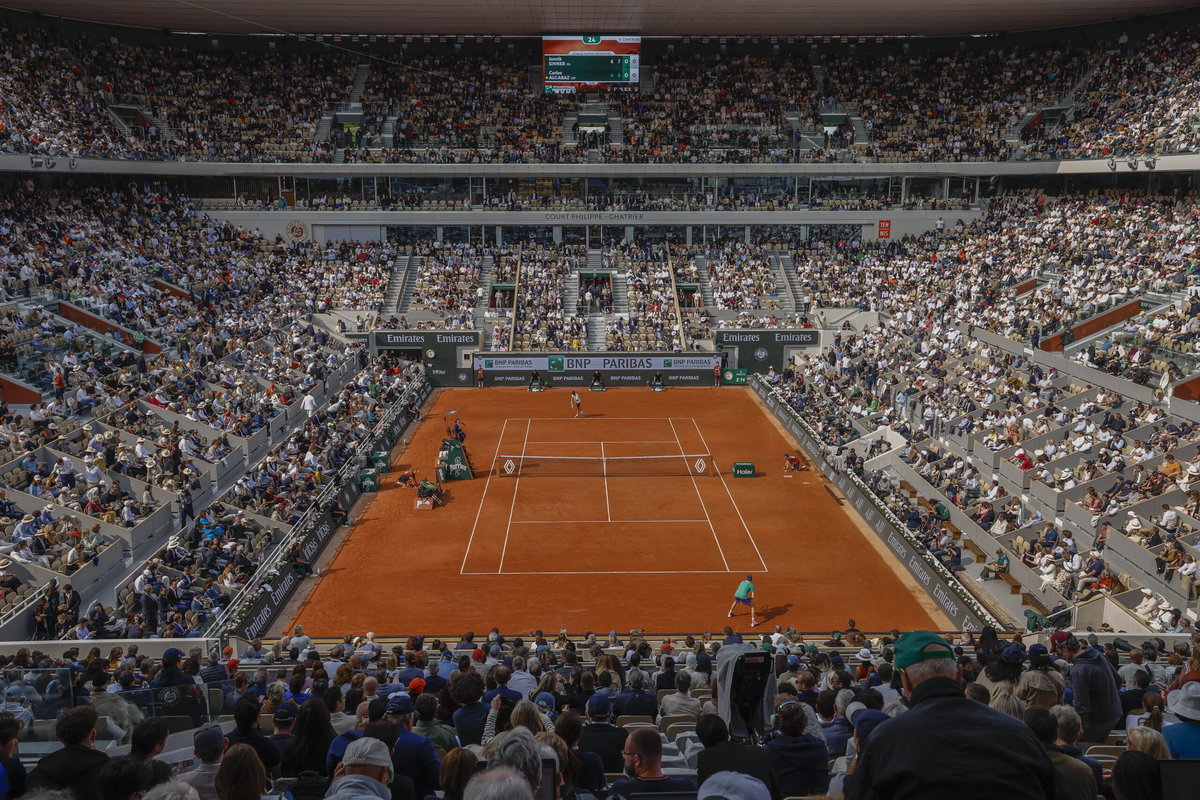
The prize money dispute between the world’s top players and the Grand Slam organizers reached a tipping point ahead of Roland Garros. Leading players Jannik Sinner and Aryna Sabalenka even called for a boycott of Grand Slams. However, with Roland Garros set to begin soon, Wimbledon is taking measures to tackle the troubles even before it arrives at its doorstep. One of Britain’s most familiar tennis faces was meeting players to make sure Wimbledon faces no such issues.
Watch What’s Trending Now!
The former British No. 1 and current member of the All England Club board of directors, Tim Henman, has directly stepped in on the controversy, meeting with several of the top players and their representatives at the Italian Open in Rome earlier this month. The initial formal gathering between the Wimbledon chiefs and top player agents is now due to take place next week at the French Open.
Henman is believed to have met representatives of the WTA Players’ Council in Rome, and a formal meeting between Wimbledon’s tournament director Jamie Baker, player relations director Laura Robson, and top player agents has now been confirmed in Paris. Sinner’s representative Alex Vittur is among several top agents who have confirmed their attendance, while some players could be in attendance if they have their tournament schedule available.
What Wimbledon will bring to that table is an offer to create its own dedicated player council, alongside a reaffirmation of its commitment to growing the sport and increasing prize money. Wimbledon will reveal its prize money at a press conference on 11 June. It’s unclear if that will prove sufficient to please the players’ representatives, but the very fact that Wimbledon is taking the step of creating a formal channel to communicate before the dispute even arrives at its own grounds is a positive move.

Imago
The Prince and Princess of Wales Attend Wimbledon 2025 View from the roof of Centre Court during the prize giving ceremony with HRH The Princess of Wales, Patron of the All England Lawn Tennis Club, after Jannik Sinner ITA defeated Carlos Alcaraz ESP in the final of the Gentlemen’s Singles at The Championships 2025. Held at The All England Lawn Tennis Club, Wimbledon. Day 14 Sunday 13/07/2025. Credit: AELTC/Joe Toth / Avalon United Kingdom, Wimbledon PUBLICATIONxNOTxINxUKxFRAxUSA Copyright: xAELTC/JoexTothx/xAvalonx 1021811916
The thing that makes Henman’s involvement so significant is that he sits on both sides of this divide. He is also a board member of the All England Club, where he is able to speak with the professional players, having played on the tour for many years and knowing what they want and why. His visit to Rome and the meetings that followed indicate that Wimbledon is aware that this controversy is not going to go away on its own accord and that it is too early to wait for it to reach SW19 in July.
The conflict dates back to last year’s French Open, when Carlos Alcaraz, Sinner, Sabalenka, and Gauff joined a group of players in requesting the executives of all the Slams to raise the level of the prize money to 22% of the revenues by 2030. What came after was a series of responses that the players found very unsatisfactory.
Wimbledon raised the prize money by a modest 7% amount, which was already included in the budget before the Paris talks. The US Open and Australian Open increased in response, by 20% and 16% respectively. Then the French Open announced a 9.5% increase this year, which the players quickly disputed, pointing out that when measured against the tournament’s actual revenue, the real-terms increase was just 5.4%, given that the French Open’s income grew by 14% to €395 million last year. That gap between the headline figure and the reality was the moment the frustration turned into organized resistance.
How a prize money row became the biggest governance crisis in tennis
The timing is no coincidence. Players discussed the possibility of a future boycott of the Slams during conversations in Rome, and this week, all the leading players agreed to a coordinated media protest at Roland Garros. They will only participate in pre-tournament press conferences with written media and conduct one interview with a host broadcaster, while refusing their usual one-on-one interviews with global TV rights holders who pay significant sums for those privileges. It is an orchestrated effort to damage the tournament’s financial health while staying in the tournament.
The French Open tournament director, Amélie Mauresmo, spoke on Thursday in a diplomatic manner that managed to hint at the tension. “Of course, we are a little sad about this choice, quite simply, because I think we all find that it penalises all the actors of the tournament, the players, the fans, the press, of course. But we’re truly engaged in this communication, in this desire to exchange ideas, to move forward,” she said.
The French Open and the US Open are also on the list of available options for meeting with player representatives in Paris, although. Tennis Australia withdrew, joining the Professional Tennis Players’ Association in a New York lawsuit against the other three Slams. The sport’s governance has rarely looked more fractured.
The players have chalked out a line of demarcation. They will not talk to any Slam about a player council until this issue of a bigger cut in revenue and welfare contributions, such as pension funds, is figured out. It was because of these issues that they denied a joint meeting at Indian Wells in March. It will be seen in the Paris talks whether any of the Slams are truly ready to take any steps on those demands, or whether the concerted protest at Roland Garros is just the start of a wider movement.