
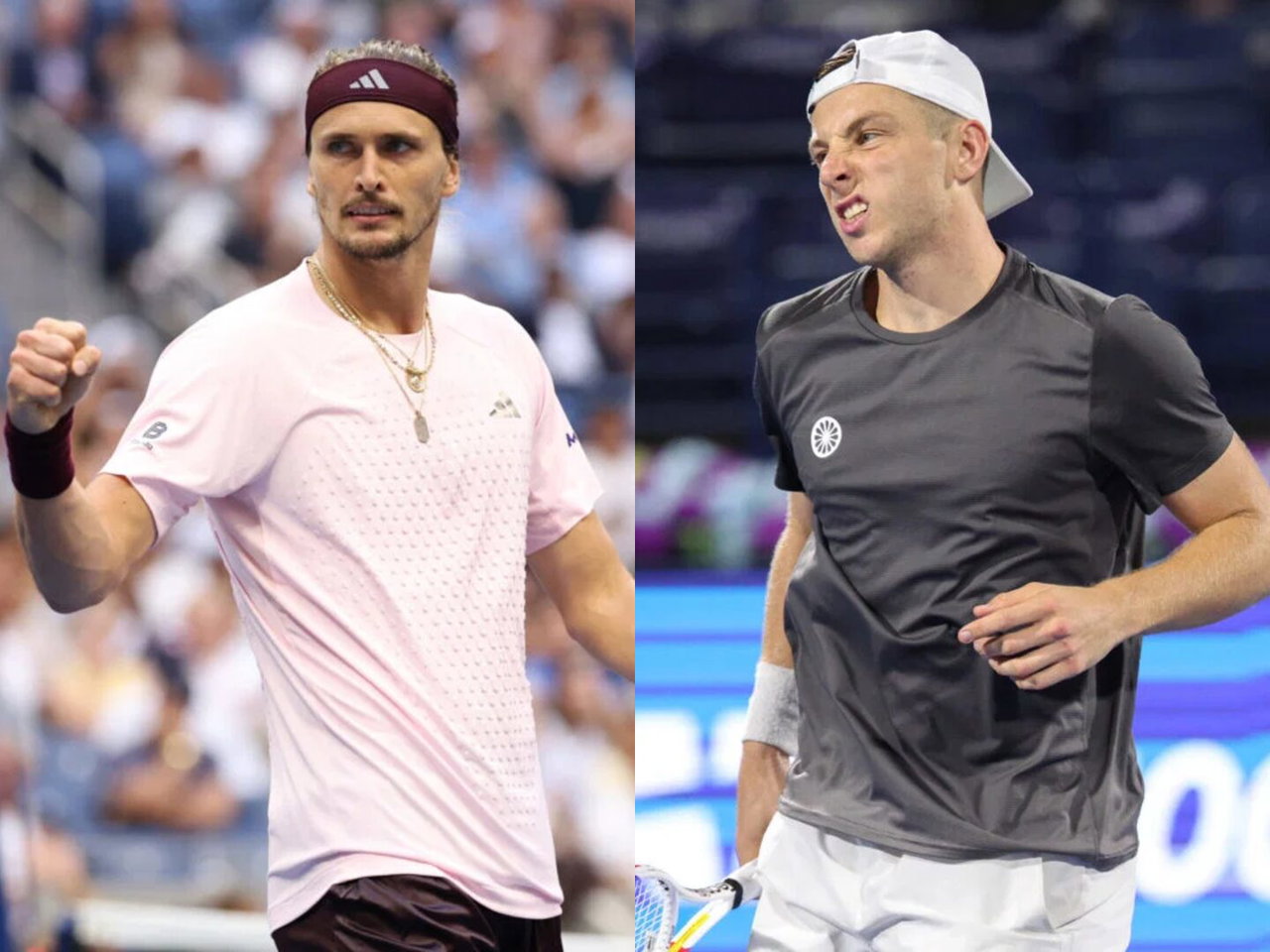
Tallon Griekspoor felt the need to step back into the conversation after his comments about Alexander Zverev’s US Open final blew up more than he expected. After some interpreted his comments about Zverev’s victory over Ben Shelton as a broad attack on the entire German season, the Dutch world No. 55 went to social media to clarify his intent.
Watch What’s Trending Now!
“Normally, I don’t react on here, but this is getting out of control,” Griekspoor wrote on X. “Just said it was tough to watch because of the never ending bouncing. Nothing but praise for Sacha for what he’s done throughout this year!”
He made his initial comments at a press conference prior to being summoned for Davis Cup duty, and his criticism was not directed at Zverev’s season but at how the final appeared on his television.
“I expected it against Shelton. The precedents were obviously already clearly in favor of Zverev. I found the match rather mediocre,” Griekspoor had said. “Zverev wasn’t exceptional, but he served really well. The second set tiebreak was crucial. There were other sports going on, and I simply have a hard time watching Zverev, especially in this tournament, where he bounced the ball 400 times before every serve. It was really extreme, but it obviously helped him.”

The Dutch even praised Zverev’s readiness whenever Alcaraz or Sinner faltered, even suggesting it would not surprise him if Zverev finished his career with four or five majors.
The numbers actually backed Griekspoor’s observation. Before his semifinal with Karen Khachanov, Zverev’s bounce count was around 12,040 in his first five matches itself, a figure that probably rose above 15,000 by the conclusion of the final. Added together, the pre-serve routine would roughly come to around two and a half hours of ball bouncing across the fortnight – a staggering number for a habit as frivolous as ball bouncing.
“I don’t do it on purpose” – Alexander Zverev on the pre-serve routine
Alexander Zverev has addressed the routine directly rather than dodging it.
“I have no idea why. I don’t do it on purpose,” he said after beating Khachanov in the semifinal at the press conference. “I saw the statistic that I’ve bounced the ball around 12,000 times or something like that. It’s pretty funny. I’m not counting them in my head or trying to reach a specific number.”
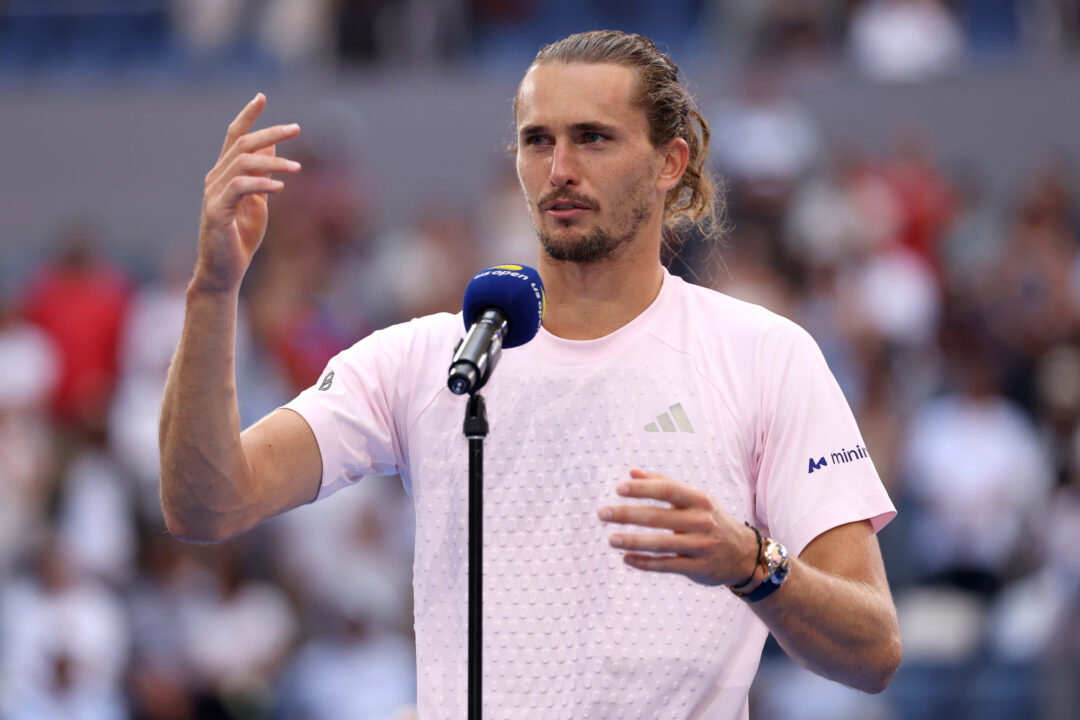
“I don’t know why it increased so much,” he added. “Today it decreased again, because I saw it before the semifinals so I was like, ‘OK, it’s gotta go less,’ but then I forget about it every once in a while and it goes up.”
His semifinal opponent, Khachanov, said the excessive bouncing disrupted his rhythm and made it tedious to watch. Shelton also requested a rule change to the time limits, specifically for the second serve, after he played the final against Zverev. Martina Navratilova took it a step further, proposing a definite limit on how many times a player should be able to bounce before serving.
On the Served Podcast, former American Pros shared sharp opinions on the issue. The 2003 US Open champion Andy Roddick argued that players cannot bounce the ball 20 times between the first and second serves and then complain about matches finishing at three in the morning. The former world No. 11 Sam Querrey took a less aggressive approach to the same complaint, saying that the pauses can slowly drain the energy from a stadium even when nothing illegal is happening.
Meanwhile, Griekspoor’s “mediocre” comment captured more than Zverev’s bouncing and was perceived as criticizing the German for his achievement. He faced a lot of turmoil from Sascha fans and pundits alike on social media, prompting him to clarify.