
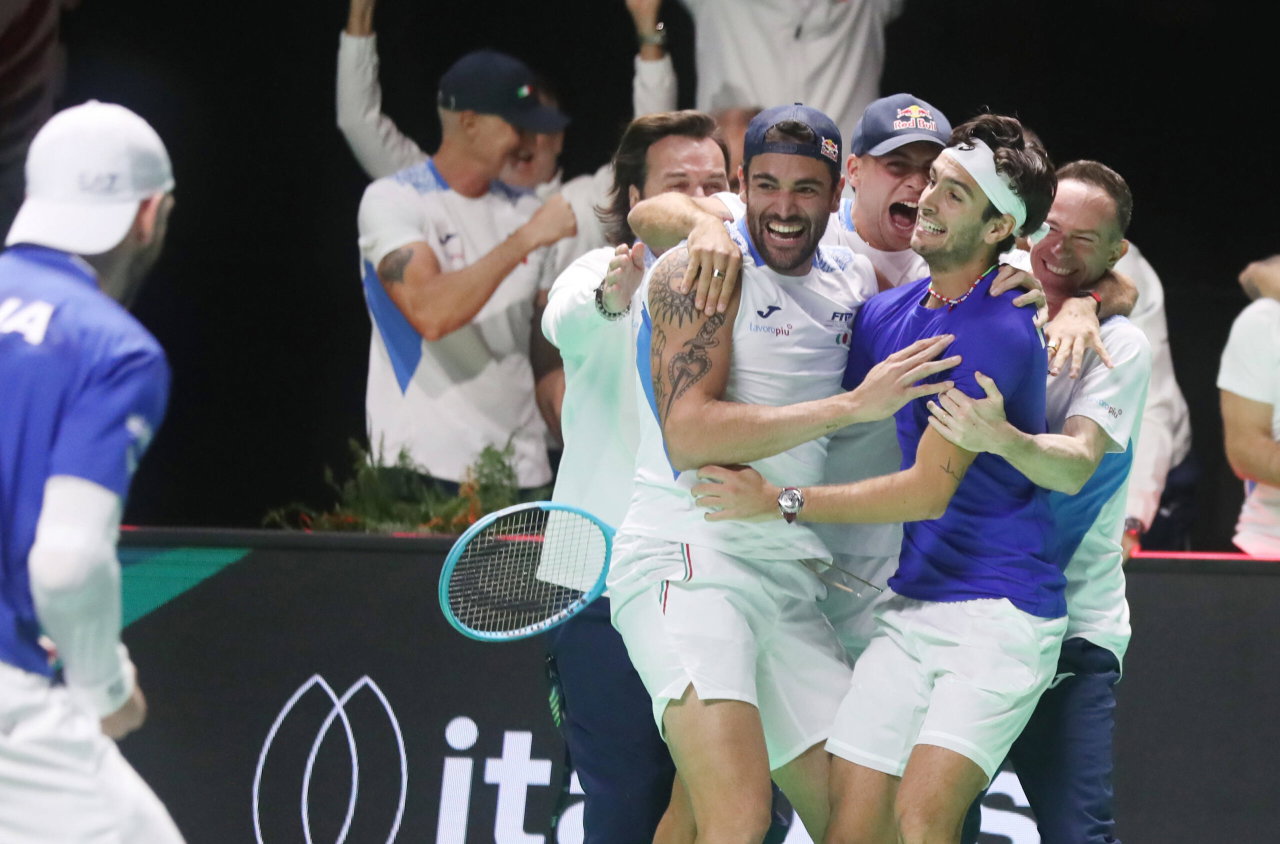
The 126‑year‑old Davis Cup has been looking for a structure for almost a decade after it abandoned the old four‑weekend home‑and‑away format in 2019. At the 2026 Finals held in Bologna, Italy, World Tennis CEO Ross Hutchins declared the search successful with the new format, but not everyone agrees it is the winning formula.
Watch What’s Trending Now!
The format introduced in 2025 featured two rounds of traditional home-and-away qualifying ties, followed by a single-city, eight-team knockout tournament in November. The thinking is that by reinstating the regional home atmosphere in both February and September and then having the one concentrated, broadcastable championship week at the end of the season, they’ve finally got the Davis Cup identity sorted.
From Kosmos Disruption to 2025 Hybrid Model
For over 100 years, the Davis Cup was a home-and-away elimination tournament that stretched over four weekends using best of five sets. But that changed in 2019 when the ITF entered into a partnership with investment group Kosmos. The group, founded by Gerard Piqué, aimed to turn the tournament into a World Cup-style one-week event in Madrid. The new format replaced the elimination tournament with an 18-team group stage finals over a single week on neutral sites, with best-of-three sets.
However, the experiment was immediately criticized by the pundits and players themselves. Particularly in the case of the neutral-site group matches involving non-host nations, which were played in front of very sparse crowds. The 25-year Kosmos agreement collapsed in January 2023, and the ITF has since been working to re-tune the tournament to win back fans who had been alienated by the format.

Imago
Tennis, DavisCup Pressetermin in Madrid Presentacion de la Copa Davis en Madrid Madrid, Spain 17-10-18 Gerard Pique Presentation of Davis Cup in Madrid *** Presentacion de la Copa Davis and Madrid Madrid Spain 17 10 18 Gerard Pique Presentation of Davis Cup in Madrid PUBLICATIONxINxGERxSUIxAUTxHUNxONLY xx xx
The 2025 overhaul scrapped the neutral-site round-robin, restoring home-and-away ties in February and September before the November Final 8. The current format sees 26 nations in 13 first-round qualifying ties in February, two days of best of five. The 13 winners (joined by last year’s runner-up) progress to further home-and-away ties in September, again best of five. Only the seven winners from that September round progress to the Final 8 in November, joining the host nation in a straight knockout with best of three rubbers.
Hutchins emphasized the calendar’s rhythm: qualifying drama in February and September, then the high-profile Final 8 in November.
“We believe that throughout the year, from February to September to November, we have an amazing product with home-and-away ties and then amazing finals here,” he told the reporters.
The Bologna Blueprint and Host Stability
A key element of the new strategy is to give the Final 8 a proper, committed home rather than have the Final go all over the place or be held in some bland neutral venue. Bologna has been the base for this approach, with the Finals being held there in both 2025 and 2026 at the indoor hard courts of BolognaFiere, with the hosting rights in place through to 2027.
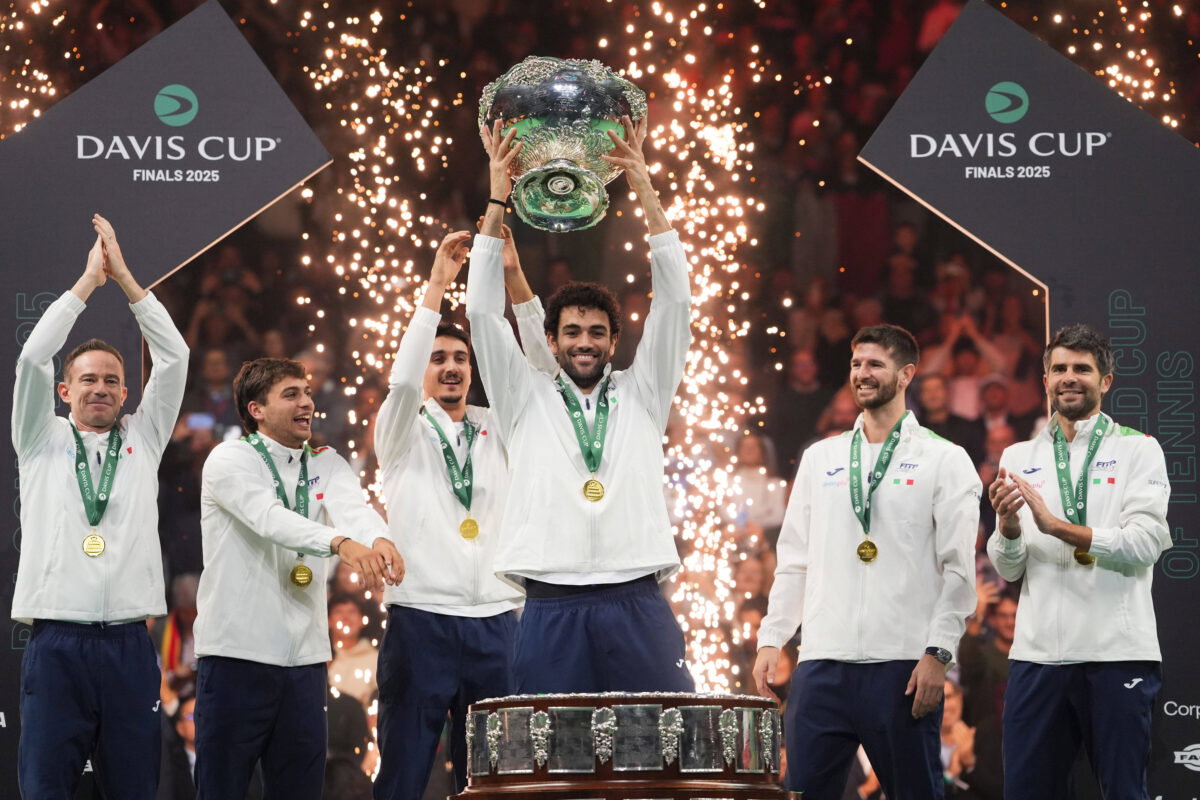
The Italian side, who are aiming for a fourth successive Davis Cup title having won in 2023, 2024 and 2025, have had the full force of the Bologna crowd behind them at the SuperTennis Arena. Sinner sat out 2026 (after defending his Wimbledon title) after undergoing knee surgery. Italy still had the full support of the home crowd as they navigated past South Korea and the Czech Republic to set up a rematch against Spain in the final.
Hutchins pointed out that anchoring the championship week in a proven tennis market is a massive advantage in terms of both commercial and atmospheric certainty. “When we have a home like this, it is very compelling to stay here for as many years as possible, and we believe that we have a very good product here,” Hutchins said.
Imago
Matteo Berrettini and the players of Italy celebrate with captain Filippo Volandri after winning the Davis Cup Finals 2025 at Bologna Fiere, Bologna, Italy – November 23, 2025. – Tennis. PUBLICATIONxNOTxINxITAxFRAxCHN Copyright: xMassimoxPaolone/LaPressex
He also recognised the difficulty of the governance issue in that you’re obviously serving the wider global tennis world as well as the home country.
“But we also have significant amounts of nations around the world who are competing in this competition as well. So we need to get that balance right, but we think that what we have today is a winning formula,” he pointed out.
The organisation cites the excellent TV ratings and the presence of the very best players in the world as evidence that the format is both commercially and competitively viable.
Persistent Pushback Over Scheduling and Fairness
Despite the confidence of the executives, the hybrid model hasn’t put all the dissent in the sport to bed. There are still very prominent voices questioning the competitive balance of a fixed host and the sheer physical cost of playing in late November. After the Czech Republic’s 2-1 semi-final defeat to Italy in Bologna, Czech captain and two-time Davis Cup winner Tomáš Berdych took issue with the structural advantage of the host nation.
He did praise the Bologna crowd for being respectful, but felt that the fact that it would always be a single nation in the final was a fundamental flaw in the competition. That is exactly what Berdych addressed in his post-match press conference. “It has been decided that this will be played in one nation, and that nation will always be in the final,” he said. “That’s not the Davis Cup, it’s a competition that for over a hundred years has been played in other formats and has completely changed.”
Former world No. 1 Andy Roddick, 2007 Davis Cup winner, was even more scathing on his podcast Served with Andy Roddick. He felt the format of the tournament had been completely undermined by the decision to compress the decider into a one-week event so soon after the ATP Finals.
“What made it magical was the format with home and away ties. It wasn’t about going to a neutral venue and playing a tournament at the end of the year, where you see your teammates for 48 hours,” he stressed.
He also took issue with the idea of having the players, who are all absolutely shattered by the end of the season, go out and play in the final week of November. That was something that Sinner’s injury forced him to miss, and it was a point that was raised quite strongly.
Ultimately, the Davis Cup’s claim to having a winning formula is one of pragmatic compromise rather than shared nostalgia. That’s the compromise that has been struck between the desire to have the national passion of the grassroots game and the desire to have a modern, high-profile, high-revenue event.
Roddick and Berdych are still not convinced about the merits of a single Final and of the calendar squeeze at the end of the season, but Hutchins and the leadership team are absolutely convinced that the formula of having the global qualifying drama and then the “best players playing in the best venue with the best broadcast and the best partners” is the way forward.