
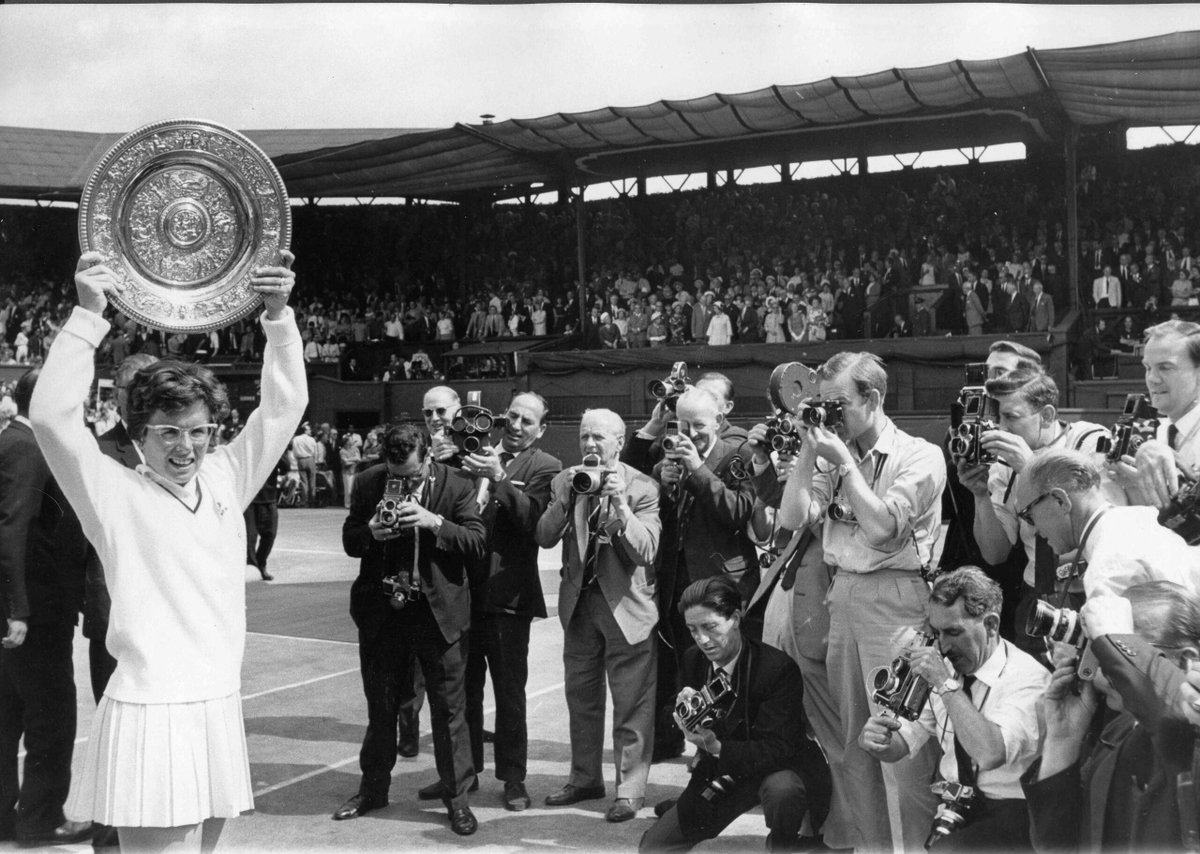
Tennis officially forayed into professional sports in 1968, when the Open Era began, allowing both amateurs and professionals to compete at the sport’s biggest stages for lucrative prize money. However, the prize money benefits were disproportionately in favor of male players, who often earned 10-12 times as much as female players at the same event. To consider matters, back at the 1970 Italian Open, the men’s champion received $7500, while the women’s champion had just $600 to show for her efforts.
Watch What’s Trending Now!
However, the women had had enough of it when similar discrepancies undermined their game at the Southern and Pacific Opens. Under the legendary vision of Billie Jean King, nine players, name Original Nine, risked their careers and Grand Slam participation by leaving established tournament structures and launching their own Tour. King had the likes of Rosie Casals, Nancy Richey, Peaches Bartkowicz, Kristy Pigeon, Valerie Zigenfus, and Julie Heldman from her own country, along with the Australian duo Kerry Melville Reid and Judy Tagert Dalton, who formed a small group that led this movement.
Several of these players were established Grand Slam champions who risked losing a lot, since the USLTA had warned them of the possibility of suspension from the Tour and even exclusion from the Slams. However, they were steadfast in their aim and, in partnership with Gladys Heldman, launched the Virginia Slims Circuit. Heldman was the commercial force behind it all, securing sponsorship from Philip Morris, with all nine women signing 1-dollar contracts.
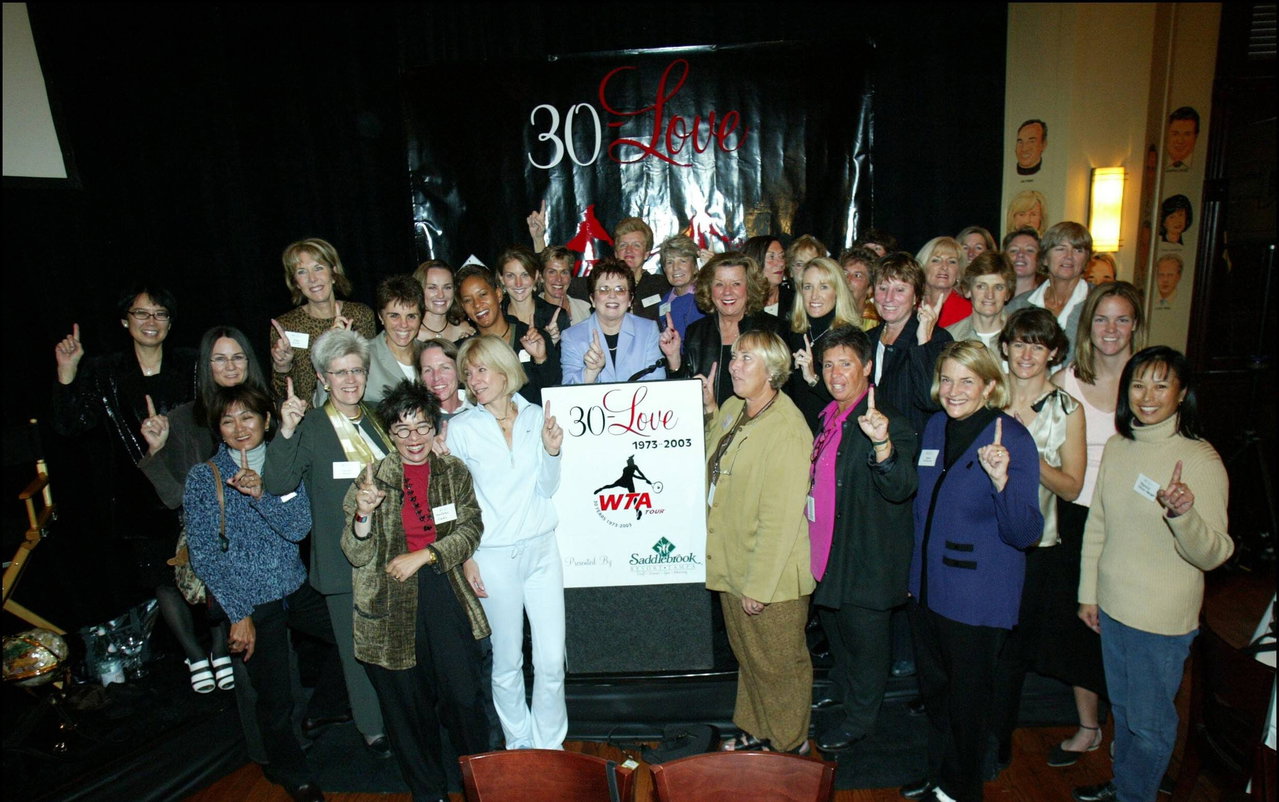
Imago
PUBLICATIONxNOTxINxFRAxBEL Copyright: xx 10044550-006
The swing of the axe was swift as the USLTA suspended all nine players, but that proved of no concern to them. The Virginia Slims Circuit took off in its first year in 1971, when Billie Jean King made history once more, crossing the $100,000 mark in earnings. Gradually, this gave King the power to unite more players to her cause in 1973, when the Women’s Tennis Association was founded, bringing together 60 female players to form a collective organization to support women’s tennis. This, in turn, meant more backing for the Virginia Slims Circuit, which saw King negotiate successfully for equal prize money for men and women at the US Open.
The WTA needed something to launch itself, and Bobby Riggs, a self-proclaimed chauvinist, provided the path to do so. Riggs, a former player, challenged the legitimacy of women’s tennis, claiming that even in his 50s, he could have defeated the world’s top women players. Once again, it was Billie Jean King who answered the call, defeating Riggs in the highly popular “Battle of Sexes” in 1974, giving a massive boost to women’s tennis. With the match between Riggs and King watched by 90 million viewers, CBS was the first network to recognize the potential of women’s tennis, becoming the WTA’s official broadcaster.
With King being the trailblazer, other players soon picked up the mantle, with Chris Evert becoming the first World No.1 in women’s tennis in 1976 as the computerized rankings were established, and ended up taking her career earnings past the $1 million mark, the first female athlete in any sport to do so. As the sport entered its 80s, it gained on-court appeal through the rivalry between Evert and Martina Navratilova, who captured the global audience after 80 battles.
Navratilova later became the first player in the 1984 season to amass a million-dollar prize money in a single season. With an established brand like Avon now in play, the WTA Tour was in commercial safety, with players able to pursue brand endorsements. The battle that King began way back in 1970 finally concluded in 1995, as the WTA and Tour reconciled their differences and became the WTA Tour, the entity we know today.
The nine original women who founded the cultural and political phenomenon, led by Billie Jean King, received their due recognition when they were inducted into the Hall of Fame in 2021.
WTA: The Modern Era and Where It Stands Today
Even though the US Open called for equal prize money for men and women back in 1973, the other three Slams took more than 30 years to follow suit, with Wimbledon being the last major to close the pay gap in 2007. It did not come in isolation, as Venus Williams took the lead in the movement demanding equal pay from the Grand Slams.

This is not just a tennis court. This is our stage to rally the world. #WTARallyTheWorld
During the 2000s, the WTA entered into a partnership with Sony Ericsson, its first major commercial partner in 2005. Currently, world-renowned brands like Hologic and Mercedes-Benz have partnered with the WTA, making the organization financially self-sufficient. This helped the WTA leverage Tour-level events to give equal prize money to both men and women, and to host joint events. The WTA has also found flexibility to alter its calendar, ensuring more joint events for both men and women, which helps its players receive the same paychecks as the men.
To draw a parallel, the current World No.1 Aryna Sabalenka has already amassed career earnings north of 49 million dollars, making her the second on the list of the highest earners in women’s tennis. Not only Sabalenka, but also the likes of Iga Swiatek and Coco Gauff already have careers with prize money over $45 million and $32 million, respectively, and all of them are set to earn much more in the coming years. Not only that, but women tennis players are also prime candidates for sponsorship deals with big brands like Nike, New Balance, Gucci, and many others, something that was previously accessible only to male players.
The WTA underwent a massive overhaul of its brand identity in 2025, launching a new slogan, “Rally the World”. Today, female players have a significant say in court matters, as seen in Coco Gauff and Aryna Sabalenka’s involvement in the ongoing pay dispute. This month, the organization marks its 53rd year, after decades of fighting for equal pay and rights for women’s tennis, which has brought it to a competitive level with men’s tennis and continues to set the standard for pay and rights across women’s sports worldwide.