
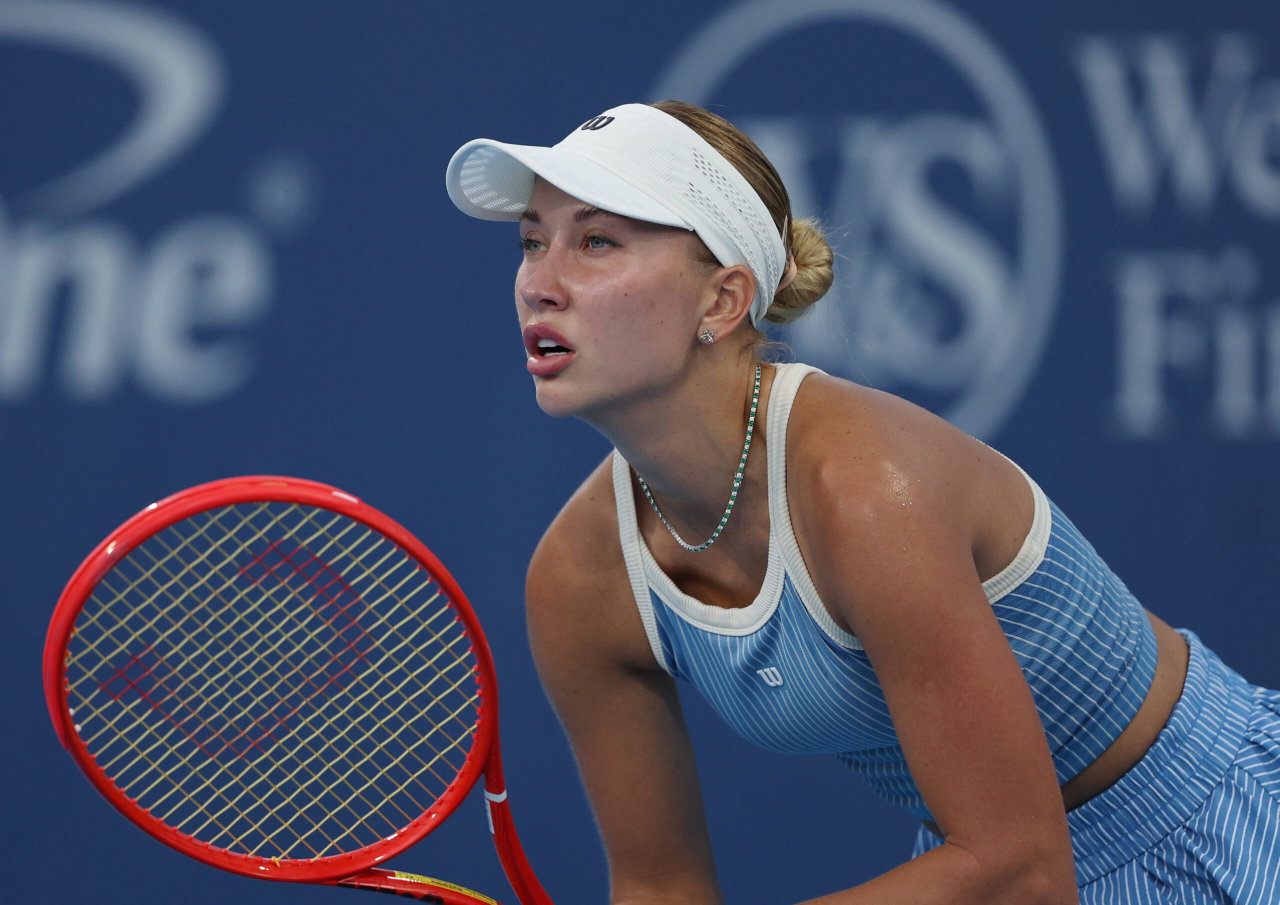
Anastasia Potapova may now compete under the Austrian flag, but her heart, she says, remains firmly in Russia. The 25-year-old, who switched her sporting nationality ahead of the 2026 season, has insisted that the change was a practical necessity rather than a rejection of her roots.
Watch What’s Trending Now!
In an interview with Russian news agency TASS, Potapova was not afraid to be belligerent about her identity.
“In my heart, I’m still a Russian,” she said. “All reasonable people understand why I had to change [sporting] nationality to make it easier to travel and get to tournaments. I have said this repeatedly, but it does not change who I am as a person, my habits or where I come from.”
“As they say, you can take the girl out of the country, but you can’t take the country out of the girl,” she added. It was an unapologetic framing of a decision she plainly feels needs no justification.
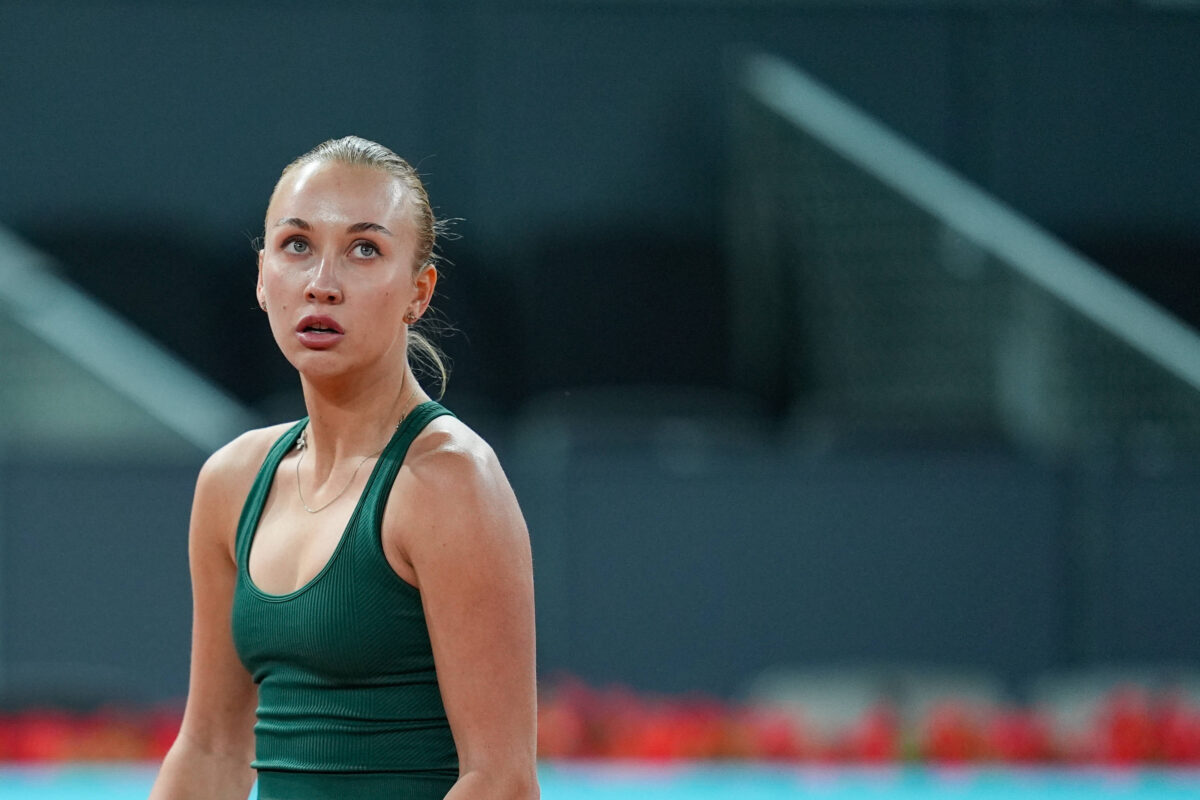
Zuma
April 27, 2026, Madrid, Madrid, Spain: Anastasia Potapova of Austria in action against Elena Rybakina of Kazakhstan during the Mutua Madrid Open 2026, ATP, Tennis Herren Masters 1000 and WTA, Tennis Damen 1000, at La Caja Magica on April 27, 2026 in Madrid, Spain. Madrid Spain – ZUMAa181 20260427_zaa_a181_905 Copyright: xDennisxAgyemanx
The comments are at the core of a current trend that has transformed both the tours in recent years. Potapova is among a string of Russian players to have changed their national affiliation since 2022, a period in which Russian and Belarusian athletes have been required to compete as neutrals, without their flags or anthems, following the invasion of Ukraine. For the world No. 28, her livelihood depends on reaching the biggest events, the logistical case for a switch was clear, and she has consistently framed it in exactly those terms.
Russian and Belarusian players face several challenges, including competitive bans from national team events such as the Davis Cup and the Billie Jean King Cup. They also face logistical problems, such as strict travel restrictions, visa hurdles, and the prejudice that comes with it.
Potapova is a decorated player in her own right, a former junior world No. 1 who triumphed in Wimbledon’s girls’ event in 2016 and has won three WTA singles trophies, including the Transylvania Open in February 2025. She’s certainly not the only one to make such a move. She is the ninth Russian to switch nationality since 2022, after her own compatriots have switched allegiances to countries ranging from Uzbekistan to Australia as players mull the administrative burden of playing at neutral status.
The biggest alleged name to be added to that list is the new world No. 2, Mirra Andreeva. The 19-year-old already lives and trains in France, and there’s strong speculation that it’s just a matter of time before Andreeva switches her nationality.
When Potapova first announced the move, she spoke warmly of her adopted home, describing Austria as “a place I love” where she feels “totally at home,” and expressing a wish to make Vienna her second base.
Her application for Austrian citizenship was granted under a provision that naturalizes those who have made outstanding achievements in sport. But her recent claim that she is Russian to the core has complicated that picture for some Austrians.
A switch that has divided opinions
The remarks were met with a strong reaction in Austria. Economist Florian Ederer wrote on social media that her Austrian citizenship should be “immediately” revoked, a reaction that captured the unease felt by some at the idea of a new citizen professing loyalty to her country of birth.
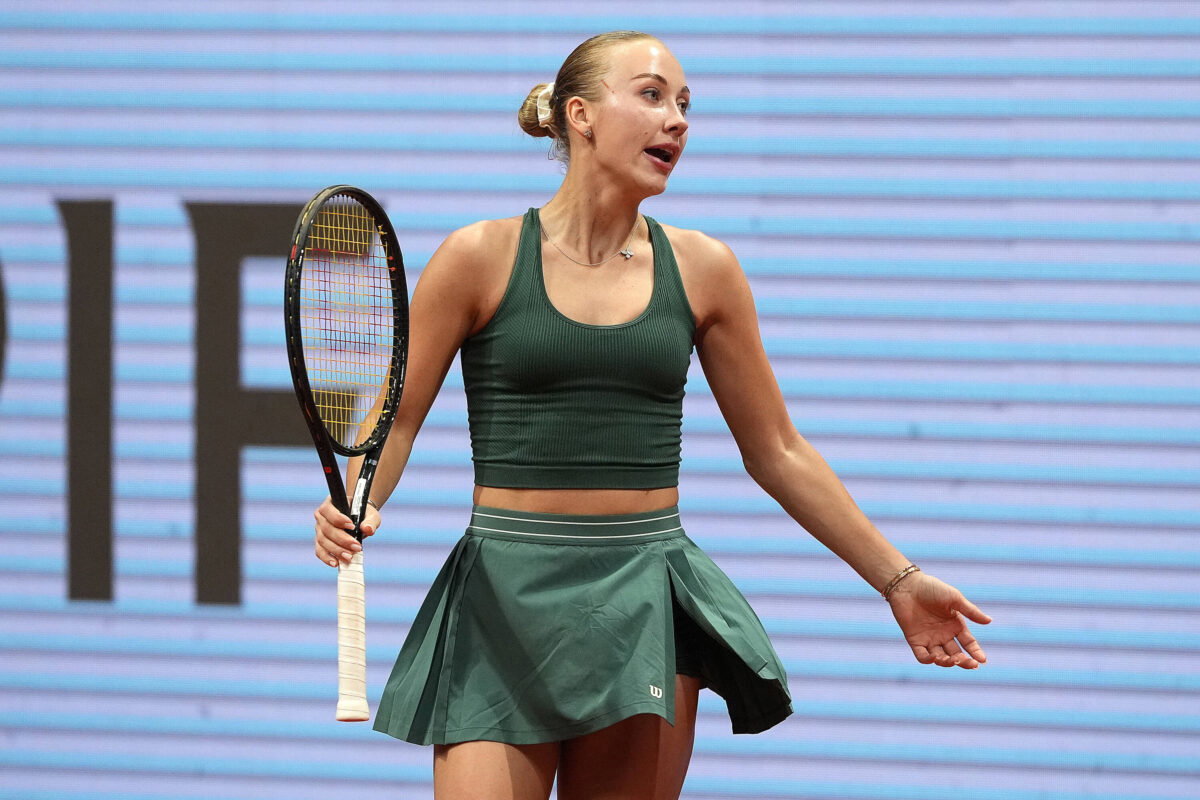
Imago
MADRID OPEN TENNIS 2026. WTA, Tennis Damen POTAPOVA AUT v OSTAPENKO LAT Anastasia Potapova, Austria, during Madrid Open Tennis 2025 match. April 26, 2026.ALTERPHOTOS/Acero MadridSpain PUBLICATIONxNOTxINxFRAxBEL Copyright: xAcerox
The criticism, however, has not come from one direction alone. In Russia, the switch was poorly received, with former world No. 1 Yevgeny Kafelnikov, a vice-president of the national federation, dismissively asking what Potapova had “ever won for Russia” before bidding her “good riddance.”
To rub salt into the wound, she had recently been at a Gazprom-sponsored exhibition in St. Petersburg, leading to some confusion that failed to dampen criticism from either side. She was also accused of lifting the wording of her announcement from Daria Kasatkina, who made a comparable switch to Australia last year and publicly mocked the comparison online.
For Potapova, the fallout underlines just how fraught these decisions have become for Russian athletes navigating a transformed sporting landscape. Her message was that a change of flag did not necessarily mean a change of self, and she tried to comfort both her new home and her old home.