
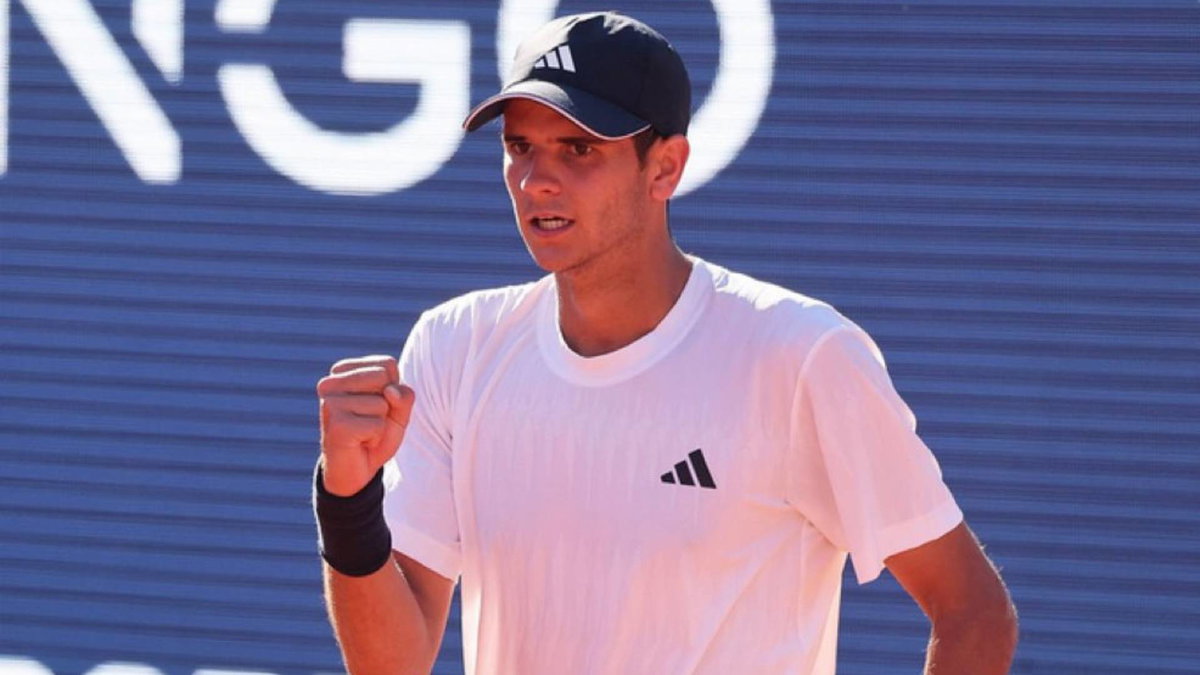
Imago
Image Credit – @RSBetting_
Imago
Image Credit – @RSBetting_
Back in 2018, ATP moved to rethink ball kid towel duties after a heated moment at the Shenzhen Open, where 34-year-old Fernando Verdasco lashed out at a ball-boy he felt was too slow bringing his towel. The incident, caught on camera, sparked widespread criticism and accelerated plans for back-court towel racks. Now, years later, a familiar storm is brewing at the French Open, as fellow 19-year-old Spaniard Rafael Jodar finds himself under scrutiny over his interactions with a ball kid following his run into the R16.
Watch What’s Trending Now!
“I didn’t touch her,” Rafael Jodar said during his post-match press conference after defeating Alex Michelsen in a marathon contest that lasted 4 hours and 16 minutes.
“No, no, no. I could never do that,” he added, speaking with confidence as his voice echoed through the press room. It was a clear and immediate denial from a player who suddenly found himself at the center of unwanted attention when questions began to emerge about the incident involving a ball kid.
The situation came after footage from the match started circulating widely across social media. Some viewers believed the video showed Jodar shoving a ball girl during a changeover, leading to criticism and debate online.
🚨 Este video se está haciendo viral, pero NO ES LO QUE PARECE.
En ningún momento Rafael Jódar empuja a la ball girl.
La chica se tropieza sola con la lona.pic.twitter.com/q9Ci4I0XUi https://t.co/1mqAiVCzoJ
— Tiempo De Tenis (@Tiempodetenis1) May 29, 2026
However, for many fans, Jodar has been unfairly accused, with many arguing that the footage does not clearly show what happened due to a lack of a definitive camera angle.
Just before the moment occurred, Jodar had thrown a bottle of water toward his player box above with his left hand. At the same time, a ball girl suddenly walked across the path where he was moving.
The available footage appears inconclusive. None of the camera angles provides a clear-cut view that confirms any physical contact between the player and the ball kid.
More importantly, several people who were present in that area and witnessed the incident firsthand have insisted that Jodar neither pushed nor touched her. Their accounts have supported the player’s version of events.
“I was telling my dad to give me the things that he was going to give me after a toilet break when I was coming back… she was in the middle, so I think she was trying to get out of the way. She was going backwards, but I think she fell, but not because I pushed her,” he clarified.
Later, to clear the air, Jodar tried to explain what may have caused the fall. While searching for the English word for court cover, he continued to describe the situation in more detail. “It was right behind her. So when she was walking backwards, she fell with that,” he said.
“I appreciate all the work that the ball kids are doing. I know it’s difficult with the heat and the conditions to stay there, so I appreciate it. I could never, you know, push a ball kid.”
His comments appeared sincere, and the explanation seems reasonable. If such an incident had genuinely occurred, the chair umpire or line officials would likely have addressed it immediately.
As Jodar now prepares for his French Open fourth-round clash against countrymen Pablo Carreño Busta on Sunday, the ball-kid controversy has now added another unwanted chapter to a major issue that has seen several difficult moments involving ball kids.
Iga Świątek sparks ball-kid controversy at the Indian Wells
Back in last year, Iga Świątek faced criticism during her SF match against Mirra Andreeva at the Indian Wells Open. The former world No. 1 was booed by sections of the crowd after an incident involving a ball boy during a tense stage of the match.
Świątek was struggling in the deciding set, which eventually ended in a heavy 1-6 defeat. During that time, she could also be heard complaining about noise coming from the ball kids behind her on the court.
At one point, a ball boy tossed a ball toward Świątek as play was about to continue. The Polish ace, clearly frustrated, reacted immediately and swatted the ball straight back in his direction with her racket.
The ball boy quickly raised his hands and stepped aside. Fortunately, he managed to avoid any contact as the ball flew back toward him.
However, that was not the only controversy involving a player and a ball kid in recent years. Another incident attracted widespread attention during the US Open in 2024.
The incident unfolded while Yulia Putintseva was trailing 4-2 in the second set against Italy’s Jasmine Paolini.
Footage showed a ball girl attempting to provide balls to the Kazakhstan player before a serve. The first ball she offered was ignored by Putintseva, who allowed it to hit her torso before bouncing away.
The later attempt received a similar response. The ball bounced off Putintseva’s feet, and the player simply turned her head and watched it roll away instead of picking it up.
Putintseva eventually caught the third ball without acknowledging the ball girl, before reaching for one of the balls she had previously ignored. The footage later showed the ball girl returning to her position while smiling and shaking her head at what had happened.
Now, with Jodar’s situation making headlines at the Roland Garros, the discussion around player conduct toward ball kids has once again returned to the spotlight. What is your opinion on the scene? Share your thoughts below.
