Getty
INDIAN WELLS, CALIFORNIA – MARCH 17: Angelique Kerber of Germany serves to Bianca Andreescu of Canada during the women’s final of the BNP Paribas Open at the Indian Wells Tennis Garden on March 17, 2019 in Indian Wells, California. (Photo by Matthew Stockman/Getty Images)
Getty
INDIAN WELLS, CALIFORNIA – MARCH 17: Angelique Kerber of Germany serves to Bianca Andreescu of Canada during the women’s final of the BNP Paribas Open at the Indian Wells Tennis Garden on March 17, 2019 in Indian Wells, California. (Photo by Matthew Stockman/Getty Images)
Just days after Matteo Berrettini disclosed he was battling the flu as the Indian Wells Open began under a cloud of tension, the drama has only intensified. Now into its fourth day, players continue chasing progress at one of tennis’s most prestigious events outside the Grand Slams. But the tournament’s momentum was abruptly shaken when a medical emergency forced play to halt at the BNP Paribas Open.
Casper Ruud’s match against Alexander Shevchenko at the BNP Paribas Open was unexpectedly halted just minutes after it began. The disruption came after a spectator in the stands started feeling unwell.
Less than fifteen minutes into the contest, Ruud was serving at 2-0, 40-15. Suddenly, fans in the crowd began shouting for assistance as they noticed the distressed spectator in the stands.
The situation quickly caught the attention of the court officials. Chair umpire Josh Brace immediately stepped in and instructed both players to pause the match and sit down.
Imago
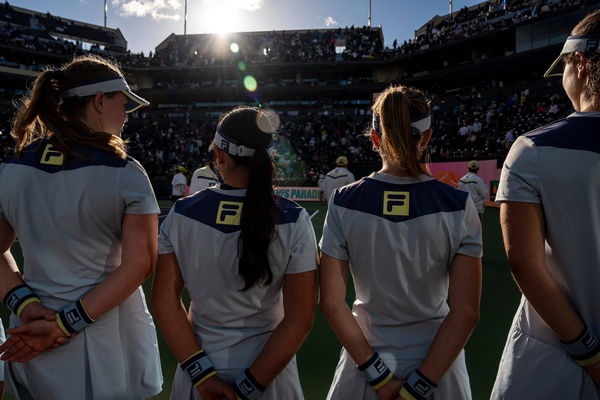
Syndication: Desert Sun Ball kids stand courtside during a changeover between Mirra Andreeva and Iga Swiatek during the WTA, Tennis Damen semifinals at the BNP Paribas Open in Indian Wells, Calif., Friday, March 14, 2025. Palm Springs , EDITORIAL USE ONLY PUBLICATIONxINxGERxSUIxAUTxONLY Copyright: xAndyxAbeyta/ThexDesertxSunx USATSI_25676313
“Gents, let’s take a seat,” chair umpire Josh Brace told Ruud and Shevchenko.
As the players waited, tournament officials began coordinating emergency help. Communication could be heard over walkie-talkies as they called for first-aid personnel to reach the stands at Stadium 3.
Meanwhile, a court attendant rushed over to assist the spectator. The attendant carried a bag of ice and a bottle of water to the stands while medical help was being arranged.
Both players stayed calm during the unexpected pause. Ruud paced slowly near the baseline, while Shevchenko walked over toward his coaching box for a brief conversation.
The umpire soon addressed the crowd again to explain the delay. “Ladies and gentlemen, thank you for your patience. As you can see, we’re dealing with an emergency at the moment. We have to wait for first aid. When that comes, we can continue playing,” he announced.
Some observers suggested that the desert heat may have contributed to the incident. Although temperatures in “Tennis Paradise” were expected to reach around 25°C, the dry conditions can still feel intense for spectators.
After several minutes, first-aid responders finally arrived in the stands. The crowd applauded as they attended to the fan and stabilized the situation.
Once play resumed, Ruud quickly regained focus. He held serve to lead 3-0, dominated the first set 6-1 in half an hour, and later won 7-6(4) to reach the Round of 32.
And this is not the first time tennis has faced major heat-related medical concerns. Last year, several spectators were affected by extreme temperatures, raising fresh questions about whether existing heat-safety measures at tournaments are sufficient.
Fan taken away on stretcher after three Centre Court emergencies at Wimbledon
At the SW19 last year, officials faced a difficult situation on Centre Court. Three separate medical emergencies occurred during the women’s semifinal day as spectators struggled in intense summer heat.
One of the incidents happened during the semifinal between Amanda Anisimova and Aryna Sabalenka. The match had to be stopped twice after fans in the stands fell ill while dealing with the sweltering conditions.
Anisimova, who eventually shocked the top seed, was leading 3-2 in the first set. At that moment, a spectator sitting directly under the sun needed urgent medical attention, forcing officials to pause the match.
During the break, Sabalenka quickly stepped in to help. She rushed over with a cold bottle of water and an ice pack to assist the fan while medical staff made their way through the crowd.
The disruption did not end there. Just four games later, another spectator required medical assistance, leading to another pause in the semifinal encounter.
A third emergency occurred earlier during the day’s other semifinal between Iga Swiatek and Belinda Bencic. Only two games into the match, a fan seated in a shaded section of Centre Court needed medical help.
Paramedics attended to the individual during the change of ends. The fan was first shielded by umbrellas and later carried away on a stretcher for further medical treatment.
There had been earlier concerns as well. During Carlos Alcaraz’s first-round match against Fabio Fognini, a woman collapsed unconscious in the crowd. Alcaraz also rushed to help another elderly spectator who became ill as temperatures reached 32.2°C, breaking the previous opening-day record of 29.3°C.
Similar situations have occurred at other tournaments. At the Australian Open this year, play was suspended during Alex de Minaur’s match against Frances Tiafoe when a spectator required urgent medical care in the stands.
Now, with a comparable incident unfolding at the BNP Paribas Open, the spotlight has again turned to safety measures. Tournament organizers may need to strengthen protections to keep both players and spectators safe in extreme heat.
Related Newsletters