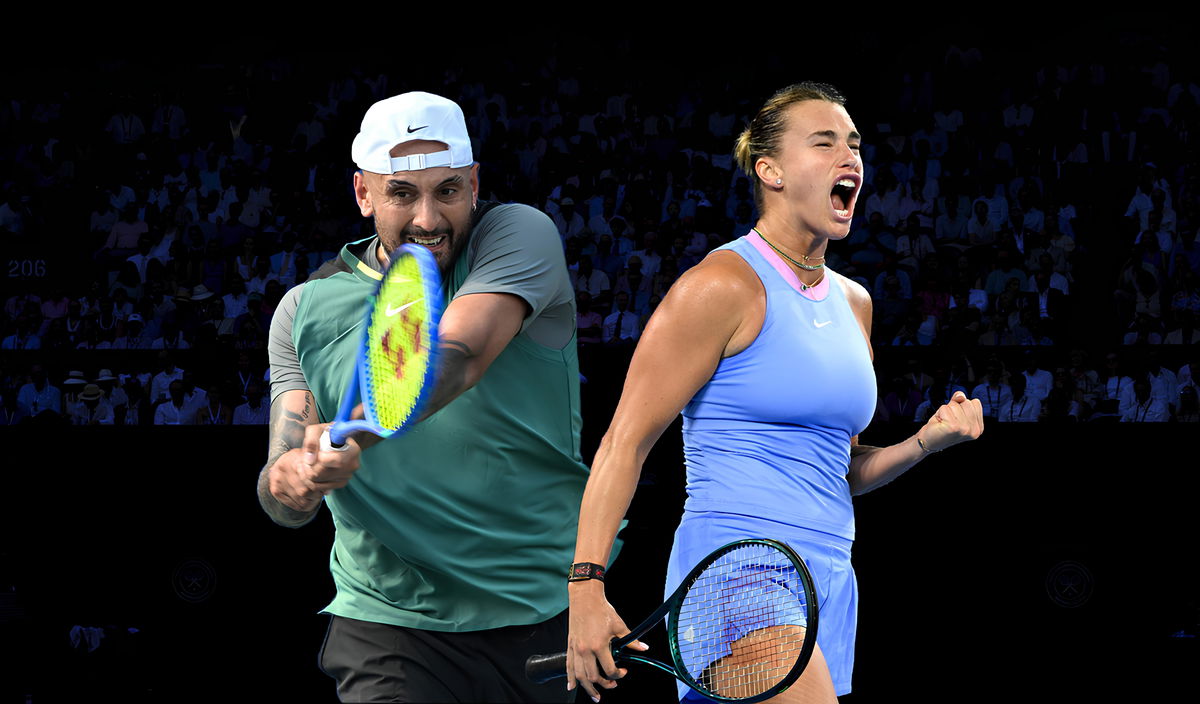
Women’s world No. 1 Aryna Sabalenka is set to take on Australian showman Nick Kyrgios in a headline-grabbing “Battle of the Sexes 2.0” exhibition in Dubai on Sunday. The matchup taps into the legacy of Billie Jean King’s iconic 1973 showdown with Bobby Riggs, a moment that forever changed tennis and the women’s game. And now, with the stage now set, the focus shifts to the unique rules that will shape this modern, made-for-spotlight contest.
Watch What’s Trending Now!
For those who may have missed it, this exhibition comes with some unconventional twists. According to BBC Sport, the match will be played as a best-of-three sets, with a 10-point match tiebreak deciding things if needed. The biggest adjustment comes on serve: both Sabalenka and Kyrgios will be limited to just one serve to start each point, a rule designed to prioritize precision over raw pace and help offset Kyrgios’ natural power advantage.
Interestingly, Kyrgios, currently ranked 671 in the world following a lengthy injury layoff, was the one who pushed for the one-serve rule to apply to both players, after Sabalenka was initially set to have two. But that’s not the only wrinkle. The court dimensions will also differ between the two competitors this time around. How exactly, you ask?
Top Stories





Is Aryna Sabalenka’s side of the court actually smaller than Nick Kyrgios’?
To answer it plainly, yes. The event’s organizers, Evolve, (the agency representing both players) have confirmed that the side of the court Aryna Sabalenka will defend is nine percent smaller than standard. But why was the court size reduced for Sabalenka, you ask?
For those unfamiliar, the decision stems directly from the match’s official announcement. In its press release, Evolve explained that the nine percent reduction was designed to “reflect average movement-speed differences between men and women,” a rule intended to balance the physical dynamics of the contest.

Imago
WUHAN, CHINA – OCTOBER 11: Aryna Sabalenka of Belarus reacts in the Women s Singles Semifinal match against Jessica Pegula of the United States on day 8 of 2025 Wuhan Open at Optics Valley International Tennis Center on October 11, 2025 in Wuhan, Hubei Province of China. PUBLICATIONxNOTxINxCHN Copyright: xVCGx 111596588864
However, from a pure serving standpoint, Nick Kyrgios still enters with a clear edge. The 30-year-old Australian ranks eighth all-time in career aces on the men’s tour, underscoring just how dangerous his delivery can be. That said, Sabalenka is no stranger to raw power herself, having recorded the second-fastest serve ever hit by a woman, a blistering 133 mph strike at the WTA Elite Trophy in 2018.
With that, one thing is clear regardless of the adjustments: this matchup is strictly for show. There will be no ranking points on offer, as neither the ATP nor the WTA has sanctioned the contest, and details surrounding appearance fees or prize money have yet to be made public.
What is the One-Serve rule and how does it change the match?
In regular tennis, players are allowed two serves per point, using the second serve as a safer backup if the first serve is missed.
However, for this exhibition, each player gets only one serve per point, meaning there is no second chance after a miss. This dramatically raises the pressure on every service game, increases the likelihood of double-fault-type errors, and forces both players to balance power with precision rather than simply swinging freely on a first serve.
Written by

Edited by

Janainah Fazlin Anam