
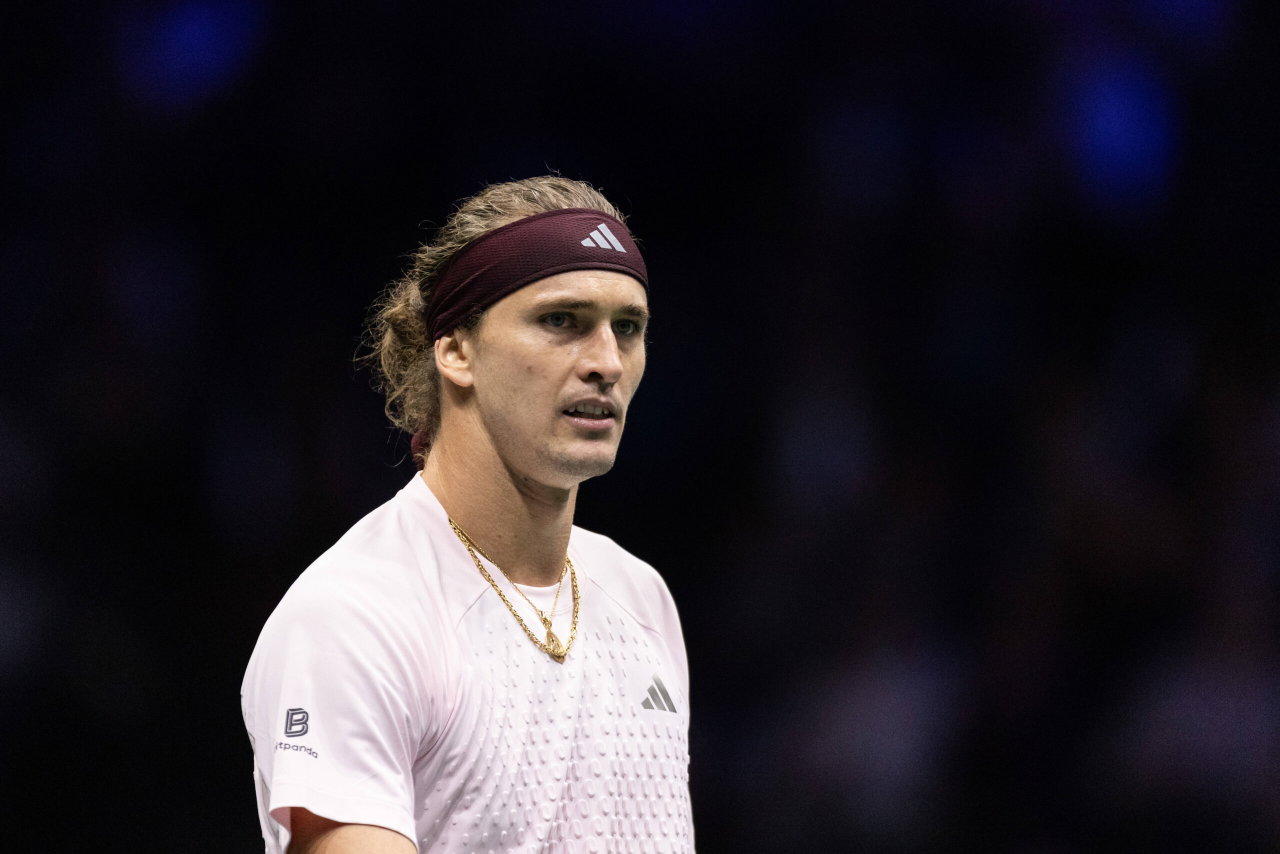
Alexander Zverev might have reached the summit in tennis, but reaching it has not silenced every question about his place among the sport’s elite. His 2026 season brought two Grand Slam trophies and the long-awaited No. 1 ranking, yet a section of the tennis audience continues to debate the circumstances behind his breakthrough. The German has heard enough of that discussion, and his latest response suggests he has little patience for having to defend achievements earned on the court.
In an interview with Corriere della Sera, published on November 9, Zverev addressed the criticism surrounding his rise to world No. 1 and his two Grand Slam victories in 2026. The German won the French Open and US Open without facing either Jannik Sinner or Carlos Alcaraz during those title runs. For some observers, that has become a reason to question the significance of his achievements.
The interviewer put that criticism directly to him, pointing out that some people consider it almost a crime to reach world No. 1 with a losing record against the two players who have dominated men’s tennis in recent seasons.
Zverev’s response was immediate (translated via ChatGPT):
“Is it a crime, in your opinion?”
When the interviewer replied that it was not, the German followed up with another pointed question: “Then why are you asking me?”
The interviewer explained that the subject remained widely debated. Zverev then made his position clear.
“My answer is simple. I can face and try to beat whoever is on the other side of the net. I have nothing to do with the fact that Jannik suffered heatstroke in Paris or that Carlos was eliminated by Shelton at Flushing Meadows, whom I also defeated in the final. In the next few seasons, I hope to face them again. What else can I do?”
For Zverev, the draw is not something he controls. He can only compete against the players who make it through to face him. Sinner’s health problems prevented a meeting at the French Open, while Alcaraz’s defeat to Ben Shelton at the US Open ended the possibility of a clash there. Zverev went on to beat Shelton in the final.
The criticism is not entirely based on his Grand Slam draws. Zverev’s record against the leading players has also become part of the debate surrounding his first spell at No. 1.
According to BBC Sport, the German recorded 62 wins and eight losses against opponents ranked No. 11 or lower in 2026. However, he won only three of his 12 matches against top-10 players. He also entered the season with a difficult recent record against the two players most frequently mentioned in discussions about the men’s game.
Zverev had lost his previous 10 meetings with Sinner and four of his last five against Alcaraz, according to the BBC’s November 4 report. Sinner had been out since Wimbledon because of a knee injury, while Alcaraz had missed significant portions of the season with a wrist problem.
Their absence from the decisive stages of Zverev’s Grand Slam campaigns therefore became a talking point. Before his breakthrough, Sinner and Alcaraz had shared the previous nine men’s singles Grand Slam titles. Zverev’s two victories ended that run, but critics questioned whether he had faced the same level of opposition that had defined the previous seasons.
His first match after becoming world No. 1 added another talking point. Zverev lost 7-6 (5), 6-2 to Lorenzo Musetti at the Paris Masters on November 4. The defeat came just two days after he officially took the top spot in the rankings.
The German admitted that he was unhappy with the constant need to defend his position. In comments reported by BBC Sport, he said he felt like the only world No. 1 in tennis history who had to explain why he deserved the ranking.
Zverev has also made it clear that he wants to face Sinner and Alcaraz again. He expects the Italian to return to his best after recovering from injury and said he cannot wait to compete against him. For now, though, he sees no reason to apologize for the opponents who appeared on his side of the draw.
Boris Becker’s Criticism of Zverev Gets a Response as German Star Hopes to Become a Role Model
The questions surrounding Zverev have not been limited to his results. Even Boris Becker, one of Germany’s most celebrated tennis figures, has publicly questioned aspects of the current world No. 1’s relationship with the country’s fans.
In an interview with Der Spiegel (via TennisTemple), Becker discussed why Zverev had not received the same level of affection from German supporters that his achievements might suggest. He criticized the player’s manner in German-language interviews, describing his interactions with journalists as abrupt. Becker also felt Zverev showed more warmth and humor when speaking English.
The six-time Grand Slam champion further questioned whether Zverev did enough to connect with the German public. He pointed to the support for Zverev’s opponents in his recent Grand Slam finals and brought up his decision not to comment publicly on the war in Ukraine. Becker acknowledged that he understood the decision but suggested it could affect how German fans viewed him.
Zverev did not take those remarks lightly. After his Paris Masters defeat on November 4, he accused Becker of looking for reasons to belittle him and expressed frustration that the former German champion seemed to comment on everything he did. He also rejected the suggestion that he needed to share his political opinions on social media.
The disagreement made the relationship between the two German tennis figures another talking point during Zverev’s first week as world No. 1. Becker later clarified that he did not consider their disagreement a personal power struggle and said that the two did not need to be close friends but should respect each other.
In the Corriere della Sera interview, however, Zverev took a more measured approach when asked about Becker’s criticism.
“Boris Becker and Steffi Graf spoiled us Germans. We were used to having players like them in the 1980s and 1990s. Now it’s my turn. The world No. 1 is a generational figure for the country he represents. I hope I can be a good role model.”
That response also reflected the responsibility Zverev believes comes with his ranking. Becker and Graf set the standard for German tennis in earlier generations, and Zverev now finds himself in the position of carrying that expectation.
He will get another opportunity to strengthen his standing at the ATP Finals in Turin, which begin on November 15. Zverev enters the season-ending tournament as world No. 1, and he has already made his position on the criticism clear. When asked whether he still had something to prove, he replied that he was motivated but did not think he had much more to prove.