
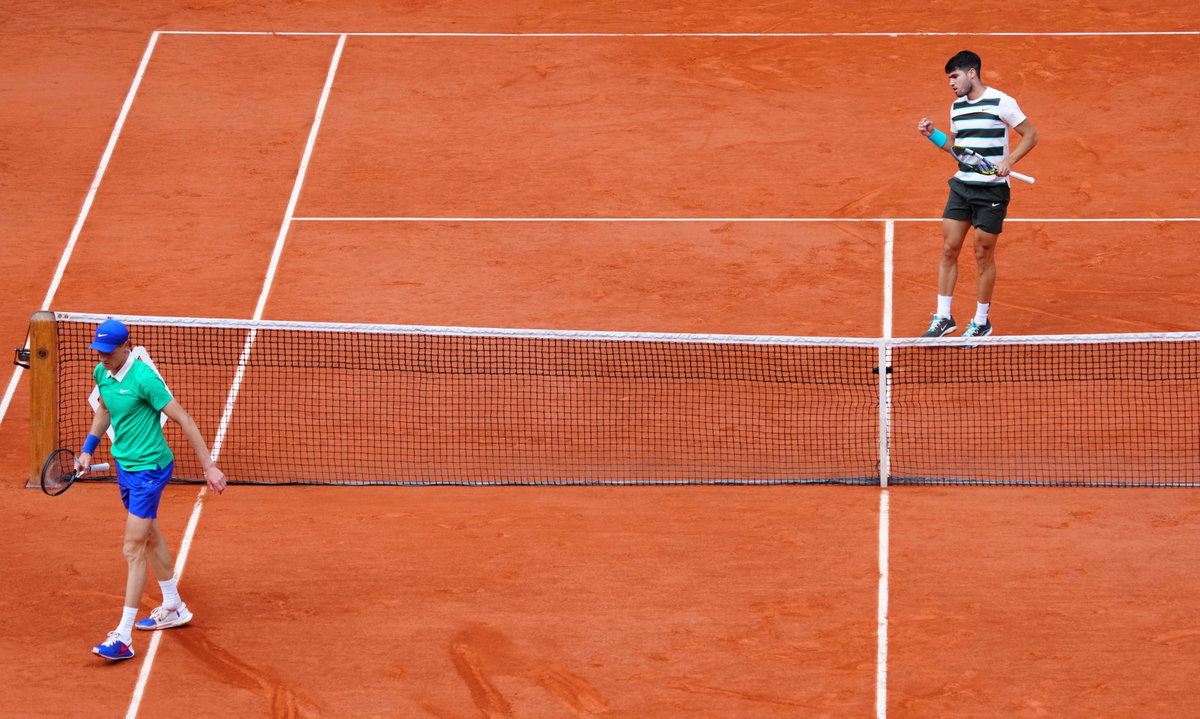
Despite technology sweeping through tennis, the French Open has remained steadfast in its traditional ways. One major traditional theme still seen at Roland Garros is the presence of line judges. Line judges are no longer seen at any of the other three Slams, where the Electronic Line Calling (ELC) system has taken precedence.
Watch What’s Trending Now!
Does Roland Garros Use Hawk-Eye or Electronic Line Calling?
No, Roland Garros uses line judges and relies heavily on the human eye rather than on algorithm-driven tracking systems like Hawkeye or Electronic Line Calling (ELC). However, players do not have the option to challenge line calls using Hawkeye, a process used at Wimbledon before the grass-court Slam introduced ELC last year. At the French Open, in times of contentious calls, the chair umpire has the discretion to look at the mark and make the final call.
Why Does the French Open Handle Line Calls Differently on Clay Courts?
Relying on the human eye to make line calls on clay is still a realistic option as the ball leaves a distinct mark on the surface. In case of confusion, the chair umpire can come down and easily ascertain if the ball is in or out. This is not the case at the other Slams, as the ball does not leave any mark on the hard or grass courts. When asked last year, the president of the French Tennis Federation, Giles Moretton, defended the decision, claiming that the Federation wanted human referees on the court and kept true to the traditions of the tournament, which is over 130 years old.
How Do Line Calls Work at Roland Garros Matches?
The chair umpire resolves the disputed line calls methodically and routinely. In case the shot in question is the point-ending shot, then the player can appeal against the call made by the line judge. But if the disputed shot is within the rally, then the player needs to stop the play and make the appeal to the chair umpire instead of continuing the rally. The chair umpire comes onto the court and inspects the mark in question, as pointed out by the player. During this process, the opponent is not allowed to cross the net to check the mark, as this constitutes unsportsmanlike conduct. Once the umpire has seen the mark, he or she makes the final call, which is absolute, and play resumes.
Why Is There Debate Over Electronic Line Calling on Clay?
The debate stems from the fact that neither the ELC nor the line judges is a 100 percent foolproof system for making line calls on clay. However, it is interesting that ELC has already been adopted for Tour-level clay-court competitions; however, since Grand Slams have separate discretion, the French Open can choose not to use the ELC system. While using line judges, there have already been some line-call controversies at the French Open this year. During the match between Pierre-Hugues Herbert and Lorenzo Sonego, the chair umpire was called down to adjudicate a tricky line call. However, both Herbert and the umpire were confused which mark was the intended one, and the call went against the Frenchman, who had an emotional confrontation with the chair umpire.
Imago
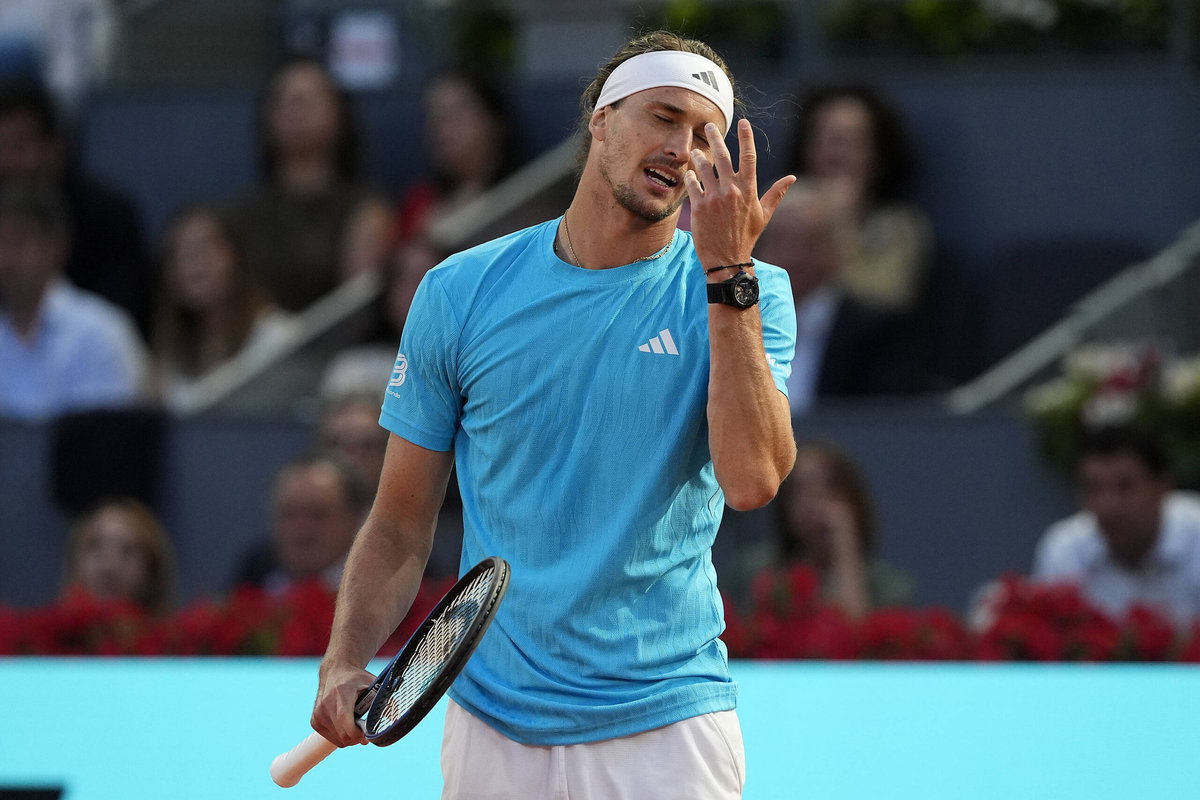
Alexander Zverev, Germany, during Madrid Open Tennis 2025 match. April 27, 2026. 20260427981
A similar incident occurred in the 2024 men’s singles final at Roland Garros, when a line call in the fifth set went against Alexander Zverev, a call the German believed cost him the chance to come back in the match. However, there have been some contentious ELC calls at clay-court events this year, as seen at the match between Zheng Qinwen and Elena Rybakina in Madrid, where the usually composed Kazakh lost her composure.
The nature of the clay court, with its loose topsoil layer, makes it difficult for either man or machine to detect the correct mark. When the ball lands, it shifts some of the clay, so the mark is not precise, which makes it difficult for the umpire and the ELC camera to achieve a 100 percent record in line calls. However, players like Alexander Zverev, who have previously been on the wrong side of line judge calls, are in favor of ELC use, stating that it is the way forward in the sport.
With the debate raging on both sides, it remains to be seen if there will be any more line-call controversies at this year’s French Open, especially during the later rounds.