
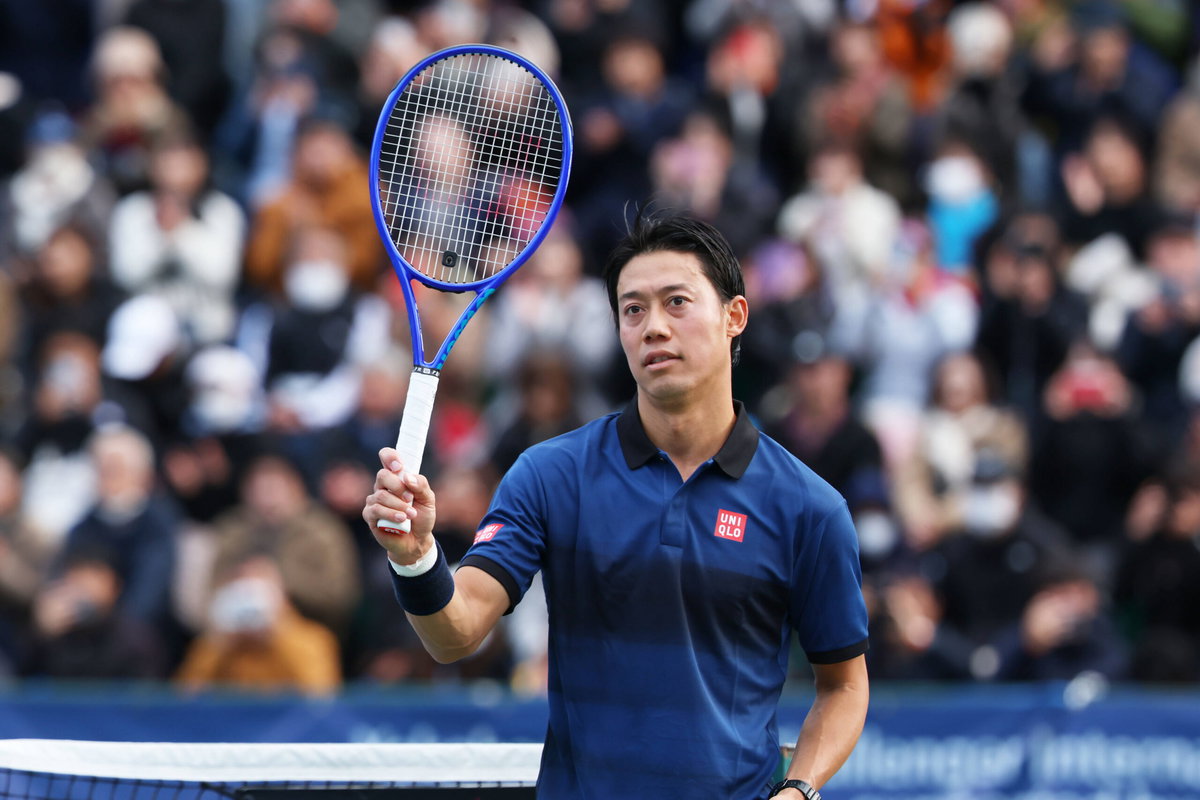
Kei Nishikori is ready for his last tournament. The former world No. 4 and 2014 US Open finalist announced back in April that this would be his final season on tour, and the destination he chose to close it out is his home country. He is set to bring his career to an end at the Japan Open in Tokyo, in front of his home fans, a tournament where he has won the title twice in 2012 and 2014.
Watch What’s Trending Now!
“I have mixed feelings,” Nishikori told ATP Media. “I am excited to play in Japan. But I also know this is my last moment. So, it’s kind of sad. Of course, I want to play good tennis. There’s some pressure, but it’s exciting too.”
The first title came in 2012, when he defeated then-world No. 6 Milos Raonic in three sets, a result he considers the defining moment of his career.
“That was my biggest moment here,” he said. “Because I think for all the Japanese players, this is one of the dream tournaments, and everyone wants to win and I did it. It was 2012 and I beat Raonic. It was a tough battle, but I won a title. I was very happy. Winning here is almost like winning a Grand Slam title for me because this is my home. A lot of fans show up and that was my biggest moment.”
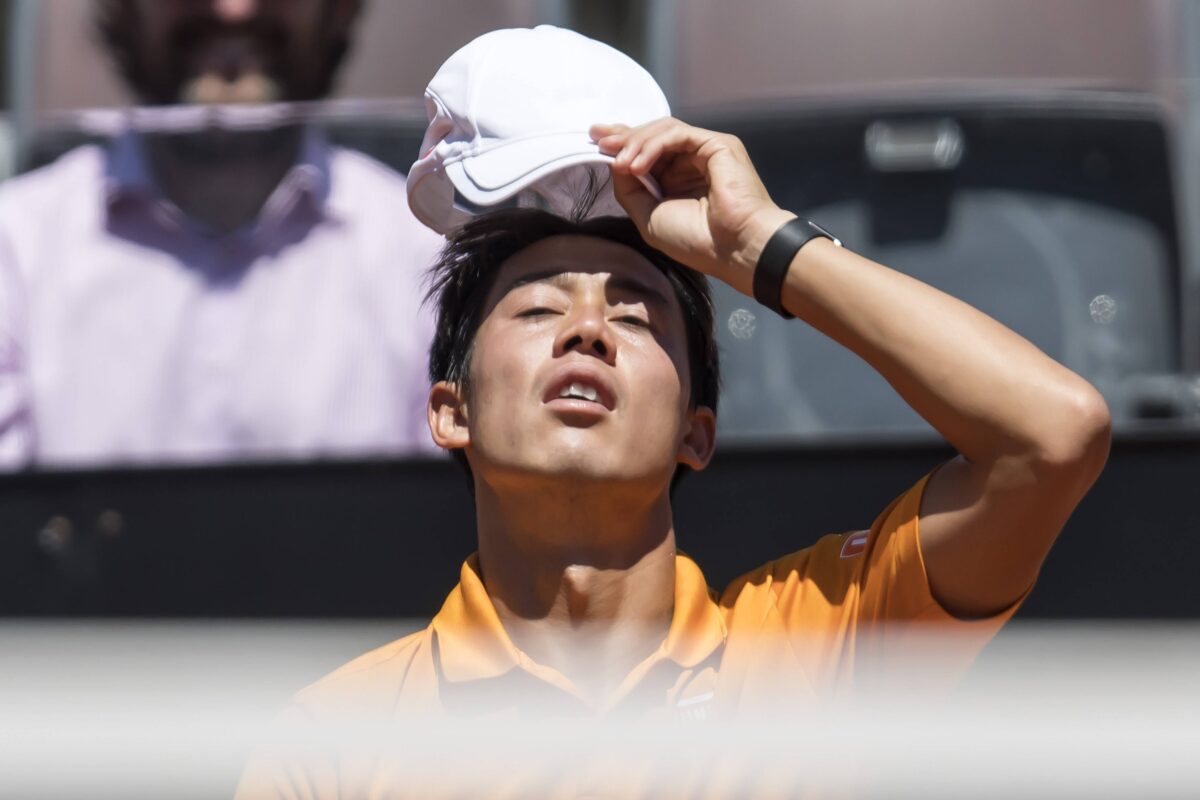
He returned to lift the trophy again in 2014, part of what he considers the finest season of his career.
“I think 2014 was my best year,” Nishikori added. “Winning a title here again, it’s not easy, but I did it. I was very happy. I wish I could win a couple more, but two times is good for me.”
The numbers from that year reveal why he holds it in such high regard. The Japanese reached the final of the US Open, becoming the first Asian man to reach a Grand Slam singles final in the Open Era, before losing in straight sets to Marin Cilic. Weeks later in Tokyo, he beat Raonic once again in a tense three-setter, 7-6(7-5), 4-6, 6-4, his third win over the Canadian that season, making him the first two-time Japan Open champion since Pete Sampras.
That run of form included wins over Stan Wawrinka and Novak Djokovic, which then eventually carried him to a career-high ranking of world No. 4 and qualified for his first ATP finals appearance. His No. 4 ranking is the ranking any Asian man has ever held, defining the legacy he is leaving behind.
A tough farewell draw
Kei Nishikori was not given a wildcard into the US Open main draw. Instead of giving up, he competed in qualifying, where he cleared two rounds before falling in the third to a fellow countryman, 20-year-old Rei Sakamoto, 6-4, 7-6(3), a player who grew up idolizing him. Nishikori positively took the loss and saw it as an opportunity to pass the torch.
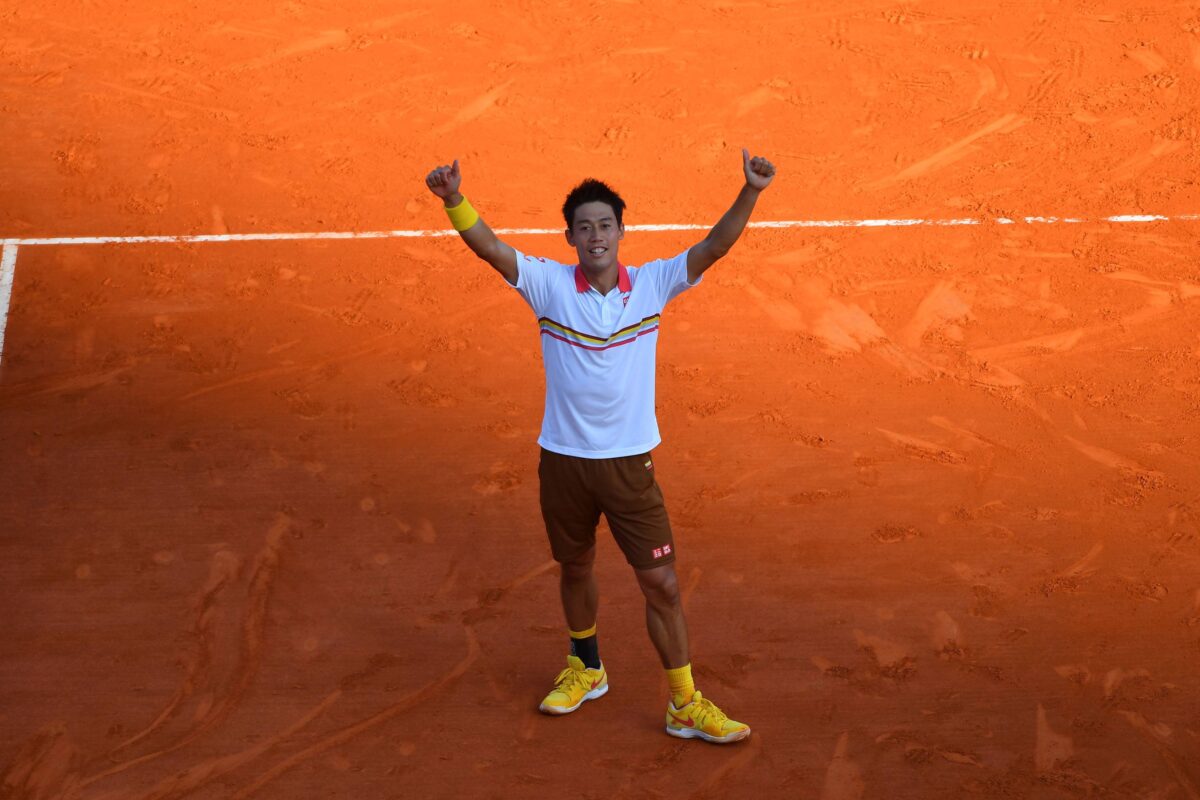
Imago
Bilder des Tages – SPORT Kei Nishikori (Jap) TENNIS : MONTE CARLO 2018 antoinecouvercelle/panoramic PUBLICATIONxNOTxINxFRAxITAxBEL
Now, in his 12th and final appearance in Tokyo, Nishikori faces an immediate test in the first round against second seed Frances Tiafoe, the world No. 8, with the two meeting for the first time on tour.
He is heading to Tokyo with a tournament record of 24-9, and despite the tough draw, he will bid adieu on an impressive note in front of his home crowd.
“I have felt the fan support all the time,” he said. “These fans always pushed me to the end, and I think that’s why I was able to win in the third set against Raonic.”
The 36-year-old tennis veteran is tipping his hat to his home crowd after dedicating 19 years of his life to the sport. He made his name in arguably the toughest era of the sport, when the ‘Big Four’ dominated the field, and he did so from a country where tennis is not that popular. With his signature two-handed backhand shots and formidable return on serve, he not only took 37 matches to five sets but also won 29 of those matches. And along the way, he earned the alias ‘Five-Set King’ in 45 Grand Slam Appearances.
Through his performances over the years, he not only inspired millions of young tennis players in his nation but also put Asian tennis on a pedestal.