
Imago
TENNIS AUSTRALIAN OPEN, Jannik Sinner of Italy reacts during the Mens 4th round match against compatriot Luciano Darderi on day 9 of the 2026 Australian Open tennis tournament at Melbourne Park in Melbourne, Monday, January 26, 2026. NO ARCHIVING MELBOURNE VICTORIA AUSTRALIA PUBLICATIONxNOTxINxAUSxNZLxPNGxFIJxVANxSOLxTGA Copyright: xJOELxCARRETTx 20260126154976058054
Imago
TENNIS AUSTRALIAN OPEN, Jannik Sinner of Italy reacts during the Mens 4th round match against compatriot Luciano Darderi on day 9 of the 2026 Australian Open tennis tournament at Melbourne Park in Melbourne, Monday, January 26, 2026. NO ARCHIVING MELBOURNE VICTORIA AUSTRALIA PUBLICATIONxNOTxINxAUSxNZLxPNGxFIJxVANxSOLxTGA Copyright: xJOELxCARRETTx 20260126154976058054
Clostebol shook the tennis world after Jannik Sinner’s twin positives at Indian Wells led to a three-month ban following a WADA appeal. Now, the same substance returns to the spotlight, as Guatemala’s Juan Sebastián Domínguez Collado earns the benefit of doubt and walks free from a doping charge under unusual circumstances.


Juan Sebastián Domínguez Collado’s case became one of the most unusual doping stories in recent tennis. The International Tennis Integrity Agency (ITIA) released a detailed explanation of its decision.
Watch What’s Trending Now!
“In the days leading up to Domínguez Collado’s doping control test, the player was sharing living quarters with his father, who, on the advice of his physician, had been conservatively treating a condition with two separate clostebol-based products, multiple times a day.”
The ITIA then explained how daily habits may have caused indirect exposure.
Imago
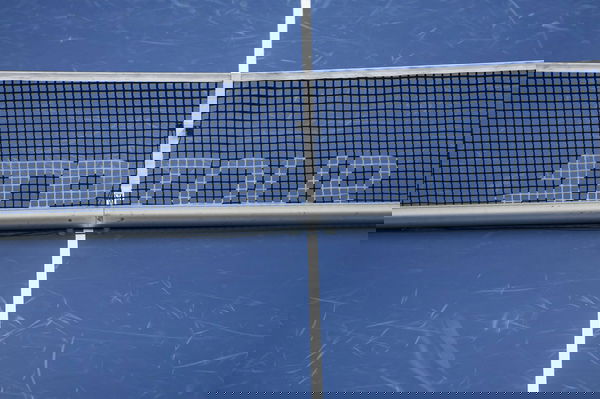
European Open ATP, Tennis Herren Tennis Tournament ATP TOUR logo inscription displayed on the net of the central court during a quarter semi final tennis match of the singles competition at the ATP 250 European Open Tennis tournament in Lotto Arena, Antwerp, Belgium on October 18, 2024. Antwerp Belgium PUBLICATIONxNOTxINxFRA Copyright: xNicolasxEconomoux originalFilename:economou-notitle241018_np70m.jpg
“Domínguez Collado asserted that he and his father had regular physical contact and shared access to a mobile device. In addition, the player shared communal towels with his father, who stated that he had regularly used the towels to wipe his hands after applying the products to his body, as an alternative to washing after each application, further increasing the exposure to the clostebol residue.”
Because the case was unusual, the ITIA sought scientific verification.
“As part of the investigation, the ITIA sought scientific advice from the WADA-accredited laboratory in Montreal, Canada, where the sample was analyzed, for expert views on the plausibility of the player’s explanation.”
The laboratory’s findings supported the player’s claim.
“Upon review, the laboratory confirmed that the player’s explanation was plausible based on the low level of clostebol in the player’s sample, and, having taken all evidence into account, the ITIA determined that the player’s explanation was more likely than not the source of the clostebol.”
The case dates back to October 2025, when the 23-year-old tested positive during competition. He was provisionally suspended in November under the Tennis Anti-Doping Program. At that time, clostebol was treated strictly because it is a non-specified anabolic steroid.
Domínguez Collado later submitted evidence showing the contamination came from close contact with his father. The ITIA accepted the explanation and ruled No Fault or Negligence. His provisional suspension was lifted immediately, and he is now free to return to professional tennis.
At the time of the test, he had reached a career-high ATP ranking of 1660. The decision allowed him to resume his career without serving a full ban.
Unusual explanations for positive tests are not new in tennis. Several players have tried to argue accidental contamination in recent years.
One such case involved Goncalo Oliveira in 2024. He tested positive for methamphetamine during an ATP Challenger event in Mexico.
The Portuguese-born player, who represents Venezuela, claimed the substance entered his system after a kiss. However, an independent tribunal rejected the explanation. He failed to prove the source on the balance of probabilities.
As a result, Oliveira received a four-year suspension. His provisional suspension time was counted toward the ban, and he will be eligible to return only in January 2029.
Cases like these highlight the strict standards in anti-doping investigations. While some players manage to prove accidental exposure, many cannot meet the required level of evidence.
For those who go through the process, even a temporary suspension can be mentally and professionally damaging. Being cleared may bring relief, but only players who experience it truly understand the pressure behind such cases.
Jannik Sinner continues to face fallout from the doping controversy
In March 2024, Jannik Sinner tested positive for the banned substance clostebol. At the time, the Italian was World No. 2, and the result raised serious questions about his future in the sport.
An independent tribunal later ruled that Sinner, 24, bore “no fault or negligence.” Despite that finding, he was handed a three-month suspension. The ban ran from February to May last year.
There was also uncertainty about a harsher punishment. The World Anti-Doping Agency had appealed the decision, creating the risk of a possible two-year ban.
Instead, after he won the Australian Open, the case concluded with a three-month sanction. The timing meant he did not miss any Grand Slam events.
Speaking at the recently concluded Australian Open, Sinner opened up about the difficult period. “It was difficult. Now it’s tough to say because I know the ending, you know?” he added. “It was difficult for me, but also for the family. I tried to stay with the people I really love, which at times worked very well. At times it was a bit disappointing, too.”
He also admitted that uncertainty weighed heavily on him throughout the process.
“I didn’t know exactly what’s going to happen. So I tried still to enjoy it when you go out on the court, but you still have it in your head.”
Now that his case is closed and Juan Sebastián Domínguez Collado has also been cleared, the tour moves forward.
However, recent cases serve as a strong reminder of strict anti-doping rules. For players, the pressure and scrutiny around banned substances remain very real.
Written by

Edited by

Snigdhaa Jaiswal