
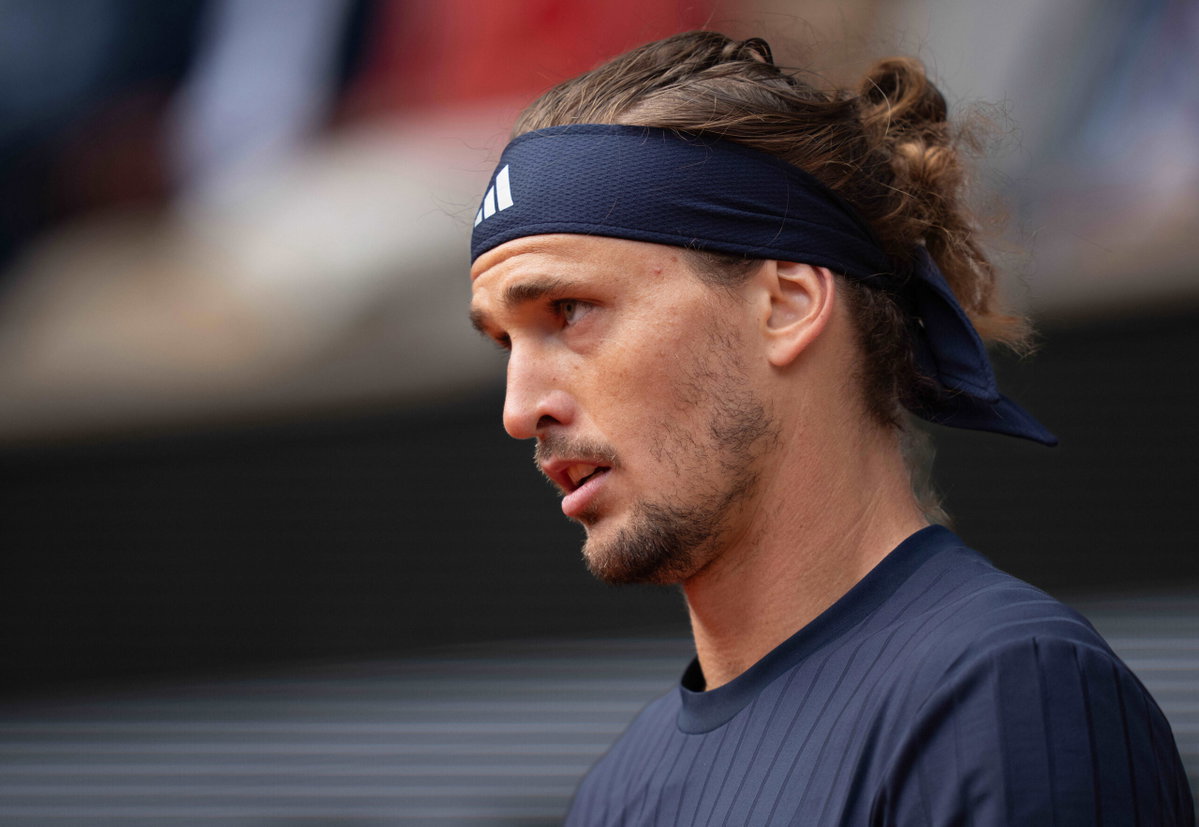
Alexander Zverev has spent years battling some of the best players in tennis. But there is another battle he has been fighting between every serve, changeover and deciding set, one that most fans rarely see. For a player competing at the highest level, managing Type 1 diabetes is part of the job. Andy Roddick believes the tennis world still does not talk about it nearly enough.
Watch What’s Trending Now!
“I don’t know how it’s not a bigger story, the fact that he’s literally checking blood sugar levels every single switchover. He has his kit. Imagine playing nine and a half hours.” Roddick said during an interview while he was on his limousine ride to the Open after filming an undercover GEICO commercial in Forest Hills, N.Y.
Roddick’s reaction comes from a place of personal understanding. His father-in-law, Steve Decker, the father of model and actress Brooklyn Decker, also has diabetes. Decker’s work as a pacemaker salesman means he travels constantly, and Roddick said being around him gave him a “crash course” in what managing the condition requires every day.
That experience made Zverev’s routine on a tennis court look even more remarkable to the former world No. 1.
“My mother-in-law is like all day checking her phone just to make sure he doesn’t crash, and that’s not 10 hours on court,” Roddick said. “It’s insane, it’s nuts. I don’t think it’s talked about enough, frankly. He doesn’t talk about it, too.” And that last part is important.
Zverev was diagnosed with Type 1 diabetes as a child, but he did not publicly discuss it until 2022, when he was 25. He later explained that he had simply felt uncomfortable talking about his condition. When he finally opened up, he also launched a foundation aimed at raising awareness about diabetes and supporting children living with the disease.
By then, he was already an established star. Yet away from the cameras, every match still required careful planning.
Zverev needs to monitor his blood glucose levels throughout matches and keep insulin close by in case he needs it. He has a Therapeutic Use Exemption allowing him to administer insulin despite the restrictions players normally face regarding medical interventions during competition.
The challenge became impossible to ignore at the 2023 French Open. Zverev was frustrated after being told he would have to use one of his toilet breaks if he wanted to leave the court to take his insulin. Rather than disrupt the match, he took his insulin pen from his bag and administered it on court.
It was a moment that showed just how different his match-day routine can be from that of the average tennis player.
Technology has since made the process easier. In a July 2026 interview with the BBC, Zverev explained that he carries a second phone without a SIM card because it is connected to his glucose-monitoring system.
“I have two phones with me, actually. One is just for on-court, which doesn’t even have a SIM card or anything like that. I basically have it throughout the entire game here, and that’s why the umpires allow me to check the phone. So I don’t have to poke my finger every changeover,” he said.
Sometimes the technology does not cooperate, though…”Sometimes it doesn’t find the signal quickly enough, and then I do have to poke my finger, but fortunately for me, I think diabetes has become easier over the past few years with technology,” Zverev added.
The remarkable part is what happens after that. He still has to serve. Still has to return. Still has to recover between points. Still has to find another gear when a match stretches deep into the night.
And somehow, Zverev has built a career among the sport’s elite.
He has reached world No. 2, won the French Open in 2026 and positioned himself for another major opportunity at the US Open. His journey is even more striking considering he started playing tennis just a year after his diagnosis.
What does Andy Roddick think about Alexander Zverev facing Ben Shelton on American soil?
That US Open run has now brought Zverev to another final, where the German will face Ben Shelton in front of an overwhelmingly American crowd.
Zverev arrived there after defeating Karen Khachanov, while Shelton stunned Carlos Alcaraz in a five-set quarterfinal before overcoming Frances Tiafoe. For Shelton, it is the first Grand Slam final of his career and a chance to end a 23-year wait for an American men’s singles champion at the US Open.
Roddick knows exactly what that pressure feels like. He was the last American man to win the tournament, lifting the trophy in 2003.
Still, he does not expect Zverev to be rattled by the noise.
“I don’t think Sascha is going to care much about the crowd,” Roddick said. “He finished winning a Slam this year. I think him winning in Roland Garros will help him deal with this.”
Instead, Roddick believes Shelton needs to be selective with the energy coming from the stands.
“Ben is going to have to be situationally smart when he uses the crowd. I don’t think he needs to use every single point throughout this match. I think he needs to use them when he wants Sascha to hear them,” he added.
There is another reason Roddick remains intrigued by the matchup: Zverev’s rise has come while dealing with a challenge that has been largely kept in the background.
The German now has the opportunity to add a second major to his season and continue challenging the dominance of Jannik Sinner and Carlos Alcaraz. He is also 5-0 against Shelton, giving him a significant edge heading into the final.