
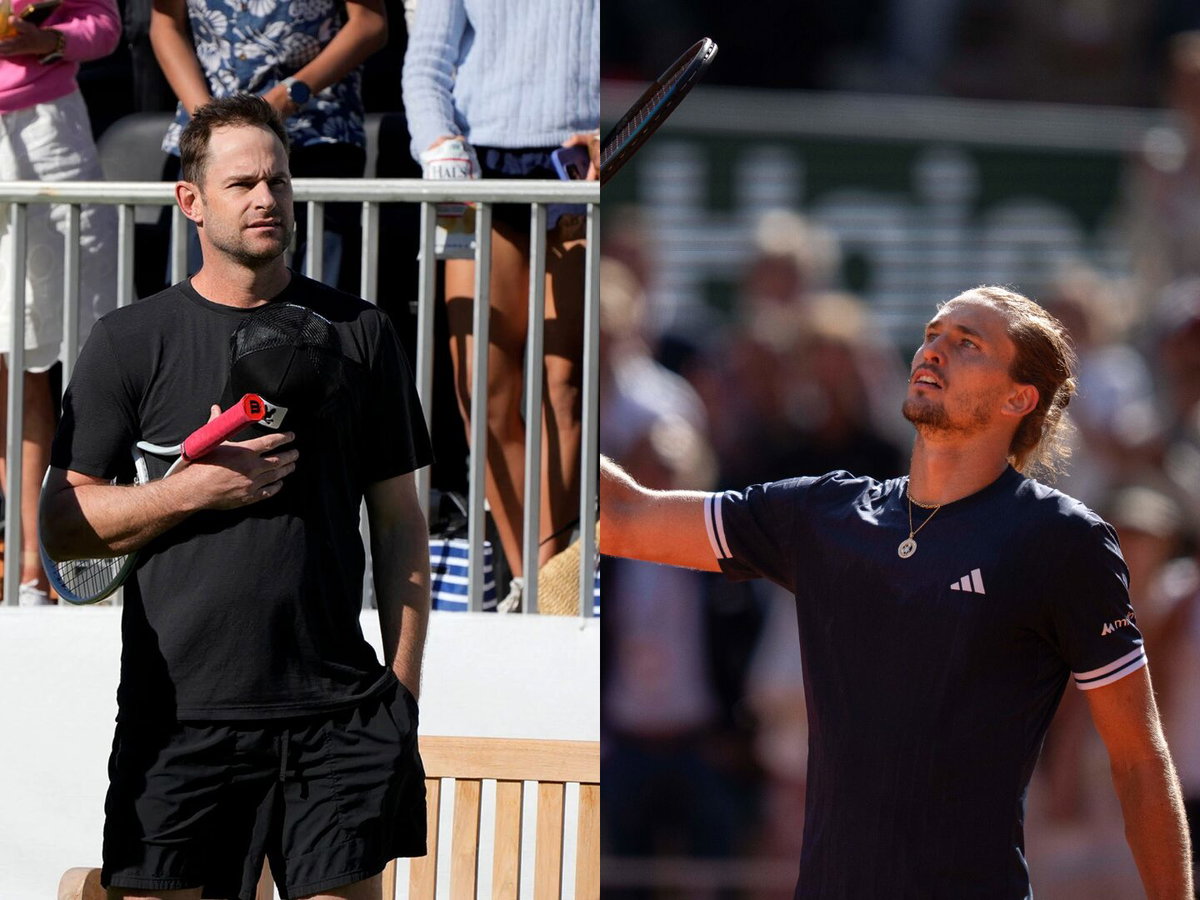
Alexander Zverev won a five-set French Open final on Sunday despite battling a chronic condition that doctors once said would end his professional career before it started. The match wasn’t just defined by the scoreline or his nine double faults. What truly stood out were the nerves and the weight of a decade-long wait for his first Grand Slam title. Former American world No. 1 Andy Roddick made sure Zverev’s struggle stayed in the spotlight.
Watch What’s Trending Now!
“Also, like an under-told story,” Roddick said on the latest episode of the Served podcast. “How about someone being a type one diabetic and winning a five-setter to win a major? It’s not nothing. Not something he kind of uses for any sort of sympathy or goodwill. Not easy.”
But there was a personal story behind it. “My father-in-law is a type one diabetic, and managing that is not, is no easy task.” The 2003 US Open champion is not someone who deals in sentimentality for its own sake. The fact that he paused the tactical breakdown of the final to raise the point said something about how seriously he took it.
Roddick’s position on the wider debate about the quality of Sunday’s final was equally direct. He admitted that both Zverev and Cobolli did not play their peak tennis in the afternoon over the four hours and 16 minutes on Court Philippe-Chatrier. He said so plainly. Then he explained precisely why he did not care or how it doesn’t matter.
According to him, the goal of winning a Grand Slam is simple and extremely difficult, i.e., win three sets, seven times, over two weeks, and beat the rest of the world to do it. Zverev did that. Therefore, all the conversations around that are white noise.
Imago
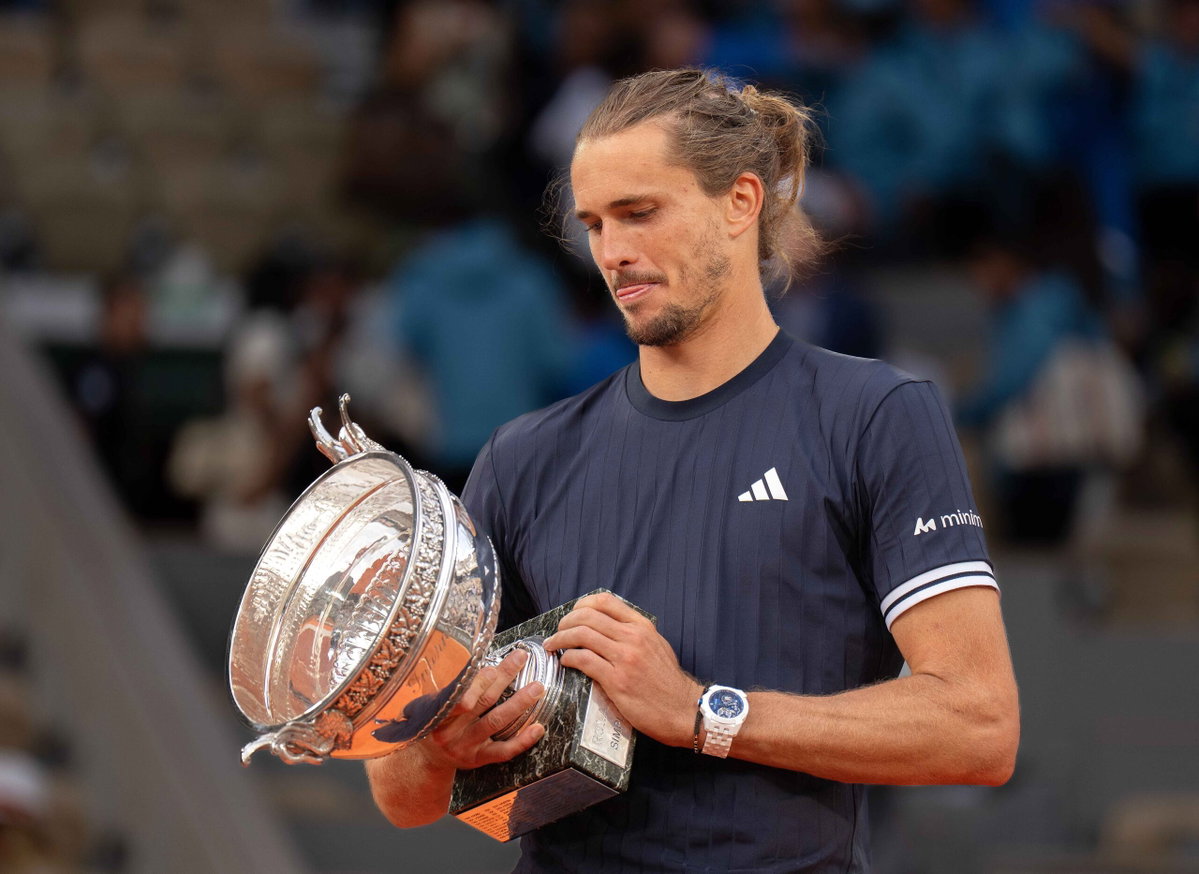
Jun 7, 2026; Paris, France; Alexander Zverev of Germany poses with the trophy after winning the mens singles final against Flavio Cobolli of Italy on day 15 at Stade Roland Garros. Mandatory Credit: Susan Mullane-Imagn Images
The 43-year-old added a layer of understanding to the diabetes conversation, which was beyond sympathy. He knows the concern firsthand, as his father-in-law is encountering the same condition. The Type 1 diabetes management includes maintaining blood sugar and insulin levels, while stress and physical exertion can shoot them up anytime.
A condition like diabetes is not just a background inconvenience that can be pushed aside on the day of a Grand Slam final. It is a daily, ongoing management process that will go on for the rest of Sascha’s life. While all this was happening, Zverev overcame the upset of the fourth-set tiebreaker, a cramping leg, and the bitter memories of his previous three defeats in the Grand Slam finals. Roddick suggested that winning a Grand Slam with Type 1 diabetes should not be just considered as a side hustle.
What Roddick made of Zverev’s win more broadly
Other than the health aspect, Andy Roddick’s breakdown of the match itself was enlightening. He noted how Zverev was on the verge of losing control in the fourth-set tiebreaker. When Zverev lost the tie-breaker and entered the decisive set, he appeared to be “physically cooked”. He further suggested that the double faults were not spontaneous but the physical manifestation of nerves that had been depleted from a body that was out of reserves. The American knew what he saw.
“I think the mental manifestation of nerves affects the physicality and your energy reserves,” he said. It was not criticism. It was a diagnosis made by someone who has experienced the pressure at that magnitude himself.

Imago
Jun 7, 2026; Paris, France; Alexander Zverev of Germany celebrates winning the men’s singles final against Flavio Cobolli of Italy on day 15 at Stade Roland Garros. Mandatory Credit: Susan Mullane-Imagn Images
Andy Roddick also set Zverev’s trajectory in a historic context, giving it its proper significance. Looking back on the list of men who lost their first three Grand Slam finals before winning one, he cited four names: Ivan Lendl, Andy Murray, Andre Agassi, and Goran Ivanisevic. Those players went on to win eight, three, eight, and one major titles, respectively.
Alexander Zverev is also now in the fold, and Roddick said that his 555+ career wins, seven Masters 1000 titles, and an Olympic gold medal already put him in Hall of Fame territory, regardless of how many more majors he’ll go on to win.
He also highlighted a fact that hadn’t been brought up in the immediate aftermath. Sascha became the first German male to win the French Open since 1937, a feat that merited little attention amid the furor surrounding the final. The impact of Sunday goes deeper than a player’s redemption arc for a tennis nation that has had two great male players in Boris Becker and Michael Stich and has been waiting for its next Grand Slam winner for years.
Roddick finished as he began, on the hardship of what Zverev accomplished, rather than focusing on the flaws of his performance.
“He beat the rest of Earth over these two weeks. Pass fail, he did it,” he said.
That’s a statement from a man who has won a Grand Slam himself and spent years learning what it takes to achieve that. The part about winning it while dealing with Type 1 diabetes, which Roddick wouldn’t let slide past, is not insignificant either.