
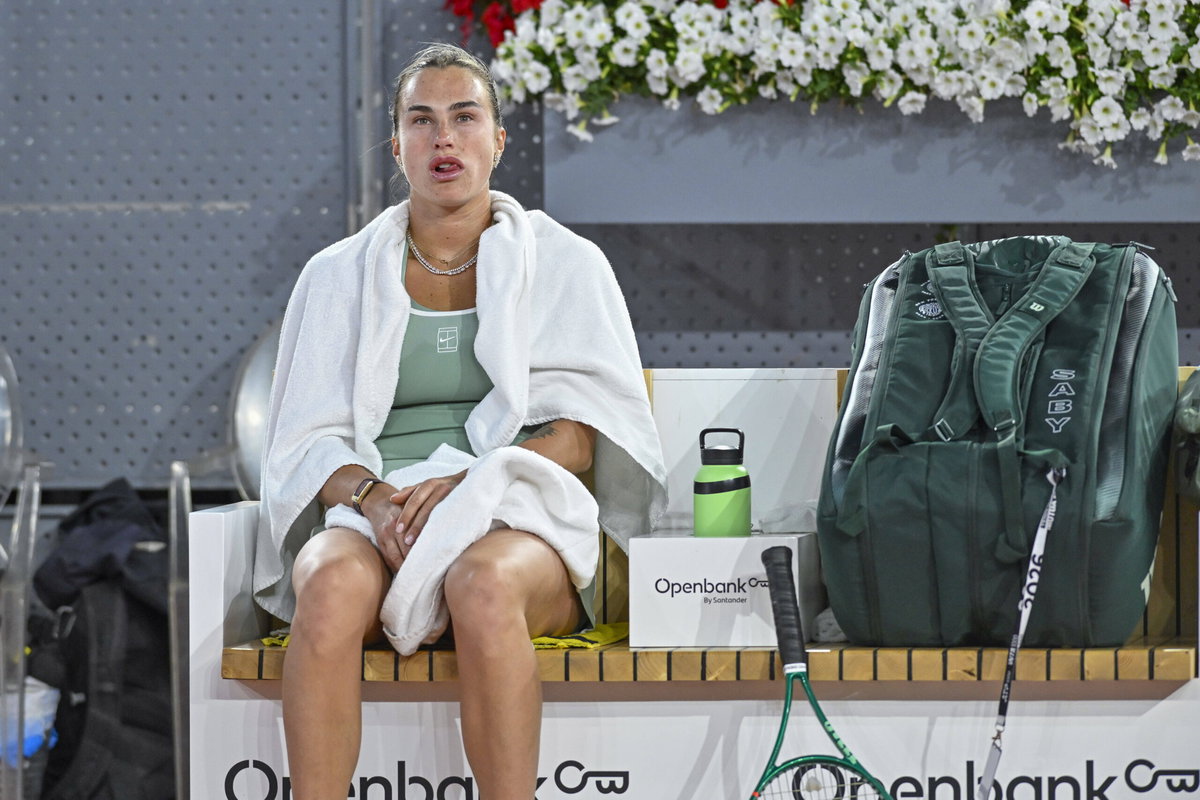
The WTA rolled out something it had never done before this year: mandatory, one-time gene testing for every player on tour, effective July 21, requiring a cheek swab, blood sample, or saliva test to screen for the SRY gene. The move followed a broader IOC eligibility policy introduced in March, and echoes similar rules World Boxing and World Athletics both adopted in 2025. World No. 1 Aryna Sabalenka has made clear exactly where she stands on it.
Watch What’s Trending Now!
“I think it’s really important to keep the fairness in our tour,” she said in a press conference before the National Bank Open. “It’s obviously, biologically, the men are way stronger than women, so I feel like it would be not really fair for the woman to compete against biological man.”
“I believe it took them a little while to make this decision and, yeah, I support it. But for me, I’m focusing on myself, on my goals, you know, whatever it takes. If they want to test us all, I’m happy to do that; it’s pretty fair, and let’s keep it that way.”
The test screens for the SRY gene, a segment of DNA typically found on the Y chromosome that initiates male sex development and indicates the presence of testes. Under WTA’s official policy, a “biological male” is defined as anyone who, regardless of legal sex or gender identity, has an SRY gene and therefore has or previously had testes or streak testes.
A positive result doesn’t automatically end a player’s eligibility, but it does render her ineligible for the women’s category unless she can demonstrate, to WTA medical staff’s satisfaction, that she has Complete Androgen Insensitivity Syndrome or another recognized Difference of Sexual Development.
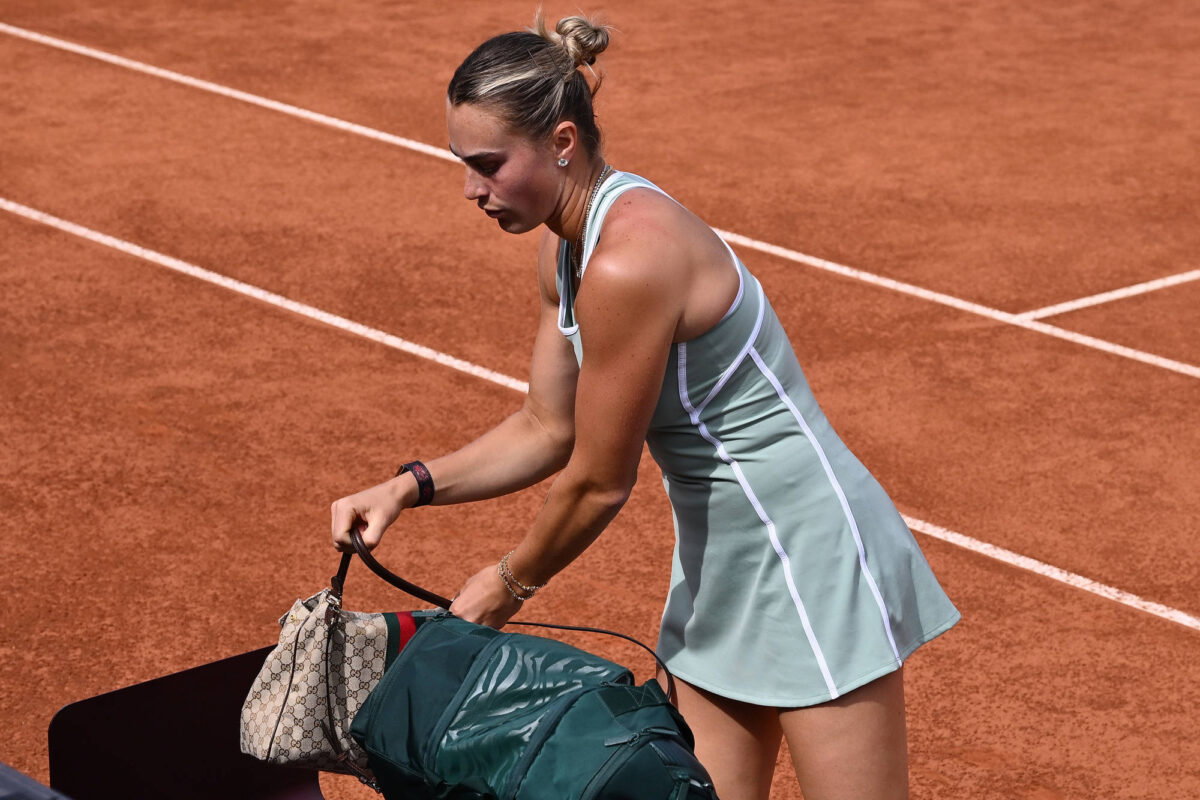
Imago
TENNIS – Internazionali di Tennis – Internazionali BNL d Italia Photo by IPA/ABACAPRESS.COM84518904 – Aryna Sabalenka enters the court with a Gucci bag prior her match against of Romania s Sorana Cirstea during the Internazionali BNL d Italia Day Four at Foro Italico on May 08, 2026 in Rome, Italy. Rome Italy PUBLICATIONxNOTxINxFRAxUK Copyright: xIPAxSport/ABACAx
The WTA has said it has “no intent to disrespect or question the gender identity or the dignity of any person” through the policy, and that players only need to be tested once in their careers; a negative result clears them for good. The rollout itself came quietly, without a formal press release explaining the league’s reasoning.
That’s a notable shift from the WTA’s previous rules, last updated in 2024, which allowed transgender players to compete if they kept their testosterone below 2.5 nmol/L continuously for two years. Sabalenka was never a fan of that standard either.
Aryna Sabalenka is not in favor of female athletes facing transgender players
Sabalenka has said facing transgender players would be unfair to women, arguing they’d carry a lasting physical advantage regardless of any hormone threshold.
“That’s a tricky question. I have nothing to do against them,” she had said in an interview with Piers Morgan in December of 2025. “But I feel like they still got a huge advantage over the women, and I think it’s not fair on women to face basically biological men.
“It’s not fair. The woman has been working her whole life to reach her limit, and then she has to face a man who is biologically much stronger, so for me I don’t agree with this kind of stuff in sport.”
Nick Kyrgios backed her take publicly.
“I think she hit the nail on the head,” he said.
Not everyone in tennis sees it the same way. Martina Navratilova has welcomed the new testing policy as progress, while Billie Jean King has called exclusionary rules like it discriminatory. Human rights groups and some medical experts have raised their own concerns, arguing a single gene marker doesn’t capture the full complexity of human sex development and could end up affecting intersex athletes alongside transgender ones.
There are currently no known transgender women competing at any level of professional tennis, which makes this debate largely a preventative one for now. The last notable transgender player on tour was Renee Richards, who competed from 1977 to 1981 before going on to coach Navratilova herself from 1981 to 1983, a connection that makes Navratilova’s current support for the policy carry a bit of extra history behind it.
Sabalenka, for her part, says she’s keeping her focus on her own game as she continues her run through the National Bank Open, which runs through August 13.