
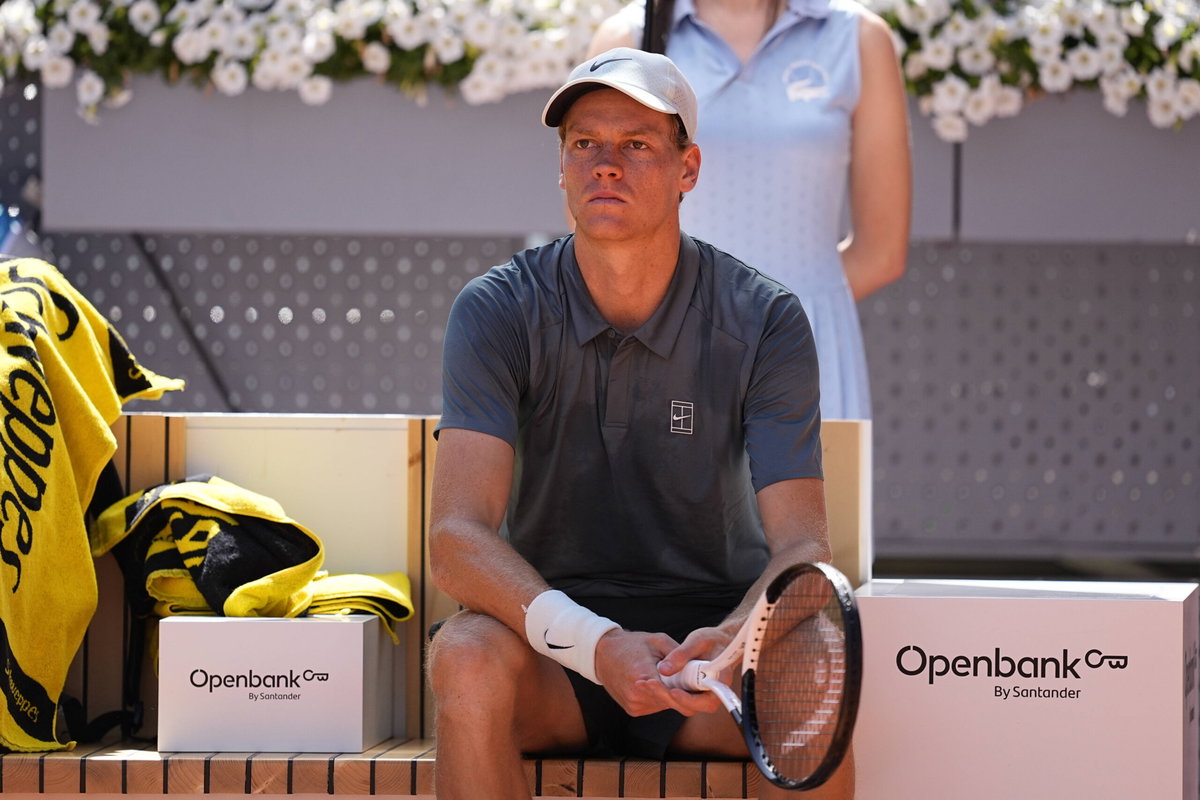
With challenging conditions and extreme heat being Jannik Sinner‘s recurring subplot, he is no stranger. And so, ahead of the North American hard-court swing, he has already begun training under the sun to ensure his readiness as he heads into the final Grand Slam of the year.
Watch What’s Trending Now!
“His heat tolerance is exactly what he needs to work on the most,” Jose Moron wrote while sharing a video that features Sinner doing fitness drills in scorching heat on a hard court. And we can see why.
The most alarming example came last year in Cincinnati, when Sinner retired just five games into the final against Carlos Alcaraz, visibly ill and gasping for breath in soaring temperatures before withdrawing at 0-5 down. He later attributed the collapse to a virus and not the conditions. Sinner was suffering from a fever of about 38 degrees Celsius when the match started, and the virus had set in during a tournament in which extreme heat had caused fatigue and sickness throughout the draw.
The repercussions then spread directly to the US Open days later, when Sinner came in with a taint of doubt over fitness. While he still went on to reach the final, he was widely seen as playing at less than full throttle throughout the fortnight compared to the imperious form that had carried him to the title the year before.
Last October in Shanghai, Sinner retired mid-match after being badly affected by cramping against Tallon Griekspoor, another time that extreme heat proved to be Sinner’s nemesis on court. He also had a near repeat at this year’s Australian Open, where he was hampered by cramps in the third round against Eliot Spizzirri as the heat climbed to near 40 degrees Celsius. The Italian later claimed that he was “lucky” the tournament’s heat stress scale had prompted a roof to be closed on Rod Laver Arena at the right moment because he was beginning to fade. In his own words, the tournament may have ended there without that intervention.
The most recent example was at this year’s French Open. Sinner was two sets up with a 5-1 lead in the third, but was stunned by 56th-ranked Juan Manuel Cerundolo in the middle of a Paris heat wave. He said that he was always dizzy and lacked energy, and at one point left the court for treatment after he appeared to cramp during the match while serving for the match. Afterwards, Sinner was careful not to blame the conditions completely, as he insisted “it was warm but not crazy warm.”
By then it was difficult to ignore all the patterns that formed. Given all those rejections, it’s no wonder Sinner’s staff seems to be taking heat tolerance seriously as they embark on this year’s American hard-court swing. His fitness in extreme heat has directly contributed to his performance at three of his past four majors, and facing that challenge head-on could be as crucial to his title prospects in New York as anything he does with his racquet.