Imago
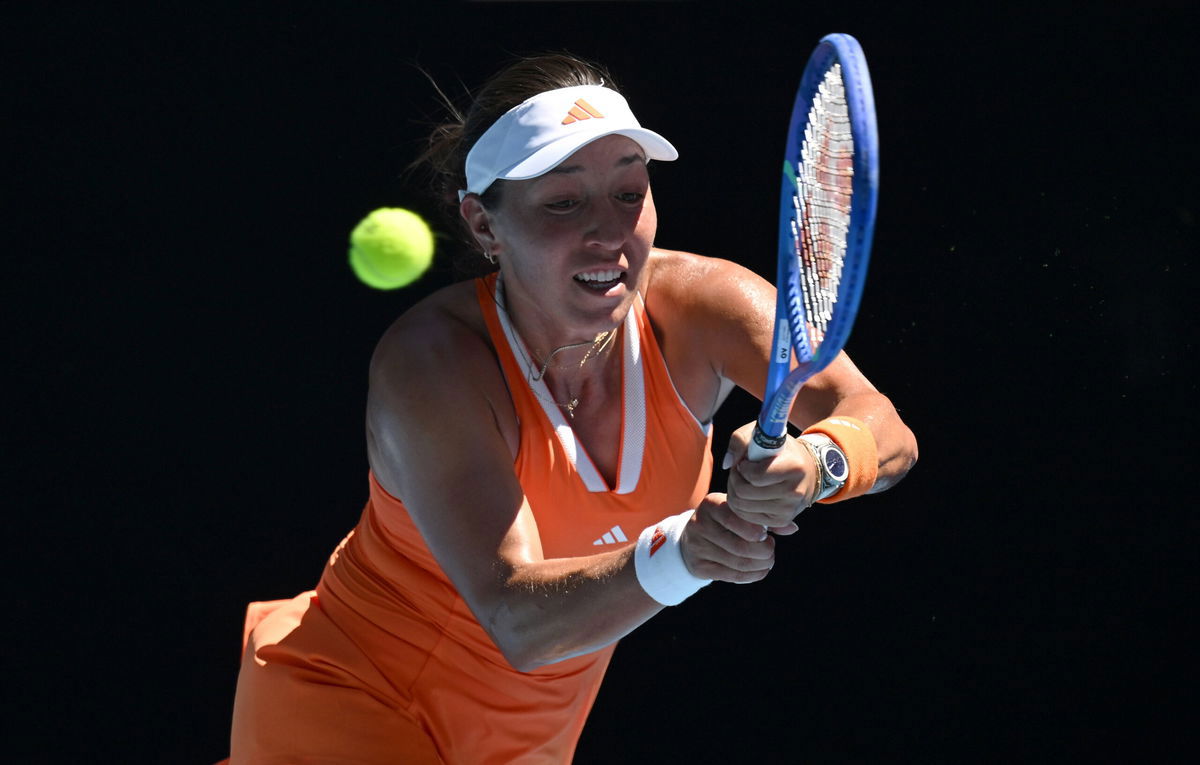
TENNIS AUSTRALIAN OPEN, Jessica Pegula of USA in action during the Womens 3rd round match against Oksana Selekhmeteva of Russia on day 7 of the 2026 Australian Open tennis tournament at Melbourne Park in Melbourne, Saturday, January 24, 2026. NO ARCHIVING MELBOURNE VICTORIA AUSTRALIA PUBLICATIONxNOTxINxAUSxNZLxPNGxFIJxVANxSOLxTGA Copyright: xLUKASxCOCHx 20260124166793069037
Imago
TENNIS AUSTRALIAN OPEN, Jessica Pegula of USA in action during the Womens 3rd round match against Oksana Selekhmeteva of Russia on day 7 of the 2026 Australian Open tennis tournament at Melbourne Park in Melbourne, Saturday, January 24, 2026. NO ARCHIVING MELBOURNE VICTORIA AUSTRALIA PUBLICATIONxNOTxINxAUSxNZLxPNGxFIJxVANxSOLxTGA Copyright: xLUKASxCOCHx 20260124166793069037
Sixth seed Jessica Pegula cruised into the Australian Open fourth round at Margaret Court Arena, dismissing Oksana Selekhmeteva 6–3, 6–2 in the day’s opening match. After last year’s third-round exit to Olga Danilović, she now meets Madison Keys, yet the post-match conversation pivoted to the challenge of an unusually early start.


Speaking during her on-court interview, Jessica Pegula was asked about adjusting to an unusually early start, something not typical for a professional tennis player. The American explained her preparation in a lighthearted way.
Watch What’s Trending Now!
“Earlier bedtime, a little earlier to the courts with some extra coffee, maybe.” She then expanded on how even a small shift in timing can feel dramatic at this level of competition.
“I mean, it sounds kind of funny, but 30 minutes it feels so much earlier. Everyone’s kind of like slightly panicking because we’re like, ‘Oh my god, we have to be there early.’” Pegula’s comments reflected the fine margins that define tour-level routines.

Imago
WUHAN, CHINA – OCTOBER 09: Jessica Pegula of United States returns a shot in the Women s Singles Round of 16 match against Ekaterina Alexandrova on day 6 of 2025 Wuhan Open at Optics Valley International Tennis Center on October 9, 2025 in Wuhan, Hubei Province of China. PUBLICATIONxNOTxINxCHN Copyright: xVCGx 111596103307
Despite the early alarm, Pegula found positives in opening the day’s schedule. “But no, it was nice to be on first today. Obviously, not a super long match, so I didn’t have to kind of kill myself out in the heat today because I think it’s going to get pretty hot.”
Heat, however, was not a concern for her personally. Pegula made that clear with a smile. She said she didn’t mind the hotter temperatures: “Being a Floridian, I was ready for it.” Her background helped her feel comfortable in demanding conditions.
Play on Day 7 began an hour earlier than initially scheduled due to forecasts predicting extreme heat reaching up to 104°F. While temperatures during the opening matches hovered around 89°F, officials acted early to limit risk as conditions were expected to worsen.
Third-round matches on the main show courts started at 10:30 am local time. Outside courts began play 30 minutes earlier. The staggered schedule aimed to reduce exposure during peak afternoon heat.
Even before play began, the tournament issued a clear warning. “The temperature is expected to climb to the low 30°C (86°F) by the middle of the day, and peak in the late afternoon,” the statement read. “Everyone coming to the AO should prepare for the heat and take advantage of the increased shade and cooling areas across the site.”
The Australian Open has used an extreme heat protocol since 2019, a move shaped by past disruptions caused by soaring temperatures.
Extreme heat forces match suspensions at the 2014 Australian Open
The Australian Open’s decision to start play earlier has been a calculated move to manage extreme heat. In previous years, soaring temperatures have forced suspensions and raised serious health concerns. Tournament officials have learned from those moments and continue refining heat-management measures.
One of the most notable examples came in 2014 at Melbourne Park. The Extreme Heat Policy was enacted when temperatures climbed above 109°F. All matches on outside courts were suspended until early evening, and retractable roofs at Rod Laver and Hisense Arenas were closed before play resumed.
Even then, the measures came too late for some players. Several criticized officials for not halting matches earlier. American Varvara Lepchenko required medical attention during her match against Simona Halep. She lay flat during a changeover as trainers applied ice.
“At first I didn’t understand what was going on but then my legs, my arms started to get heavier. I couldn’t focus at one point and started feeling dizzier and dizzier,” Lepchenko said. Her experience became a lasting reference point in discussions around player safety.
Recent decisions have also been influenced by incidents involving ball kids. During Stefanos Tsitsipas’s match against Shinichi Mochizuki, play was stopped when a ball girl suddenly became ill. She vomited on the court, forcing a delay of nearly ten minutes.
Mochizuki was serving with an advantage in the opening game of the third set when the chair umpire intervened. “Wait, please, wait please,” said Australian umpire Thomas Sweeney. Moments later, a groan rippled through the crowd as play halted.
A similar incident occurred earlier in the tournament during the match between Ekaterina Alexandrova and Zeynep Sonmez. At 1573 Arena, under intense sun, a ball girl collapsed beside the umpire’s chair and required immediate attention in the shade.
With earlier starts now part of the heat strategy, players like Jessica Pegula have already hinted at rising temperatures later in the day. Officials are expected to maintain heat protocols throughout play, balancing competition with safety as conditions intensify.
Related Newsletters