
There is one version of Victoria Azarenka that the tennis world knows well on the court, the one they see grunting, screaming, straining, every muscle in her body to win the point at hand. And then there is the version that is in the locker room, at the practice courts, in the back rooms of grand slams and other venues. Jessica Pegula has seen both and has a tale of each.
Watch What’s Trending Now!
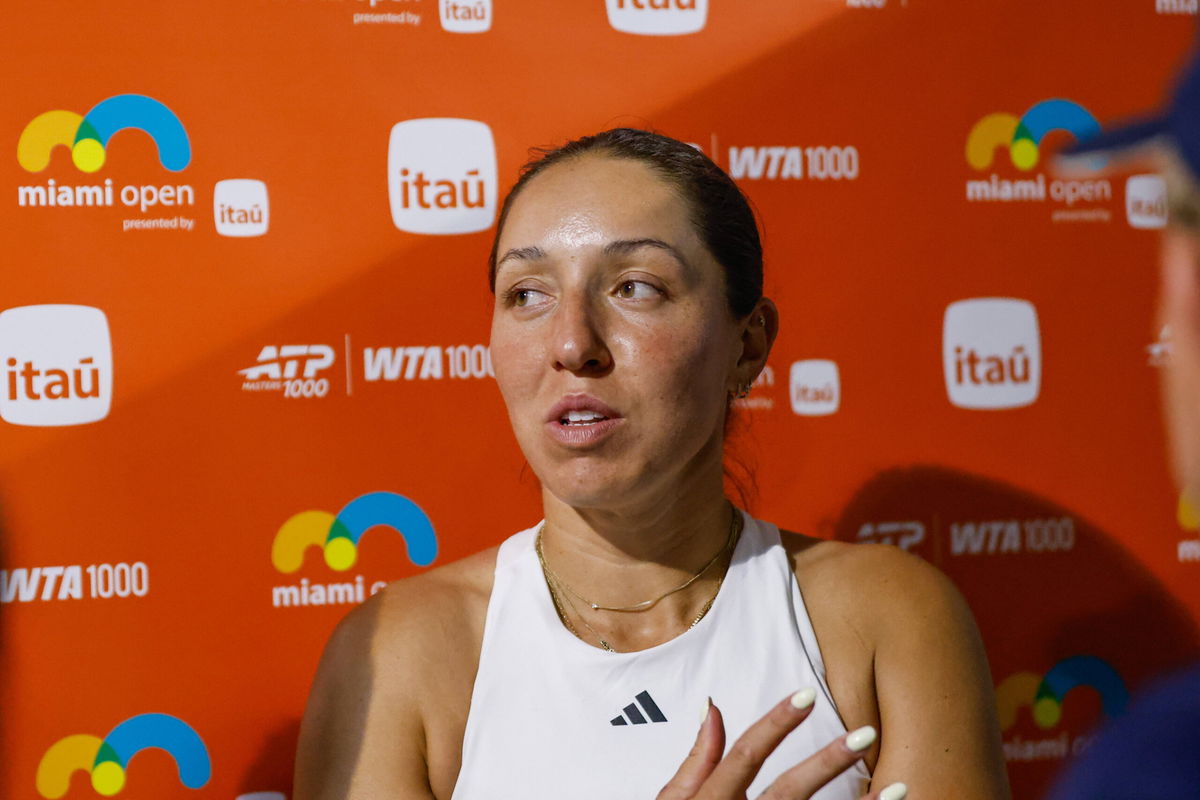
On The Players Box Podcast with Jennifer Brady, Madison Keys, and Desirae Krawczyk, a fan asked a question that could be interesting: “Is there someone on tour that seems tough on court but is not like that in reality?” Pegula was quick to respond.
“I was gonna say Vika, because Vika is so intense on the court. Like, so intense. The first time I hit with her, I was like, ‘Oh my gosh, like I’m not good enough.’ She is so intimidating. Just because of her energy, when she’s out there, when she starts, it’s like business. So intense, so focused. And like, great practice, especially if you want to replicate just from start to finish, like intensity. But then off the court, she’s like pretty chill,” she said.
The distinction she draws will be very familiar to all who have followed Azarenka over the years. The two-time Australian Open champion and former world No. 1 has always been one of the most competitive players in tennis. She is the type of player whose practice is as intense as the fifth game of a tie-breaking set. On the practice court, that focus can feel like a wall.
Off the court, Pegula has had a very different experience. Her recollection, illustrating it, was all the more poignant. It was from the initial days of her career, when she had won her first WTA title at Washington, D.C., in 2019, defeating Camila Giorgi in straight sets in the finals.
“I remember I won my first tournament in DC, and she was like, ‘Oh, congrats on DC.’ And it was kind of like – I was like, she was playing at the time and doing really well. And I was like, ‘Why does Azarenka know that I won a tournament?’ Like, I didn’t even realise that she knew I existed. I was like, ‘Oh, thanks. Yeah, exactly.’ So she’s one I would say that I get that feeling with,” Pegula added.
The revelation speaks volumes about Pegula’s status at that time as much as it does about Azarenka. For a fledgling pro, the notion that one of the sport’s biggest champions had taken notice of her achievement and taken the time to say something about it was a powerful thought that obviously had an impact on her.
While the court-intimidation factor may have been palpable in practice, on-court encounters are more evenly matched. The American holds a 4-3 career lead in seven matches against the Belarusian, with the most recent coming at the 2025 US Open, a match Pegula won. Azarenka has not played a match since then.
Pegula herself has had a bag of decent results this season. In March, she claimed her 11th WTA singles title by winning the Charleston Open, beating Yuliia Starodubtseva in the final, which helped cement her as a top-five player in the world. The red-dirt swing has not gone smoothly. A 6-1, 6-4 loss to Marta Kostyuk in the round of 32 at the Madrid Open knocked her out of the Caja Mágica after just one match, leaving her with some catching up to do before the Italian Open and Roland Garros.
The season’s record is still solid, 25-5. But for a player with the aspirations of Pegula, Grand Slam quarterfinal finishes of the past few years remain the benchmark to break.
Where Is Victoria Azarenka? The mysterious absence of a former World No. 1
The most intimidating player on tour, according to Jessica Pegula, hasn’t been seen at a WTA event since that US Open match in August 2025. That’s 244 days so far, and in that period, Victoria Azarenka has not made any statement about her absence, posted anything on social media, or ever indicated when or if she will return to competition.
Imago
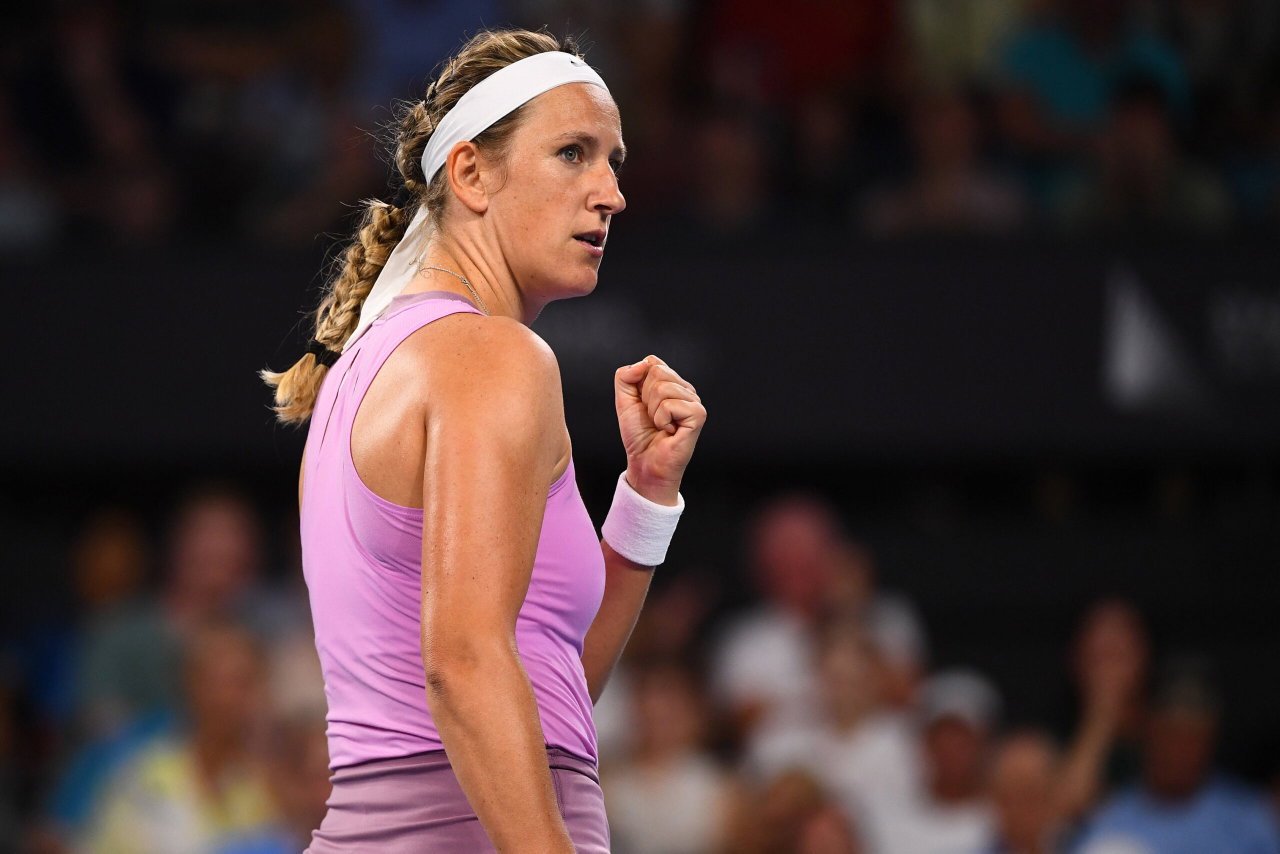
Sport Bilder des Tages TENNIS BRISBANE INTERNATIONAL, Victoria Azarenka of Belarus wins the second set during the Brisbane International Second Round match between Victoria Azarenka of Belarus and Maya Joint of Australia at Queensland Tennis Centre in Brisbane, Wednesday, January 1, 2025. ACHTUNG: NUR REDAKTIONELLE NUTZUNG, KEINE ARCHIVIERUNG UND KEINE BUCHNUTZUNG BRISBANE QUEENSLAND AUSTRALIA PUBLICATIONxNOTxINxAUSxNZLxPNGxFIJxVANxSOLxTGA Copyright: xJONOxSEARLEx 20250101136759417316
She is 36 years old, ranked outside the top 200 as a result of the extended absence, and has not won a WTA title since the 2019 Fed Cup. Since her prime – two Australian Open singles titles, world No. 1, and an Olympic gold medal – her career path has been one of tenacity in the face of injury and age. She emerged from the birth of her son in 2016, regaining her ranking multiple times, and played a US Open final as recently as 2020.
The only public sign of her ongoing activity in the sport came in March when she reposted a video detailing why players had penned an open letter to Grand Slam organizers about the need for a better distribution of the money generated by events. This is an issue she has been speaking out about for many years. Beyond that, complete silence.
But whether Azarenka is recovering from injury, or grappling with life decisions, or simply weighing up how much longer she wants to commit to the rigor of the tour remains unknown. According to the International Registered Testing Pool of the International Testing Authority (ITIA), which lists players who are required to give their whereabouts for out-of-competition tests, her name is still on the list, meaning she has not announced her retirement.
But what she has left behind for players such as Pegula is the bar for competitive play set high. When the world No. 5 played her for the first time, she left the court feeling she wasn’t “good enough,” as she recounted on the podcast; that is the ultimate compliment.